NASA Advances Future of Sustainable Aviation with Successful Stress Tests of Innovative Truss-Braced Wing Design

NASA researchers recently achieved a significant milestone in the development of next-generation aircraft by successfully completing a series of rigorous structural tests on a novel wing design that could redefine the efficiency of commercial aviation. The test article, known as the 15-foot Structural Wing Experiment Evaluating Truss-bracing (SWEET-15), represents a critical step forward in NASA’s mission to reduce the environmental footprint of the global aerospace industry. By pushing this long, thin, and lightweight structure to its absolute breaking point, engineers have gained invaluable data that confirms the viability of the Transonic Truss-Braced Wing (TTBW) concept, a design that promises to significantly lower fuel consumption and carbon emissions in future airliners.
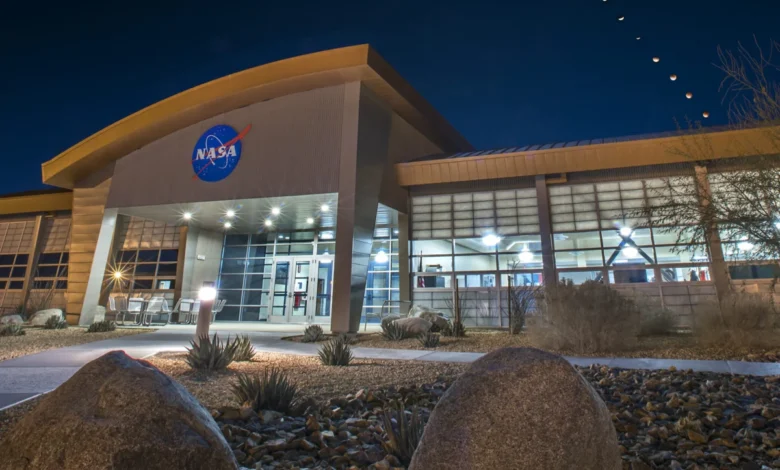
The SWEET-15 testing program was conducted at NASA’s Armstrong Flight Research Center in Edwards, California, following an extensive design and fabrication phase at the Langley Research Center in Hampton, Virginia. The results of the experiment were overwhelmingly positive, with the wing structure demonstrating resilience far beyond its predicted design limits. This success provides a foundational proof of concept for the Sustainable Flight National Partnership, a collaborative effort between NASA and industry leaders aimed at reaching net-zero carbon emissions for commercial aviation by 2050.
The Engineering Philosophy Behind the Truss-Braced Wing
At the heart of the SWEET-15 project is the pursuit of aerodynamic efficiency through high-aspect-ratio wing design. In aviation, the aspect ratio of a wing is the ratio of its span to its mean chord (the distance from the leading edge to the trailing edge). Historically, commercial aircraft have utilized relatively short, thick wings to ensure structural integrity and to house fuel tanks and landing gear. However, shorter wings generate significant "induced drag"—a byproduct of lift created by wingtip vortices.
By contrast, a long, thin wing reduces this drag considerably, allowing the aircraft to glide more efficiently through the air. The challenge, however, is that such thin wings lack the inherent stiffness to support the weight of a large fuselage or to withstand the turbulent forces encountered during flight. Without additional support, these wings would be prone to excessive bending or a dangerous phenomenon known as flutter, where the wing oscillates uncontrollably.
To solve this, NASA’s Transonic Truss-Braced Wing concept utilizes a diagonal strut that supports the wing from below. This truss-braced configuration allows for an exceptionally long wingspan without the weight penalty of a traditional cantilevered wing. The SWEET-15 test article was specifically designed to evaluate how this truss system—including the main strut and a secondary "jury strut"—interacts with the wing under extreme mechanical stress.
Advanced Manufacturing and the ISAAC Robot
The development of the SWEET-15 was not merely an exercise in aerodynamic theory; it was also a showcase for cutting-edge manufacturing technologies. The 15-foot wing was constructed using five distinct advanced composite manufacturing and assembly technologies. These technologies allowed for a structure that is both lighter and stronger than traditional aluminum or standard carbon-fiber components.
A central player in this fabrication process was the Integrated Structural Assembly of Advanced Composites (ISAAC) robot at NASA Langley. ISAAC is a state-of-the-art robotic system capable of precisely laying down layers of composite materials with microscopic accuracy. This automated fiber placement technology ensures that the internal grain and orientation of the composite fibers are optimized for the specific loads the wing will encounter. By using ISAAC, NASA engineers were able to create complex geometries and integrated joints that would be nearly impossible to manufacture using traditional manual methods.
The use of composites is vital for the TTBW concept because every pound saved in the airframe translates directly into fuel savings. Furthermore, composites offer superior fatigue resistance compared to metals, which is crucial for a wing designed to undergo significant flex during its operational life.
A Chronology of Testing: From Langley to failure at Armstrong
The journey of the SWEET-15 began in the design labs of NASA Langley, where computational fluid dynamics (CFD) and finite element analysis (FEA) were used to predict how the wing would behave. Once the physical article was fabricated, it was transported to the Flight Loads Laboratory at NASA Armstrong, a facility renowned for its ability to simulate the harsh conditions of flight on the ground.
The testing phase spanned several months and followed a meticulous progression:
- Instrumentation and Calibration: Before any force was applied, the wing was outfitted with thousands of sensors. Of particular importance was the Fiber Optic Sensing System (FOSS), a NASA-developed technology that uses hair-thin glass fibers to measure strain and temperature at thousands of points along the structure simultaneously. This provided a high-resolution "nervous system" for the wing, allowing engineers to see exactly where stress was accumulating in real-time.
- Incremental Load Testing: Engineers began by applying loads that simulated standard flight conditions, such as cruising at high altitudes and performing gentle maneuvers. The wing was bent upward and downward using hydraulic actuators, with researchers comparing the real-world sensor data against their computer models.
- Design Limit Testing: The team then pushed the wing to 100% of its "design limit load"—the maximum force the wing is expected to encounter during its entire service life, including extreme turbulence or emergency maneuvers. The SWEET-15 passed this stage with no signs of structural compromise, validating the initial engineering designs.
- Test-to-Failure: The final and most dramatic phase of the program was the deliberate destruction of the test article. Engineers continued to increase the hydraulic pressure beyond the design limits to find the "ultimate load" capacity. The goal was to identify the weakest points of the truss-braced architecture and understand the failure modes of the new composite joints.
The wing ultimately failed at approximately 127% of its design limit load. The failure manifested as visible damage near the trailing edge and the upper wing cover, providing a wealth of data on how the structure redistributes stress when pushed beyond its envelope.
Data Analysis and Scientific Significance
The fact that the SWEET-15 withstood 127% of its intended load is a resounding victory for the research team. In aerospace engineering, a structure that fails too far above its limit is often considered "over-engineered," meaning it is heavier than it needs to be. A failure at 127% suggests that the SWEET-15 design is highly efficient—strong enough to provide a significant safety margin, but light enough to maximize fuel savings.
The data gathered by the Fiber Optic Sensing System is currently being analyzed to refine the computer models used for future aircraft. By understanding the exact point of failure in the "jury struts" and the primary truss connections, engineers can further optimize the weight of these components. This iterative process of "test, fail, and refine" is essential for certifying new technologies for commercial use.
Collaborative Efforts and Industry Implications
The SWEET-15 project was made possible through a synergy of various NASA centers and projects. While Langley handled the manufacturing and Armstrong handled the testing, the project falls under the umbrella of the Subsonic Flight Demonstrator (SFD) project within NASA’s Aeronautics Research Mission Directorate.
The implications of this research extend far beyond the laboratory. The TTBW design is a core component of the Boeing X-66, an experimental aircraft currently being developed in partnership with NASA. The X-66 will be a full-scale flight demonstrator based on a modified MD-90 airframe, featuring the same long, thin, truss-braced wings tested in the SWEET-15 experiment.
If the TTBW concept is successfully integrated into the next generation of single-aisle aircraft—the "workhorses" of the airline industry like the Boeing 737 and Airbus A320 families—the impact on global emissions could be profound. Estimates suggest that the combination of the TTBW design, advanced propulsion systems, and improved materials could result in a 30% reduction in fuel consumption compared to today’s most efficient aircraft.
Looking Toward a Sustainable Aviation Future
As the aviation industry faces increasing pressure to decarbonize, the success of the SWEET-15 test offers a tangible path forward. The transition to sustainable aviation fuels (SAF) and electric propulsion is part of the solution, but aerodynamic breakthroughs are equally critical. A more efficient airframe requires less energy to move, regardless of whether that energy comes from kerosene, hydrogen, or batteries.
The researchers involved in the SWEET-15 program have expressed great optimism about the results. By proving that a lightweight, truss-supported composite wing can handle the violent forces of flight, NASA has cleared a major technical hurdle. The next steps involve taking these lessons to the skies with the X-66 demonstrator, which is expected to begin flight testing later this decade.
Ultimately, the SWEET-15 experiment is a testament to the power of collaborative research and the importance of pushing boundaries. By breaking a wing in a laboratory today, NASA is ensuring that the aircraft of tomorrow are safer, lighter, and cleaner for the generations to come. The data harvested from this 15-foot piece of composite hardware will inform the blueprints of the global fleet for decades, marking a pivotal moment in the history of flight.