Solving the Mystery of Early Universe Giants: How Direct Collapse Black Holes Challenge Cosmic Evolution

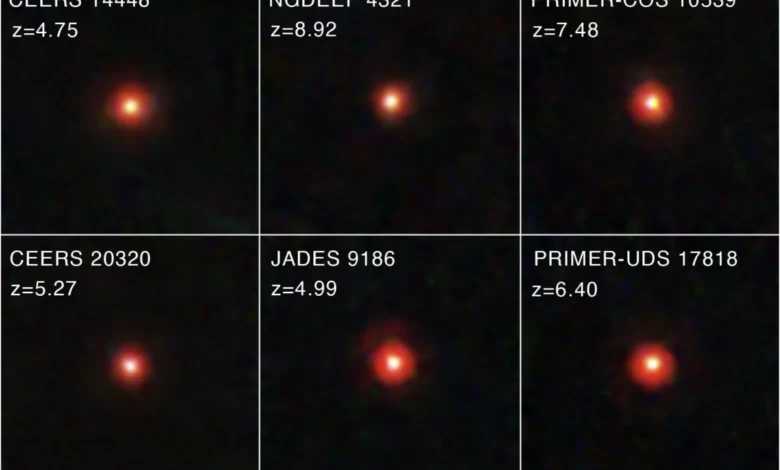
When the James Webb Space Telescope (JWST) turned its infrared gaze toward the dawn of time, it shattered long-held astronomical paradigms. By capturing light from galaxies existing less than one billion years after the Big Bang, JWST revealed a startling truth: the early Universe was not a slow, gradual construction site of small structures. Instead, it was populated by surprisingly massive, luminous objects that hinted at the presence of supermassive black holes (SMBHs) far earlier than theoretical models predicted. This discovery has forced a complete reappraisal of how the first generation of cosmic monsters—those millions or billions of times the mass of our Sun—managed to grow so rapidly in such a compressed timeframe.
The Problem with Traditional Models
For decades, the standard model of black hole formation relied on a bottom-up, hierarchical approach. In this framework, the first stars—known as Population III stars—reached the end of their brief, violent lives and collapsed into stellar-mass black holes. Over billions of years, these remnants were expected to merge, grow by consuming surrounding gas, and slowly coalesce into the SMBHs observed in the centers of modern galaxies.
However, the "redshift problem" has rendered this explanation insufficient. Redshift (z) is a measure of how much the expansion of the Universe has stretched light from a distant object; high-redshift values correspond to the earliest epochs of cosmic history. JWST observations have identified SMBHs at redshifts exceeding z=6 or even z=7, meaning these objects existed when the Universe was barely 700 to 800 million years old. Mathematically, these black holes simply did not have enough time to reach such gargantuan proportions if they began as mere stellar-mass seeds. The traditional model of incremental growth cannot account for the sheer mass density of these early giants.
The Direct-Collapse Hypothesis
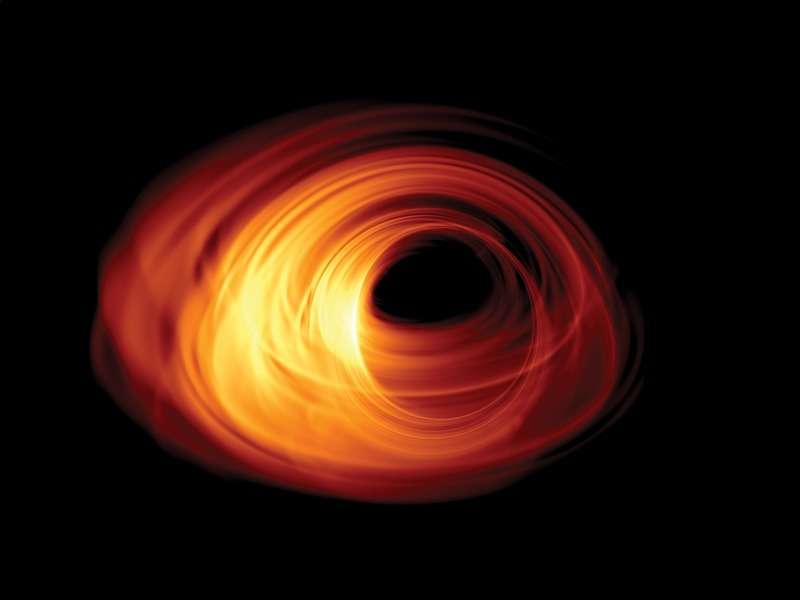
To reconcile these observations, astrophysicists have increasingly turned to the Direct-Collapse Black Hole (DCBH) scenario. Unlike the stellar-remnant model, the DCBH hypothesis proposes a more dramatic birth. In this scenario, massive clouds of pristine, cold hydrogen gas—unpolluted by the heavy elements produced by earlier generations of stars—collapse directly under their own gravity at the centers of early galaxies.
Because these gas clouds do not fragment into individual stars, they do not suffer the energy loss associated with stellar feedback. Instead, the entire cloud collapses into a "heavy seed" black hole, potentially starting with a mass thousands or even millions of times that of the Sun. This provides a "head start" that allows the black hole to reach supermassive status within a few hundred million years, aligning perfectly with the timing of the objects detected by JWST.
Investigating the Cradle of Giants
An international collaboration of researchers, led by Alessandro Trinca of the University of Edinburgh’s Institute for Astronomy, has sought to determine the environmental conditions required for such a rare, catastrophic birth. Their findings, published in the Monthly Notices of the Royal Astronomical Society (MNRAS), suggest that DCBHs are not randomly distributed but are likely forged in specific "cosmic nurseries."
The team utilized a sophisticated combination of high-resolution N-body simulations and semi-analytic modeling to track the life cycles of Dark Matter (DM) halos. Within the Lambda Cold Dark Matter (ΛCDM) cosmological model, DM provides the gravitational scaffolding upon which all visible matter accumulates. By using "cosmic zoom-in" simulations—which allow researchers to focus on specific, high-density regions of the early Universe—the team mapped how gas and stars interacted within these gravitational wells.
The researchers employed the GIZMO code to simulate the merger history of these halos and the Cosmic Archaeology Tool (CAT) to interpret the baryonic, or "visible," component. Their analysis focused on "cosmic overdensities"—regions of space where the concentration of dark matter, gas, and stars is significantly higher than average. In these dense environments, the gravitational potential is strong enough to funnel immense quantities of gas toward the center, creating the precise conditions necessary for a direct collapse.
A Chronology of Early Growth
The research provides a tentative timeline for the birth and suppression of these heavy seeds:
- 13.64 Billion Years Ago (z > 20): The era of the first DCBH formation begins. Under pristine conditions, massive gas clouds collapse into heavy seeds shortly after the birth of the first structures.
- 13.6 to 13.5 Billion Years Ago: The period of peak formation. The density of the early Universe allows for frequent mergers of dark matter halos, facilitating the rapid growth of the initial seeds.
- 13.5 to 13.4 Billion Years Ago: The "Metal Enrichment Threshold." As the first Population III stars reach the end of their lives, they explode as supernovae, seeding the surrounding intergalactic medium with metals (elements heavier than helium). The presence of these metals increases the cooling rate of gas clouds, causing them to fragment into stars rather than collapsing into singular, massive black holes. This effectively ends the window for DCBH formation.
- 13.0 Billion Years Ago (z ~ 7): The era observed by JWST. The seeds formed hundreds of millions of years prior have now evolved into the mature quasars and Active Galactic Nuclei (AGN) that telescopes are currently detecting.
Analysis of Implications
The findings presented by Trinca and his colleagues have profound implications for modern cosmology. By linking the formation of DCBHs to highly clustered environments, the study provides a testable prediction for future observation. If the team’s model is correct, future JWST surveys should find a specific "clustering" of quasars. If quasars are consistently found surrounded by smaller, satellite galaxies or AGN, it would serve as strong, empirical evidence that these SMBHs formed in regions of extreme gravitational density.
"Our results provide a theoretical framework to test the conditions that favor heavy seed formation," the team noted in their conclusion. The implication is that SMBHs are not merely accidents of galactic history but are intrinsic to the most massive nodes of the cosmic web. This shifts the focus from asking "how did they grow?" to "where were they born?"
Reactions and Future Perspectives
While the scientific community has largely welcomed the DCBH model as the most viable solution to the JWST "early giant" puzzle, it remains a subject of intense investigation. The reliance on semi-analytic models like the Cosmic Archaeology Tool is standard practice, but researchers emphasize that upcoming observations are vital for confirmation.
Dr. Trinca’s team suggests that the identification of a large population of "quasar-companion" AGN candidates would represent a breakthrough. If these systems are detected in the predicted numbers, it would validate the theory that early massive black hole formation is an environmental phenomenon, governed by the distribution of dark matter rather than purely stochastic events.
Furthermore, the study highlights the efficiency of the JWST as a time machine. By analyzing the light from these high-redshift objects, astronomers are essentially performing a form of "cosmic forensics." Every photon captured by the telescope acts as a data point in the reconstruction of the Universe’s first billion years.
As the astronomical community prepares for the next phase of JWST surveys, the benchmark established by the Edinburgh-led team provides a roadmap. The search for the "descendants" of these DCBHs—the massive black holes that anchored the growth of the first galaxies—will continue to define the frontier of astrophysics for the next decade. By integrating the complex physics of dark matter with the visible evidence of early galactic structure, researchers are finally beginning to peel back the layers of the early Universe, revealing a history far more dynamic and violent than previously imagined.
Related posts: