The Quest for Authenticity: A Comprehensive Evaluation of AI Writing Detectors in the Modern Digital Landscape


As the digital ecosystem becomes increasingly saturated with content generated by large language models (LLMs), the ability to distinguish between human-authored prose and machine-generated text has transitioned from a niche curiosity to a fundamental necessity for educators, employers, and content consumers alike. The rise of sophisticated generative AI tools, such as OpenAI’s ChatGPT, Google’s Gemini, and Anthropic’s Claude, has ushered in an era where polished, grammatically flawless text can be produced in seconds, leading to a burgeoning "arms race" between AI creators and AI detectors. This technological shift has profound implications for academic integrity, search engine optimization (SEO) ethics, and the very nature of human communication. To understand the efficacy of current detection technology, a rigorous assessment of five leading AI detection tools—Pangram, Grammarly, GPTZero, Scribbr, and Copyleaks—was conducted to determine if they can truly identify the "telltale signs" of silicon-based authorship.
The Evolution of the AI Detection Arms Race
The timeline of AI writing detection began in earnest following the public release of ChatGPT in November 2022. Within months, the internet was flooded with AI-generated essays, articles, and social media posts, prompting a desperate search for countermeasures. Early detection methods relied on identifying specific linguistic "tics," such as the overuse of the em dash, a lack of sentence length variation, and a distinct lack of personal anecdote or "burstiness." However, as LLMs have evolved from GPT-3 to GPT-4 and beyond, these markers have become increasingly subtle.
The current market for AI detection is valued in the hundreds of millions of dollars, driven largely by the education sector. According to recent industry data, over 60% of higher education institutions have implemented or are considering AI detection software to maintain academic standards. Despite this demand, the reliability of these tools remains a subject of intense debate. Even OpenAI, the creator of ChatGPT, shuttered its own AI classifier in mid-2023, citing a "low rate of accuracy." This backdrop of uncertainty makes the independent testing of third-party detectors essential for understanding the current state of digital authenticity.
Methodology of the Evaluation
The testing process was designed to simulate real-world scenarios where AI detection is most frequently applied: the review of professional articles and creative introductions. The human control group consisted of original article introductions written by professional journalist David Nield, known for a distinct, non-AI-assisted style. To challenge the detectors, three of the world’s most advanced AI models—ChatGPT (OpenAI), Gemini (Google), and Claude (Anthropic)—were tasked with generating 150-word versions of the same introductions based on the original titles and premises.
The samples were then processed through five prominent detection platforms. Each platform’s performance was measured by its ability to correctly identify the source of the text, with particular attention paid to "false positives" (human text labeled as AI) and "false negatives" (AI text labeled as human).

Tool-by-Tool Analysis and Results
Pangram: The High-Confidence Leader
Pangram positions itself as a premium solution for AI detection, offering a subscription-based model for heavy users. In this evaluation, Pangram demonstrated remarkable accuracy. It correctly identified 100% of the human samples as being authored by a person and 100% of the AI samples (from ChatGPT and Claude) as machine-generated.
Beyond a simple binary result, Pangram provided qualitative feedback, highlighting specific phrases like "from the moment you…" as common AI indicators. Its "high confidence" rating in these decisions suggests a robust underlying algorithm that looks beyond simple word frequency to analyze structural patterns.
Grammarly: The Integrated Assistant
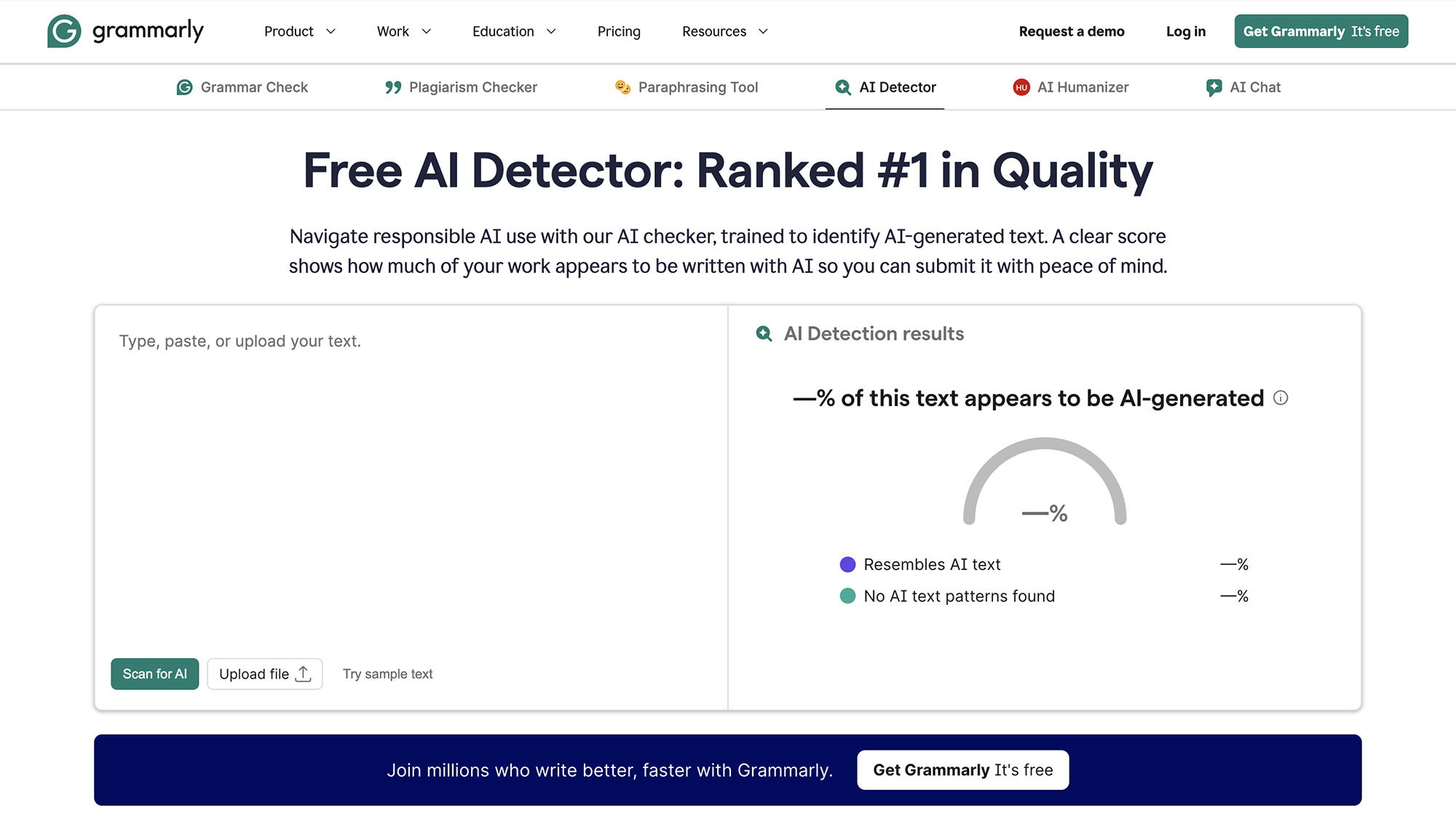
Long established as a grammar and spell-checking powerhouse, Grammarly has recently integrated AI detection into its suite of services. The tool successfully identified the human-written samples as 100% human. When faced with AI text from Claude and Gemini, Grammarly correctly flagged them as AI-influenced, though its confidence was lower, returning scores of 68% and 66% AI-written, respectively. While Grammarly was accurate in its assessment, its tendency toward moderate probability scores suggests a more cautious approach to detection, perhaps to avoid the legal and ethical pitfalls of false accusations in professional settings.
GPTZero: The Academic Standard
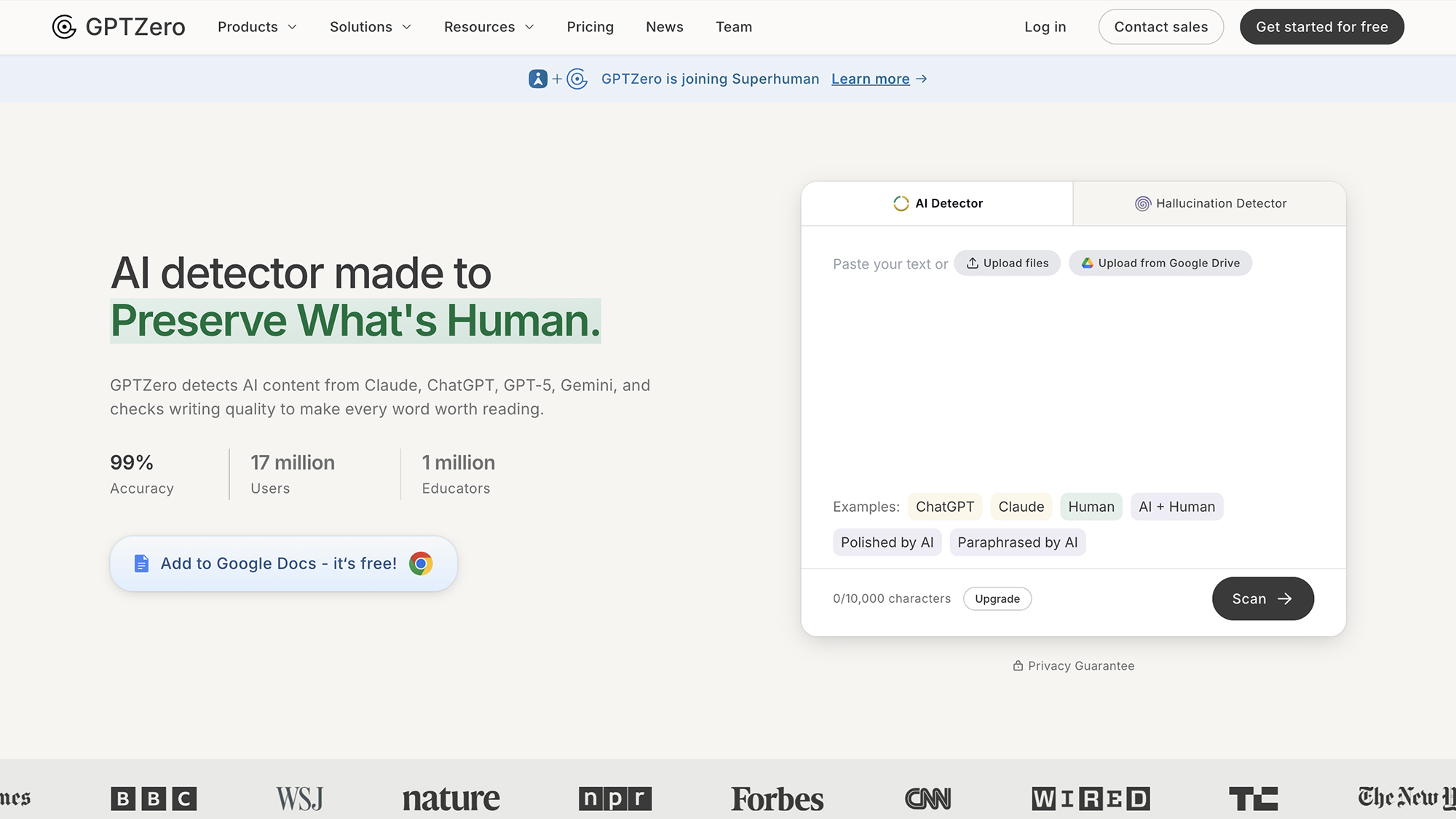
Developed by Edward Tian at Princeton University, GPTZero was one of the first tools to gain widespread recognition. Its mission is to "preserve what’s human" by analyzing "perplexity" (the randomness of text) and "burstiness" (the variation in sentence structure). In the test, GPTZero lived up to its reputation, correctly identifying both human samples with high confidence. It also successfully flagged samples from Gemini and ChatGPT. Notably, GPTZero highlighted specific sentences it deemed most likely to be AI-generated, providing a layer of transparency that is crucial for educators who must justify their findings.
Scribbr: The False Negative Failure
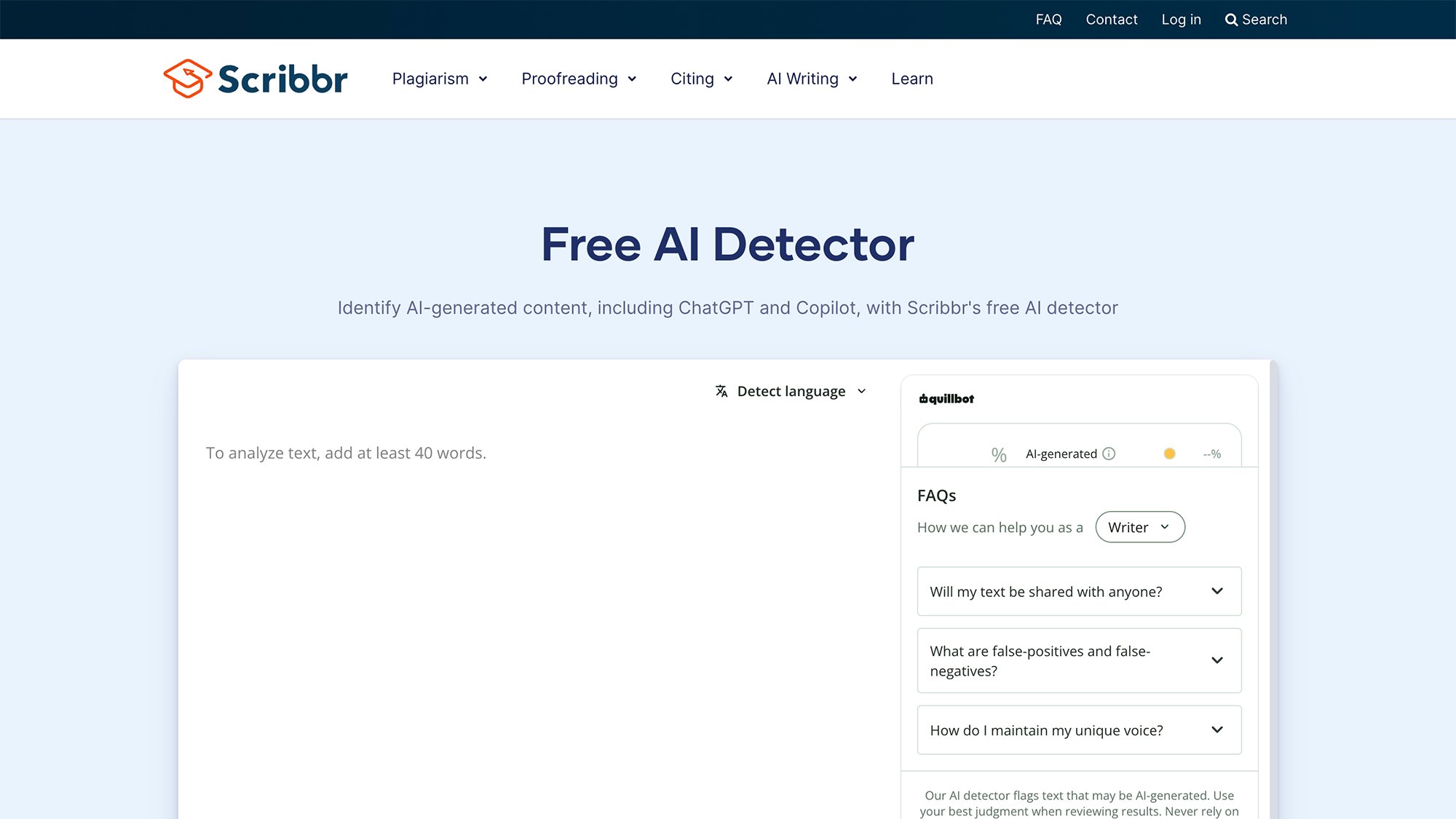
Scribbr, a popular tool for students and researchers, offers a free AI detector. However, its performance in this evaluation was the most concerning. While it correctly identified human text, it failed to detect AI-generated samples from both ChatGPT and Claude, labeling them as 100% human. Despite a disclaimer noting that detectors are not always reliable, Scribbr’s failure to catch even basic AI prose highlights the significant risk of "false negatives" in the industry. For users relying on Scribbr to verify the authenticity of a document, the tool provided a false sense of security.
Copyleaks: The Mixed Performer
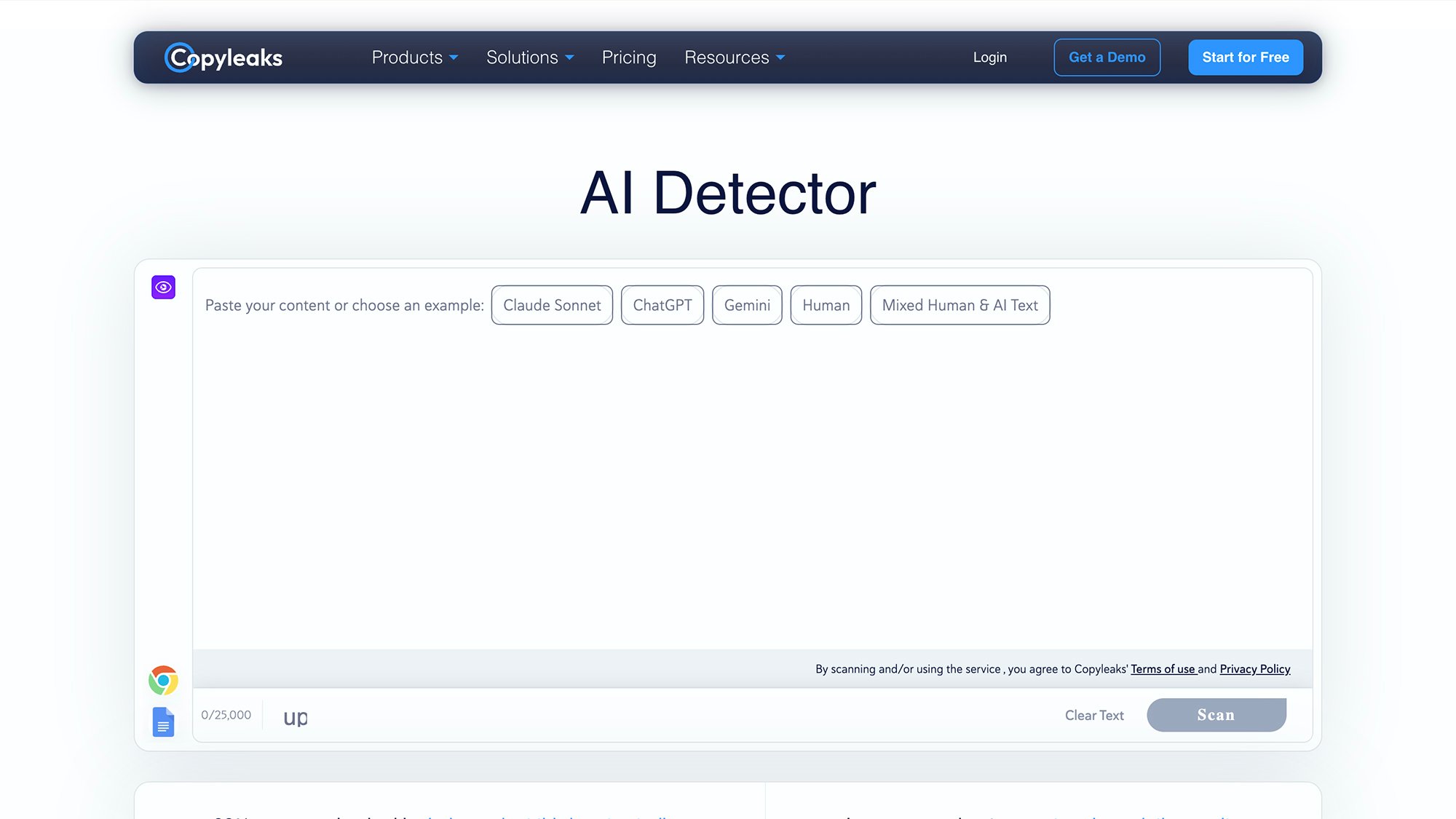
Copyleaks offers a broad range of detection services, including image and video analysis. Its performance on text was inconsistent. It accurately cleared the human samples and correctly identified a Gemini-written sample as 100% AI. However, it failed to detect the Claude sample, rating it as 0% AI-written. This "half-right" result underscores a common problem in the industry: detectors often struggle to keep pace with specific models, particularly those like Anthropic’s Claude, which are designed to produce more "human-like" and less predictable prose.
The Science of Detection: Perplexity and Burstiness
To understand why some detectors fail while others succeed, it is necessary to examine the two primary metrics of AI detection: perplexity and burstiness.
- Perplexity: This measures how "surprised" a language model is by a sequence of words. AI models are designed to predict the next most likely word in a sentence, resulting in text with low perplexity. Human writing, which often includes unexpected word choices or creative phrasing, has higher perplexity.
- Burstiness: This refers to the variance in sentence length and structure. Humans tend to write in "bursts"—a long, complex sentence followed by a short, punchy one. AI models often produce sentences of relatively uniform length and structure, leading to low burstiness.
Detectors like Scribbr and Copyleaks likely failed because modern LLMs are increasingly being "fine-tuned" to increase their perplexity and burstiness, effectively mimicking the irregularities of human thought.
Broader Implications and Industry Impact
The inconsistencies found in this evaluation have significant real-world consequences. In the academic world, a "false positive"—where a student is wrongly accused of using AI—can lead to disciplinary action, loss of scholarships, and reputational damage. Conversely, "false negatives" allow for the erosion of academic standards.
In the media and publishing industry, the stakes are equally high. Ziff Davis, the parent company of Popular Science, filed a lawsuit in April 2025 against OpenAI, alleging copyright infringement in the training of AI systems. This legal battle highlights the tension between content creators and AI developers. If AI detectors cannot reliably identify AI-generated content, the ability of publishers to protect their intellectual property and ensure the authenticity of their reporting is severely compromised.
Furthermore, the "Dead Internet Theory"—the idea that the majority of web traffic and content will eventually be bot-generated—becomes a more plausible reality if detection tools cannot keep pace. If search engines cannot distinguish between high-quality human reporting and low-effort AI "slop," the quality of information available to the public could plummet.
Conclusion: A Collaborative Approach to Authenticity
The results of this evaluation suggest that while AI detection technology is capable of identifying human writing with high accuracy, it remains fallible when faced with the latest generation of AI models. Pangram and GPTZero emerged as the most reliable tools, while Scribbr and Copyleaks demonstrated significant vulnerabilities.
For those tasked with verifying content, the data suggests that no single tool should be treated as an absolute authority. Instead, a multi-pronged approach is recommended:
- Triangulation: Use two or three different detectors to see if they reach a consensus.
- Qualitative Analysis: Look for the reasoning provided by tools like GPTZero or Pangram rather than just the percentage score.
- Human Oversight: Ultimately, the "human eye" remains a critical component. Subtle cues, such as a lack of recent real-world context or a peculiar emotional flatness, can often be spotted by an experienced editor even when a machine misses them.
As generative AI continues to evolve, the quest for authenticity will require constant vigilance. The "telltale signs" of today may disappear tomorrow, necessitating a new generation of detection tools that are as creative and adaptive as the AI they seek to unmask. For now, the most effective tool for ensuring authenticity is a combination of advanced technology and rigorous human skepticism.
Related posts: