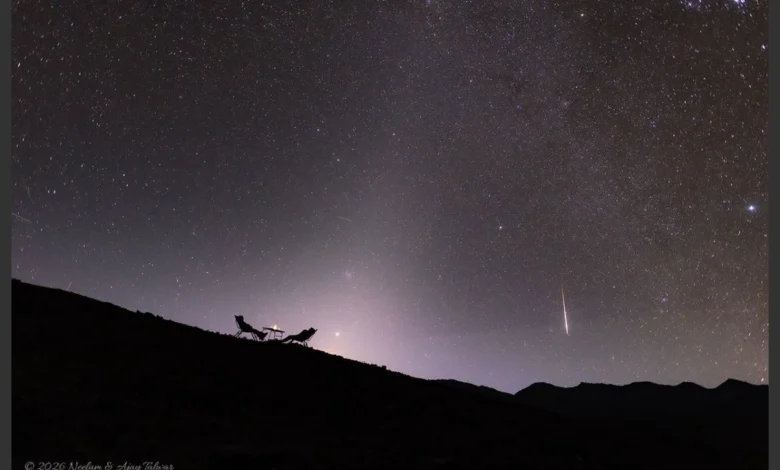
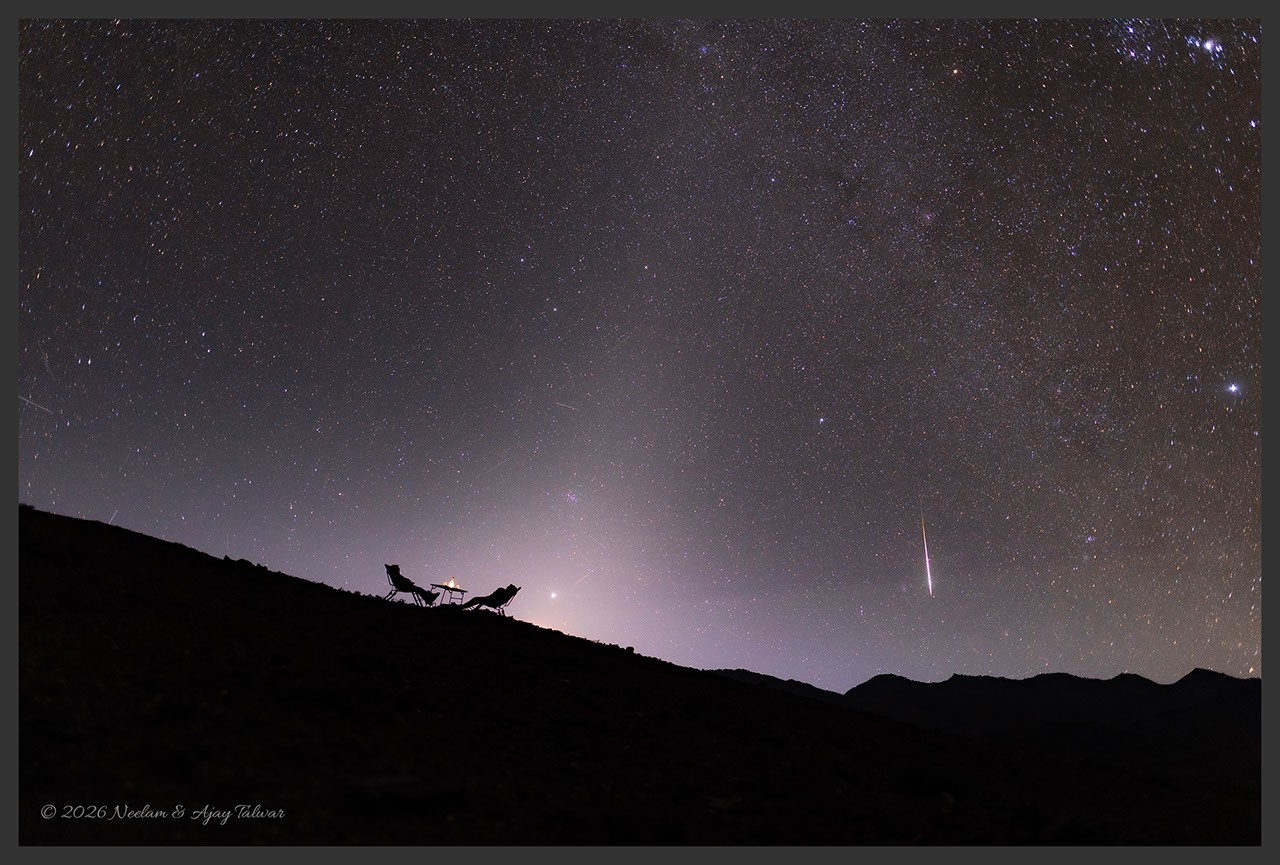
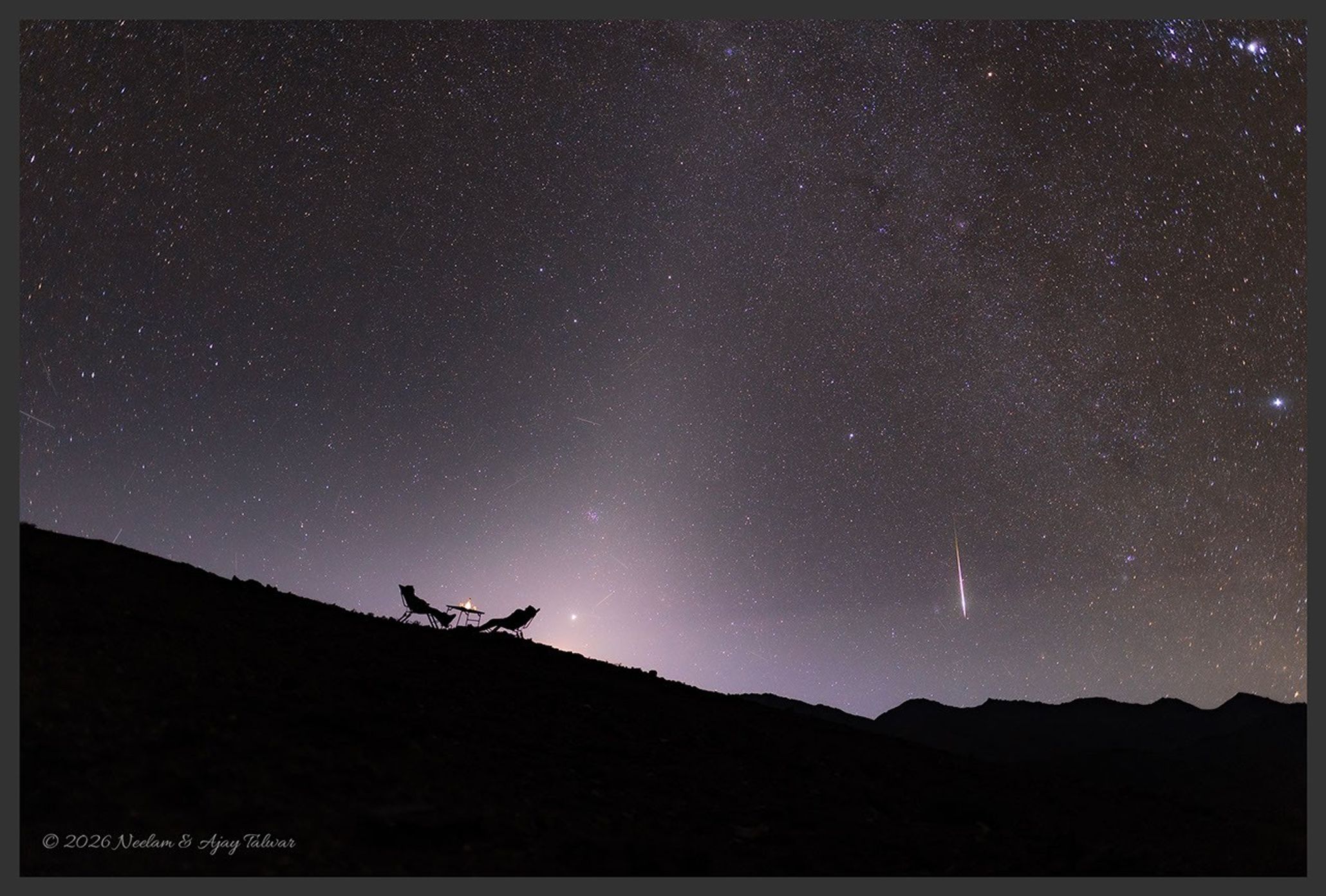
The phenomenon known as zodiacal light, frequently referred to as the false dawn, serves as a poignant reminder of the intricate relationship between interplanetary dust and the visibility of our solar system’s celestial mechanics. In a recently featured Astronomy Picture of the Day (APOD), a serene and high-altitude skyscape captured at the Hanle Dark Sky Reserve in Ladakh, India, highlights this ethereal glow, providing observers with a clear view of planets and star clusters immersed in the faint, diffused light of the ecliptic plane. This image not only showcases the pristine conditions of the Himalayan observatory but also underscores recent scientific findings regarding the origin of the dust responsible for the zodiacal phenomenon.
The Setting: Hanle Dark Sky Reserve
The Hanle Dark Sky Reserve, situated at an altitude of approximately 4,500 meters (14,764 feet) in the Ladakh region of India, represents one of the premier locations on the planet for professional and amateur astronomy. The reserve’s extreme altitude places it above a significant portion of the Earth’s atmosphere, which minimizes light pollution and atmospheric turbulence. For the observers captured in the photograph, the environment offered a rare, unobstructed view of the night sky just moments before the onset of astronomical twilight.
The location is part of a growing global movement to preserve "dark sky" heritage, ensuring that areas with minimal light interference remain protected from the encroaching glow of urban development. For astrophotographers, Hanle provides a sanctuary where the faint, cone-shaped zodiacal light becomes visible to the naked eye, appearing as a soft, luminous band extending from the horizon along the path of the sun and planets.
Understanding Zodiacal Light: A Celestial Mystery
Zodiacal light is caused by sunlight reflecting off a massive disk of interplanetary dust that orbits the sun within the plane of the solar system, known as the ecliptic. Because the earth resides within this plane, the sunlight back-scattered by this dust creates a subtle, glowing wedge that is best observed shortly after sunset or just before sunrise—hence the historical term "false dawn."
For decades, the specific source of this dust was a subject of scientific debate. Conventional wisdom long held that the dust was primarily composed of debris from comets and asteroids passing through the inner solar system. However, recent data provided by NASA’s Juno spacecraft has introduced a paradigm-shifting hypothesis. During its transit to Jupiter, the Juno spacecraft’s star-tracking cameras detected thousands of microscopic impacts from interplanetary dust. By analyzing the trajectory and distribution of these impacts, researchers found evidence suggesting that the dust is not primarily cometary, but rather originates from the planet Mars.
The implication is that Martian dust is lifted into space by the planet’s atmospheric processes and then spread throughout the inner solar system via solar radiation pressure and gravitational interactions. This discovery, which challenges established models of solar system dust dynamics, suggests that our own planet’s zodiacal glow may be inextricably linked to the dust generated by our neighboring red planet.
Chronology of the Observation
The photograph featured in the APOD was captured during a September star party at the Hanle facility. The timing was critical, as the observers needed to wait for the exact window of time when the sun was far enough below the horizon to prevent direct glare, yet before the transition into astronomical twilight began.
In the captured frame, the planet Jupiter is positioned prominently near the eastern horizon, seemingly bathed in the zodiacal glow. Moving upward along the ecliptic band toward the zenith, the image reveals the open star cluster M44—commonly known as the Beehive Cluster—and the distinct, yellowish hue of Mars. The presence of these objects in such close proximity within the frame provides a rare visual context for how the ecliptic plane organizes the major bodies of our solar system.
Supporting Data and Scientific Analysis
The significance of the Hanle imagery is supported by ongoing longitudinal studies of the interplanetary medium. According to data collected by various deep-space missions, the density of the interplanetary dust cloud is estimated to be approximately 10^-20 grams per cubic centimeter. While this appears negligible to the casual observer, the sheer volume of this material, spread over the vast expanse of the inner solar system, provides enough surface area for sunlight to reflect and create the visible zodiacal band.
The research published in peer-reviewed journals, including studies associated with the Juno mission findings, indicates that the dust grains responsible for zodiacal light generally range from 10 to 100 micrometers in size. The ability of the Hanle imagery to isolate these features without the interference of modern light pollution is a testament to the effectiveness of the reserve’s conservation efforts. Experts note that the intensity of the zodiacal light varies depending on the observer’s latitude and the time of year, with the equinoxes providing the most favorable viewing conditions due to the steep angle of the ecliptic relative to the horizon.
Official Responses and the Future of APOD
The Astronomy Picture of the Day (APOD) project, which has been operated by NASA for over three decades, serves as a bridge between the professional astronomical community and the general public. As part of a broader institutional transition, the APOD archive is currently migrating from its long-standing home at apod.nasa.gov to the consolidated science.nasa.gov/apod platform.
This transition reflects a wider agency initiative to centralize scientific outreach and educational resources. The move ensures that historical data, including detailed explanations of phenomena like zodiacal light, remains accessible to educators, students, and enthusiasts worldwide. The inclusion of the Hanle photograph in this repository serves as both a scientific document and a call to action for the preservation of dark skies.
Broader Impact and Implications
The study of zodiacal light is not merely an aesthetic pursuit; it is fundamental to understanding the evolution of planetary systems. By mapping the distribution of dust in our solar system, astronomers gain insight into the debris left over from the formation of the sun and its planets. Furthermore, the potential link between Martian dust and the zodiacal glow provides a new avenue for studying the Martian atmosphere and surface processes from a distance.
The Hanle Dark Sky Reserve, by facilitating such observations, plays a crucial role in the global effort to catalog these cosmic phenomena. The images captured there allow for a comparative analysis of how light pollution mitigation affects the ability of ground-based observatories to contribute to planetary science. As human-made light pollution continues to increase globally, the value of protected zones like Hanle becomes increasingly apparent.
Ultimately, the capture of the zodiacal light over Ladakh is a reminder of the fragility of our perspective. The interplay of dust, light, and planetary position, visible only when humanity steps back from the glow of its own civilization, represents a fundamental intersection of physics, history, and natural beauty. As researchers continue to analyze the origin of the interplanetary dust cloud, the continued documentation of the zodiacal glow will remain a priority for the international astronomical community, providing a visual record of the unseen matter that defines our solar system’s environment.
Related posts: