Fueling the Future: How MIT Researchers Are Turning the Martian Atmosphere Into a Launchpad for Return Missions

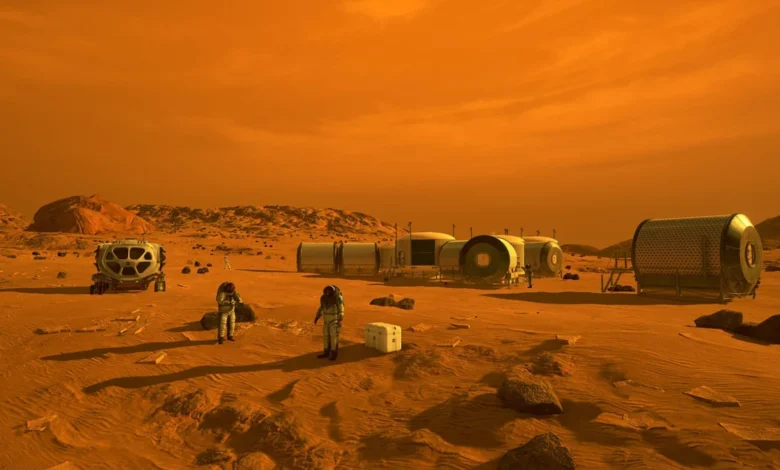
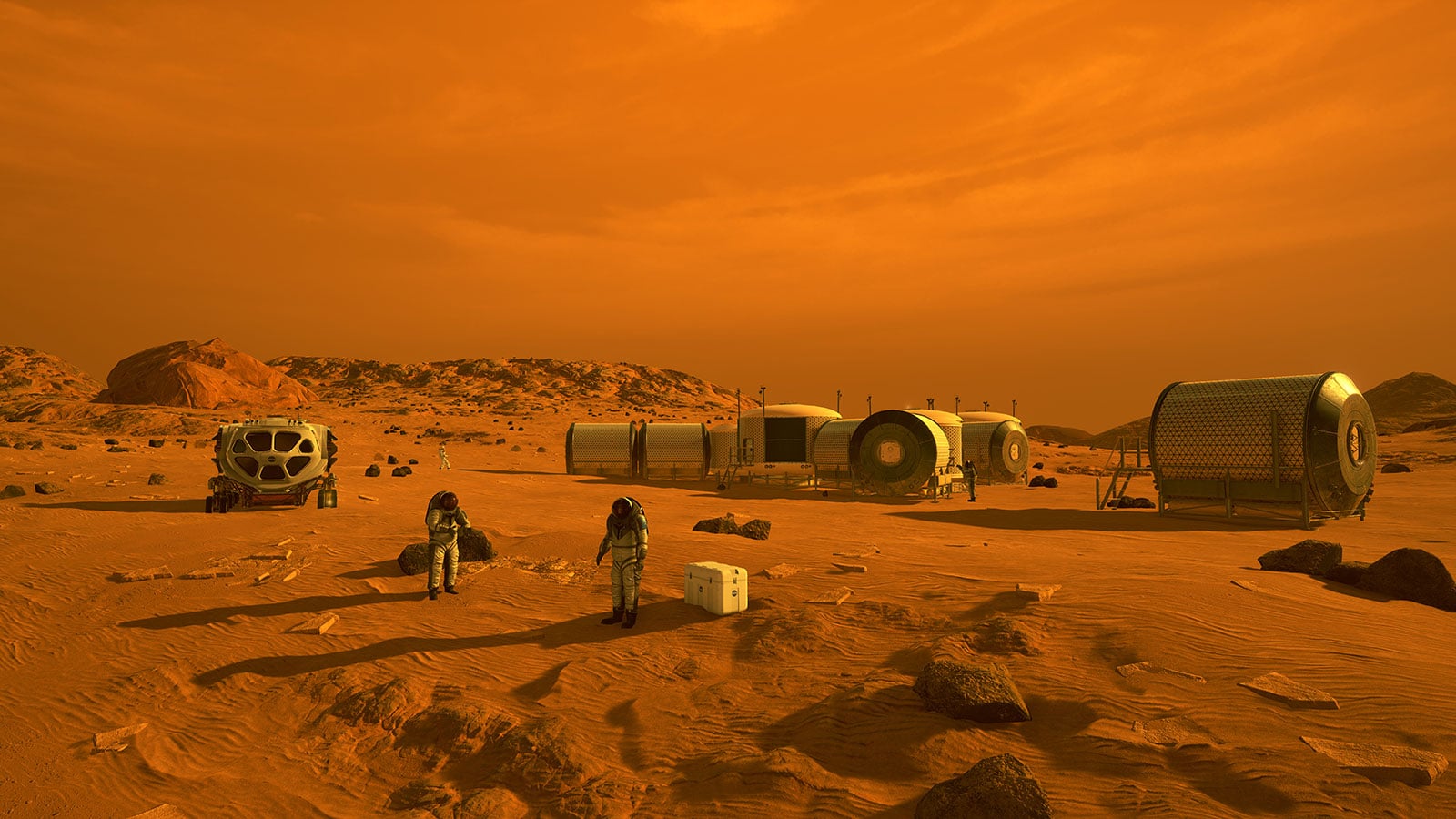
The ambition to establish a human presence on Mars, currently a central pillar of the long-term strategic planning for NASA and the China National Space Administration (CNSA), hinges on a singular, daunting logistical challenge: the return journey. While current rocketry can propel a spacecraft to the Red Planet, the mass requirements for carrying enough propellant for a round trip from Earth are prohibitive given current launch vehicle capacities. To solve this, researchers at the Massachusetts Institute of Technology (MIT) are turning toward In-Situ Resource Utilization (ISRU), focusing on technology that can synthesize fuel from the Martian environment itself.
At the forefront of this effort is Lanie McKinney, a PhD candidate within MIT’s Aerospace Plasma Group. Her work seeks to transform the primary constituent of the Martian atmosphere—carbon dioxide, which makes up approximately 95 percent of the air—into usable oxygen and carbon monoxide. By deploying a specialized plasma reactor, McKinney and her colleagues are developing the conceptual foundation for “gas stations” on Mars, a necessity if humanity intends to move beyond mere exploration toward sustainable habitation.
The Science of Plasma-Driven ISRU
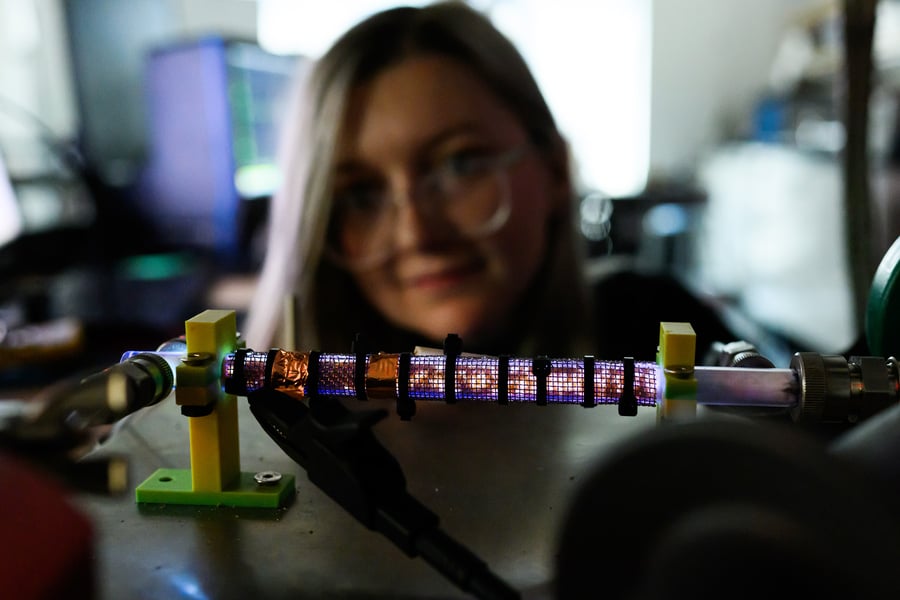
The core of McKinney’s research involves the Nanosecond Repetitively Pulsed Dielectric Barrier Discharge (NRP-DBD) reactor. This device utilizes cold plasma to trigger the dissociation of carbon dioxide molecules. Unlike thermal decomposition, which requires immense energy to reach the temperatures necessary to break molecular bonds, the NRP-DBD approach uses high-voltage, nanosecond-duration pulses to energize electrons, effectively "cracking" the CO2 molecule at much lower ambient temperatures.
The chemical reaction yields two critical products: oxygen, which is essential for life support and as an oxidizer for rocket fuel, and carbon monoxide, which can serve as a secondary fuel source. However, the process is not without significant engineering hurdles. Once the plasma has dissociated the CO2, the resulting mixture of oxygen and carbon monoxide is highly reactive. If the oxygen is not immediately isolated, it tends to recombine with the carbon monoxide, reverting to its original state.
To mitigate this, McKinney is integrating an oxygen-selective membrane into the reactor system. This membrane is designed to physically separate the oxygen from the plasma stream in real-time. The primary research challenge currently facing the team is the interaction between the membrane materials and the harsh, ionized environment of the plasma. Predicting how these advanced materials will degrade or behave under continuous, high-intensity plasma exposure remains a focal point of the Aerospace Plasma Group’s current experimental phase.
A Chronology of Innovation and Competition
The path toward these technical milestones has been paved by a series of NASA-backed competitions designed to foster academic and industrial innovation. McKinney’s trajectory reflects a broader push within the scientific community to move from theoretical physics to hardware-based proof-of-concept systems.
In early 2025, McKinney participated in a multi-disciplinary effort via MIT’s Space Resources Workshop, where the primary objective was to model a 10-year, self-sustaining Mars mission. This project emphasized that successful ISRU is not merely a chemical process, but a systems-engineering challenge requiring the coordination of power generation, thermal management, and resource extraction.
Following this, the CERBERUZ (Composites for Extraterrestrial Recycling By Engineering the Reuse and Upcycling of Zotek) team, co-led by McKinney, achieved a significant victory in Phase 2 of NASA’s LunaRecycle Challenge. The team developed a closed-loop system capable of shredding mixed space-station waste into a fine powder, which is then processed via injection molding or 3D printing to create replacement parts and filaments. Awarded $775,000 for their efforts, the team demonstrated the critical necessity of circular resource management—a philosophy that extends directly to the propellant manufacturing plants proposed for the Martian surface.
Contextualizing the Mars Logistics Problem
The logistical reality of a crewed mission to Mars is constrained by the “rocket equation,” which dictates that every kilogram of propellant added to a spacecraft requires more fuel to launch, creating an exponential growth in mass. NASA’s current Artemis program, which focuses on the Moon as a testbed for Martian exploration, aims to prove that we can extract water ice from the lunar south pole to produce hydrogen and oxygen fuel. Mars presents a different challenge; while there is subsurface water, the atmosphere provides a more accessible, albeit chemically complex, reservoir of carbon and oxygen.
According to mission architects, a crewed mission to Mars would require approximately 30 to 50 tons of propellant to return to Earth orbit. Transporting this volume from Earth would require several heavy-lift launches, costing billions of dollars and introducing significant risks of mechanical failure during the long voyage. By producing this fuel on the surface of Mars, agencies could reduce the initial launch mass by more than 60 percent, fundamentally altering the feasibility of the mission architecture.
Interdisciplinary Collaboration as a Necessity
The integration of space architecture with chemical engineering has become a hallmark of the MIT approach. In another notable project, McKinney and her peers addressed the issue of radiation shielding for lunar habitats. By utilizing lunar regolith—the loose, rocky material covering the lunar surface—the team developed a method to produce interlocking, mortar-free bricks. This research highlights the shift toward using "local materials" to provide structural safety, a strategy that will be equally vital on Mars, where high-energy cosmic rays and solar radiation pose a constant threat to human health.
McKinney notes that these cross-departmental efforts have been instrumental in her own development. "The kinds of innovative solutions that can be discovered when you work on a team that brings together different expertise and experiences was one of the project’s major takeaways," she stated. This sentiment is echoed by faculty members like Carmen Guerra-Garcia, the Esther and Harold E. Edgerton Associate Professor at MIT, who serves as McKinney’s mentor. Under Guerra-Garcia’s guidance, the Aerospace Plasma Group has maintained a focus on high-impact, actionable research that bridges the gap between laboratory plasma physics and the rugged requirements of extraterrestrial environments.
Future Implications and Global Cooperation
The transition from the current experimental phase to operational deployment is estimated to take at least two decades. The success of the NRP-DBD reactor will likely depend on the development of more robust, radiation-hardened electronics and long-term durability testing for the selective membranes.
Furthermore, the scale of these operations will necessitate a degree of international and public-private cooperation rarely seen in previous space endeavors. As McKinney emphasizes, the end goal is not merely to land and return, but to establish a permanent presence. "If we don’t build gas stations on Mars, it will be very difficult to get humans back to Earth," she says. "We’re going to need some way to produce the propellant on site. What comes next is building up a permanent presence so that we can do amazing science and be really effective at exploration."
The broader implications of this research extend beyond the Martian surface. Technologies developed to convert carbon dioxide into oxygen and fuel have clear applications in Earth-based carbon capture and sequestration (CCS) efforts. By learning to harness plasma to reconfigure atmospheric gases, the work performed at MIT may provide dual benefits: facilitating the next era of human exploration while offering new pathways to address climate-related chemical engineering challenges on our home planet.
As NASA and its international partners continue to refine their timelines for a 2030s or 2040s mission, the reliance on ISRU will move from the periphery of mission planning to the center. For researchers like McKinney, the mission is clear: to ensure that when the first astronauts arrive on the dusty, red plains of Mars, they are not merely visitors, but the first inhabitants of an interplanetary civilization.