Weather folklore has permeated human culture for millennia, acting as a primitive survival guide long before the advent of satellite imagery or advanced computational fluid dynamics. From the ancient mariner’s reliance on sky coloration to modern parenting advice regarding winter apparel, these heuristics have become deeply embedded in our collective consciousness. However, as meteorological science has matured, many of these "rules of thumb" have been revealed as oversimplifications or outright inaccuracies. By examining the biological, physical, and atmospheric mechanisms behind common weather beliefs, we can distinguish between actionable wisdom and historical superstition.
The notion that cold weather is the primary catalyst for the common cold is perhaps the most enduring myth in public health. While seasonal spikes in respiratory illnesses undeniably correlate with plummeting temperatures, the causal link is frequently misunderstood. Scientific consensus has shifted from blaming the ambient cold itself to focusing on the behavioral and physiological shifts that occur during the winter months.
The Biological Reality of Seasonal Illness
Medical researchers, including those at the University of Westminster and Johns Hopkins Medicine, have extensively studied why viral transmission rates accelerate as temperatures drop. The primary driver is not the temperature of the air, but rather the change in human behavior. During the winter, populations naturally migrate indoors to escape the elements. This increased density in enclosed, often poorly ventilated spaces creates an ideal environment for the transmission of respiratory viruses, such as rhinovirus and influenza.

Furthermore, internal humidity levels play a critical role. Heating systems in modern buildings tend to lower relative humidity, causing the mucus membranes in the human nose and throat to dry out. These membranes act as a primary physical barrier against pathogens; when they become desiccated, their ability to trap and expel viruses is significantly diminished.
Physiologically, cold air exposure triggers a process known as vasoconstriction within the nasal passages. As the body attempts to conserve heat, blood vessels in the nose narrow, which reduces the delivery of white blood cells to the area. This local suppression of the immune response may make it easier for a virus that has already been introduced to the system to take hold. Consequently, while cold weather creates the "social and biological conditions" favorable to viral success, the cold itself is not the pathogen. The implication for public health is clear: frequent hand washing, ventilation, and social distancing remain more effective preventative measures than merely layering clothing.
The Physics of Lightning and Electrical Discharge
In popular culture, the phrase "lightning never strikes the same place twice" serves as a metaphor for the improbability of a recurring event. In atmospheric physics, however, this statement is demonstrably false. Lightning is an electrical discharge seeking the path of least resistance to the ground, and it is governed by the laws of electrostatics rather than luck.
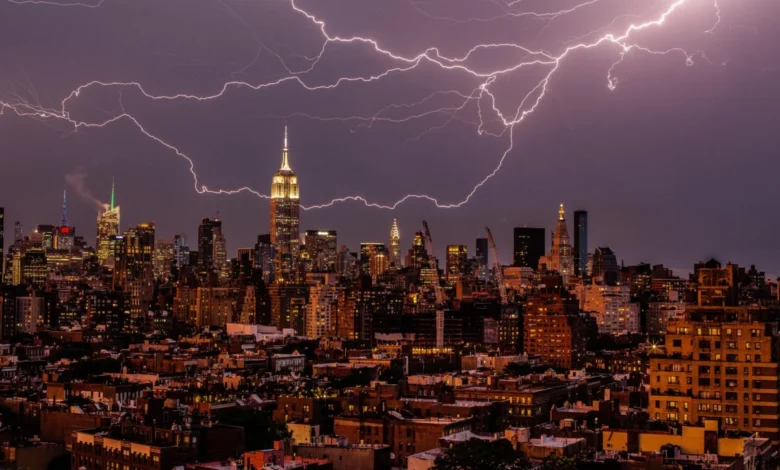
Lightning strikes are primarily attracted to elevated, conductive objects. This explains why skyscrapers, mountain peaks, and tall, solitary trees are struck repeatedly. Data from the Empire State Building in New York City indicates that the structure is struck approximately 25 times per year. Similarly, the CN Tower in Toronto, which utilizes an engineered lightning rod system, experiences an average of 75 strikes annually.
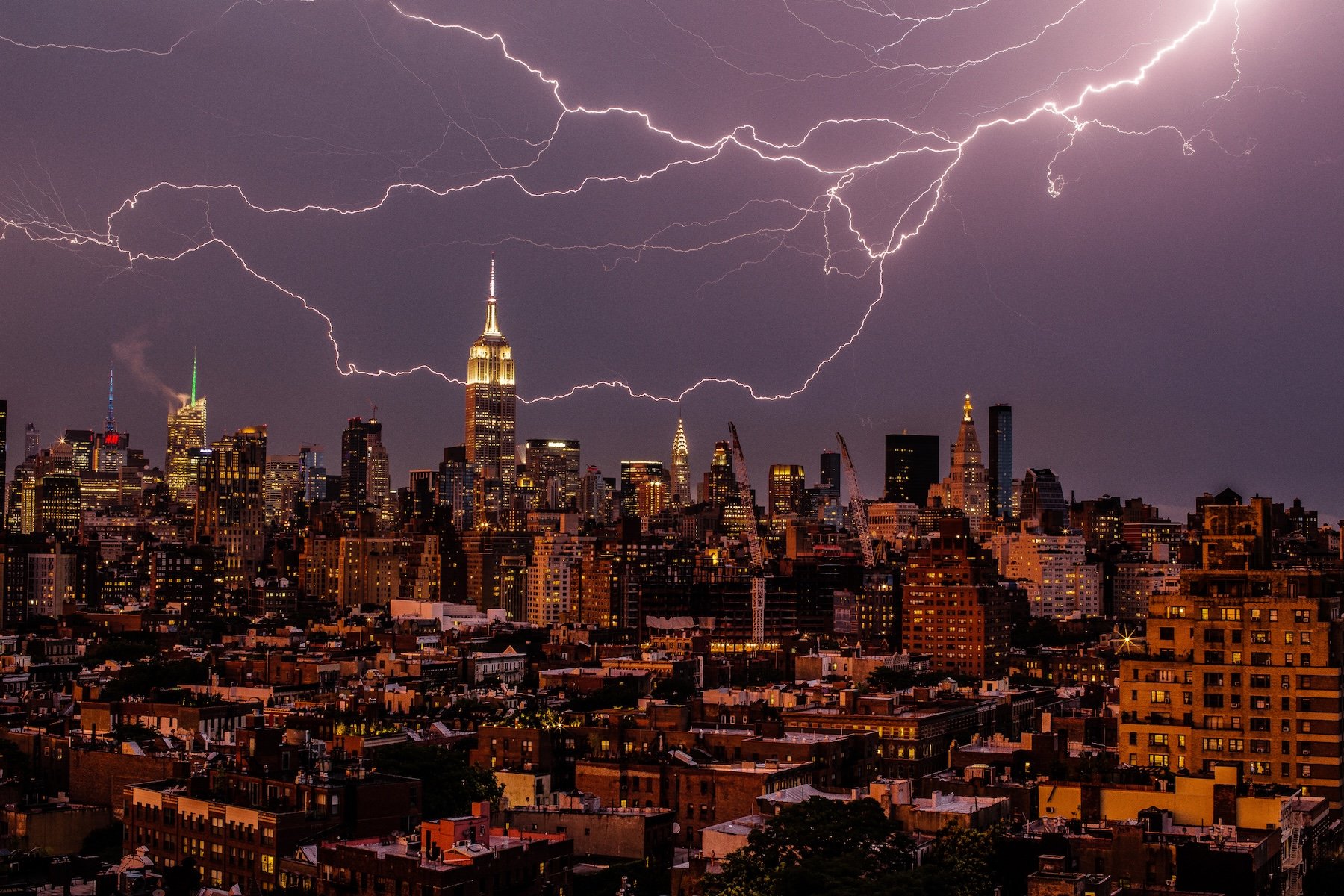
These facilities are not "unsafe"; rather, they are designed to manage high-voltage discharges safely. The existence of these structures demonstrates that lightning does not "avoid" previous strike zones; it actively seeks them out due to their height and electrical profile. For the general public, the lesson remains consistent with National Oceanic and Atmospheric Administration (NOAA) guidelines: during a thunderstorm, no place outdoors is truly safe. The unpredictability of lightning—which can occasionally strike flat terrain or deviate from the highest point—necessitates immediate shelter in a sturdy building or vehicle.
Meteorological Indicators and the Red Sky Phenomenon
The aphorism "Red sky at night, sailor’s delight; red sky in the morning, sailors take warning" is one of the few pieces of folk meteorology with a legitimate scientific foundation. The color of the sky is a product of Rayleigh scattering, a process where atmospheric particles—such as dust, pollutants, and water droplets—scatter shorter wavelengths of light (blue and violet) more effectively than longer wavelengths (red and orange).
For a red sky to occur, sunlight must pass through a longer path of the atmosphere, usually during sunrise or sunset. This phenomenon is indicative of high-pressure systems trapping aerosols. In the mid-latitudes (between 30 and 60 degrees in both hemispheres), weather patterns are largely driven by the prevailing westerlies.
- Red sky at night: This signifies that the high-pressure system—which brings clear, stable weather—is located to the west and is moving toward the observer. Hence, the "sailor’s delight."
- Red sky in the morning: This indicates that the high-pressure system has already passed the observer and is moving to the east, while an area of low pressure—often associated with storms—is likely approaching from the west. This justifies the "sailor’s warning."
While this rule is robust within the mid-latitudes, covering much of North America, Europe, and parts of Australia, it loses its predictive value in tropical regions. In the tropics, weather systems are often localized and do not follow the same predictable, west-to-east migration patterns. In these climates, the scattering of light is less tied to the movement of large-scale pressure systems, rendering the old adage ineffective.

Implications for Public Safety and Education
The perpetuation of weather myths often stems from a desire to simplify complex, chaotic systems into digestible patterns. However, the reliance on these myths can sometimes lead to complacency. For instance, believing that a warm day in early winter precludes the risk of catching a virus may lead individuals to ignore hygiene protocols. Similarly, misunderstanding the nature of lightning strikes may lead people to seek shelter under trees, believing that if a tree was not struck in the past, it is safe in the present.
The modern era of meteorological forecasting has replaced these folk heuristics with sophisticated predictive models. Agencies like the National Weather Service utilize Doppler radar, satellite imagery, and supercomputer simulations to provide real-time data that far exceeds the accuracy of traditional proverbs.
Moving Toward Data-Driven Awareness
As we navigate an era of shifting climate patterns, the accuracy of our weather knowledge becomes increasingly vital. The transition from folklore to empirical science represents a significant step in human safety. By understanding the underlying physics—whether it is the fluid dynamics of air pressure, the electrical potential of a thunderstorm, or the viral mechanics of seasonal disease—we can better prepare for environmental challenges.
The "Home of the Future" awards and similar initiatives highlight that our relationship with the environment is becoming increasingly integrated with technology. As we continue to develop smarter, more resilient infrastructure, the importance of separating myth from reality will only grow. The history of weather forecasting is a trajectory from fear and superstition to observation and, finally, to calculated prediction. Relying on verified scientific data rather than cultural shorthand is not only a matter of intellectual rigor but a fundamental component of public safety in an unpredictable climate. By fostering a public that is scientifically literate regarding the atmosphere, society can better respond to the very real, and often dangerous, realities of our changing weather patterns.
Related posts: