Secrets of Early Universe Dust Revealed Through James Webb Space Telescope Observations of Dwarf Galaxy Sextans A

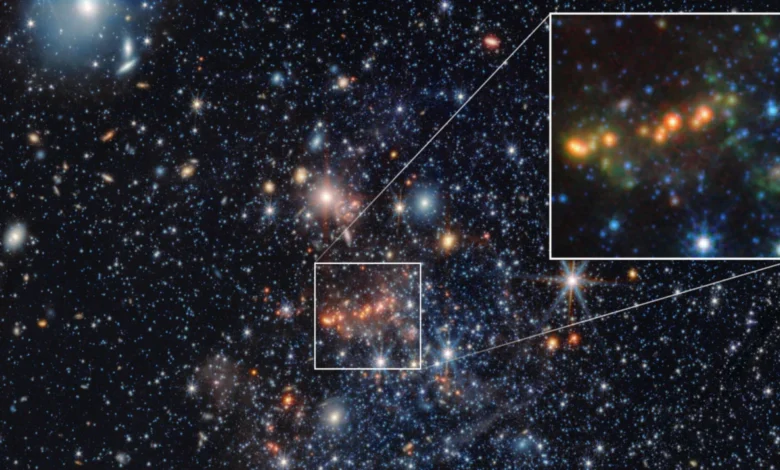
The cosmic dawn, a period spanning the first few hundred million years after the Big Bang, remains one of the most enigmatic chapters in the history of the universe. During this era, the first stars ignited, and the first galaxies began to coalesce from primordial gas. However, the mechanisms by which these early systems transitioned from simple hydrogen and helium environments into complex, dust-rich structures capable of forming planets and life have long been shrouded in mystery. Utilizing the unparalleled sensitivity of the James Webb Space Telescope (JWST), a team of international astronomers has recently unlocked critical insights into this transformation by observing a nearby proxy for the early universe: the dwarf galaxy Sextans A.
The Challenge of Observing the Primordial Cosmos
While the James Webb Space Telescope was specifically designed to peer back in time to the very first galaxies, observing them in granular detail remains a formidable challenge. These ancient systems are located billions of light-years away, and their light is significantly redshifted and dimmed by the expansion of the universe. Even with the JWST’s 6.5-meter primary mirror, resolving individual stars within the first generations of galaxies is often beyond current technological limits.
To circumvent this obstacle, researchers led by Claudio Gavetti of the National Institute for Astrophysics (INAF) adopted a "proxy" strategy. Instead of looking solely at the distant past, they turned their gaze toward Sextans A, a dwarf irregular galaxy located approximately 4.6 million light-years from Earth. Despite its relative proximity and modern age, Sextans A possesses chemical characteristics that are strikingly similar to those found in the infant universe. Specifically, it is "metal-poor," meaning it lacks the heavy elements—referred to by astronomers as "metals"—that characterize more evolved galaxies like the Milky Way.
"Directly studying the galaxies that populated the early universe is still very difficult," Gavetti explained in an official statement. "This is why observing a nearby galaxy like Sextans A, which presents similar chemical conditions, offers us a precious opportunity to understand how the first generations of stars evolved and what role they played in transforming the interstellar medium."
A Chronology of Chemical Enrichment: From Pop III to Pop I
To understand the significance of the Sextans A observations, one must look at the timeline of cosmic chemistry. The early universe was a chemically simplistic place, dominated almost entirely by hydrogen and helium, with only trace amounts of lithium. The first generation of stars, known as Population III (Pop III) stars, formed from this pristine gas. Because they lacked heavy elements to help them radiate heat away during formation, Pop III stars are believed to have been massive, hot, and short-lived.
Within their nuclear furnaces, these first stars forged heavier elements—carbon, oxygen, nitrogen, and iron—through the process of stellar nucleosynthesis. When these stars reached the end of their brief lives, they exploded as supernovae, seeding the surrounding interstellar medium (ISM) with these new elements. This enrichment allowed for the formation of Population II (Pop II) stars, which contained a small but measurable amount of metals.
Our own Sun is a Population I (Pop I) star, representing the third generation of stellar evolution. It is rich in metals, containing the recycled remains of several previous generations of stars. Sextans A, however, appears to have remained in a "stunted" evolutionary state. Its metallicity is estimated to be between only 1% and 7% of the solar level. This makes it an ideal laboratory for studying the processes that occurred when the universe was only a fraction of its current age.
The Role of Asymptotic Giant Branch Stars
The research team focused their efforts on a specific phase of stellar evolution known as the Asymptotic Giant Branch (AGB). This phase occurs in stars with masses between approximately 0.8 and 8 times that of the Sun after they have exhausted the helium in their cores.
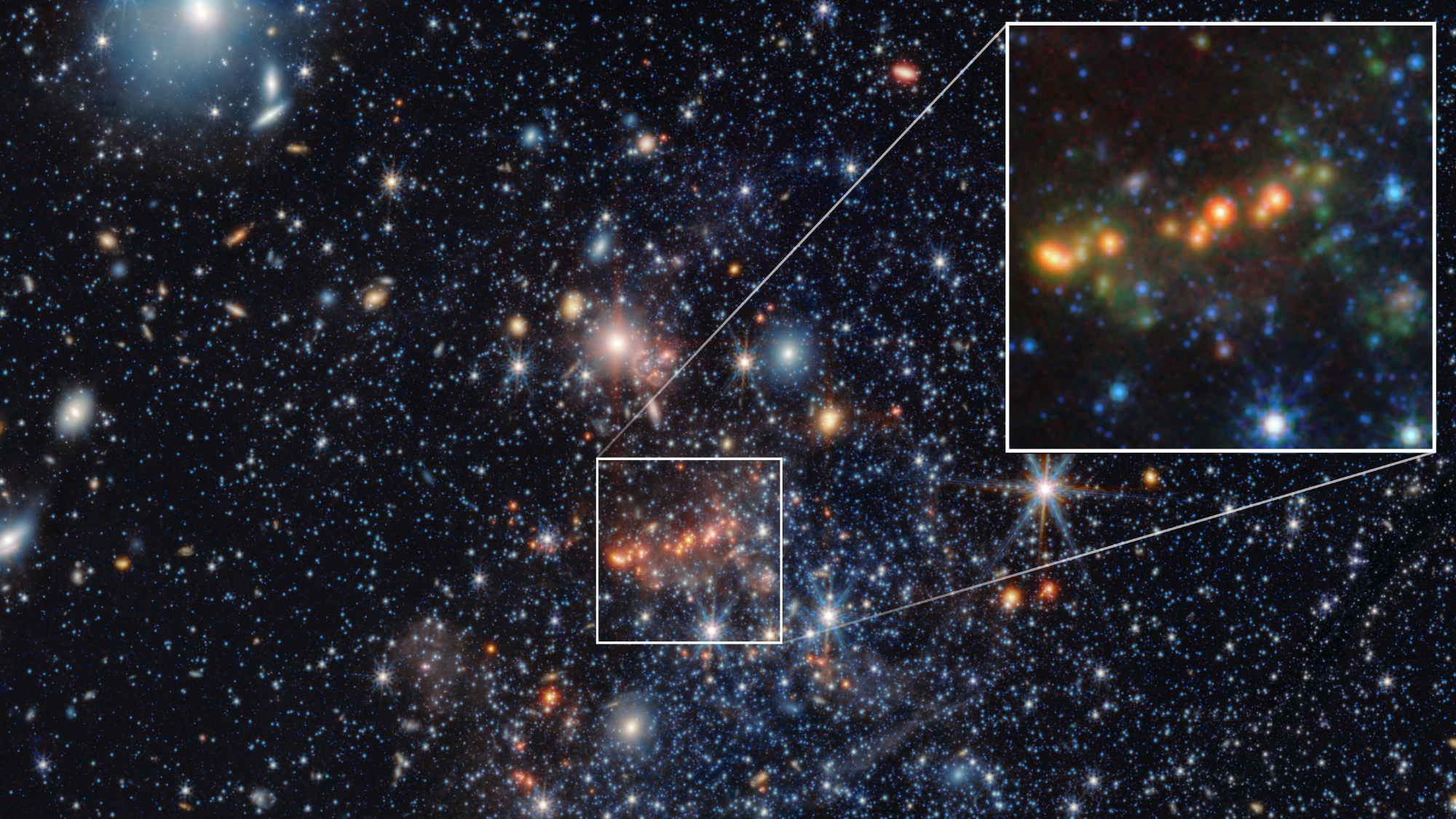
During the AGB phase, a star develops an inert core of carbon and oxygen, surrounded by shells of burning helium and hydrogen. These stars undergo massive thermal pulses, causing them to expand to enormous sizes—sometimes hundreds of times their original radius—and increase in luminosity by several thousandfold. This expansion cools the outer layers of the star, creating the ideal conditions for gas to condense into solid dust grains. These grains are then pushed out into space by the star’s intense radiation pressure, creating a "dust envelope" or shell around the star.
In the early universe, these AGB stars were the primary "dust factories," producing the solid material necessary for the formation of later stars, planetary systems, and complex molecules. Understanding how much dust a metal-poor AGB star can produce is vital for accurate cosmological modeling.
High-Resolution Observations via NIRCam and MIRI
The study utilized two of the JWST’s most sophisticated instruments: the Near-Infrared Camera (NIRCam) and the Mid-Infrared Instrument (MIRI). Infrared light is essential for this type of research because dust grains absorb visible light but re-emit that energy in the infrared spectrum. Furthermore, infrared light can penetrate dense clouds of gas that would otherwise obscure the stars within.
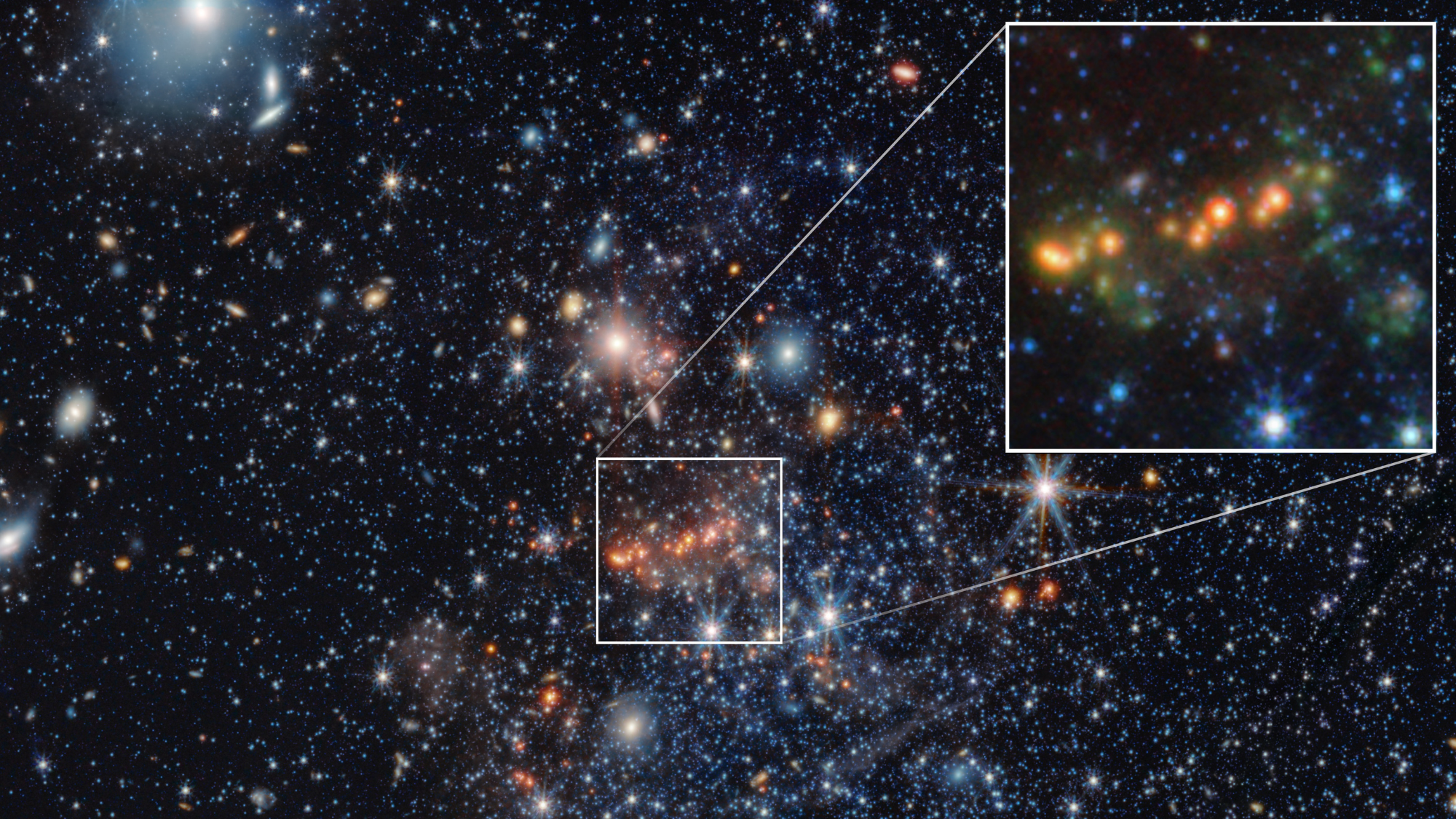
By mapping the entire population of AGB stars in Sextans A, the team discovered a surprising disparity. Their analysis revealed that approximately 90% of the AGB stars in the galaxy were "naked," meaning they lacked significant dust envelopes. However, a small subset—roughly 20 stars—were identified as prolific dust producers, embedded in thick, opaque shells of material.
The data indicated that these "dust factories" formed between 2 billion and 3 billion years ago. The stars responsible for this enrichment were found to have an initial mass of approximately 1.5 times the mass of the Sun. This finding provides a specific mass and age range for the most effective dust-producing stars in low-metallicity environments, offering a new benchmark for theoretical models of galactic evolution.
Scientific Implications and Analysis
The discovery that only a small fraction of AGB stars produce the majority of dust in low-metallicity environments has profound implications for our understanding of the "Cosmic Dawn." It suggests that the enrichment of the early universe may not have been a uniform process driven by all stars, but rather a localized phenomenon driven by specific stellar populations.
This research also highlights a "metallicity threshold" for dust production. In metal-rich galaxies like the Milky Way, dust formation is a common byproduct of stellar aging. In metal-poor environments like Sextans A, the conditions for dust condensation are much harder to meet. The fact that the JWST identified any significant dust production at all in such a metal-poor environment is a testament to the telescope’s sensitivity and the resilience of stellar processes.
Furthermore, the study confirms that the "dust-to-gas ratio" in early galaxies was likely much lower than previously assumed. This affects how astronomers calculate the star-formation rates of the first galaxies, as dust plays a crucial role in cooling gas clouds so they can collapse under gravity to form new stars.
Reactions from the Scientific Community
The publication of this study in The Astrophysical Journal has sparked significant interest among astrophysicists. Flavia Dell’Agli, a member of the INAF research team, emphasized the transformative nature of the JWST data.
"The JWST allows us to observe in unprecedented detail environments that until a few years ago were beyond our reach," Dell’Agli stated. "The value of these data lies not only in the images but in the ability to compare them with theoretical models and verify how correctly they describe the evolution of stars."
Independent researchers have noted that the Sextans A study provides a "missing link" in the history of cosmic dust. While previous missions like the Spitzer Space Telescope observed AGB stars in the Magellanic Clouds, those galaxies are much more metal-rich than Sextans A. The JWST’s ability to resolve individual stars in a galaxy 4.6 million light-years away represents a quantum leap in observational capabilities.
Future Outlook: Toward the First Galaxies
The insights gained from Sextans A are already being applied to the analysis of even more distant objects. By establishing a clear relationship between stellar mass, metallicity, and dust production, astronomers can better interpret the blurry, infrared signatures of galaxies from the first billion years of the universe.
Future observations will likely focus on other dwarf galaxies in the Local Group and beyond, such as Leo A or the Sagittarius Dwarf Spheroidal Galaxy, to see if the patterns found in Sextans A hold true across different low-metallicity environments. Additionally, the JWST is scheduled to perform deep-field surveys that will attempt to find the "first dust" in galaxies at redshifts greater than 10, a time when the universe was less than 500 million years old.
As the JWST continues its mission, the "dull" chemistry of the early universe is being replaced by a vibrant picture of stellar birth and death. The discovery of dust factories in Sextans A reminds us that even in the most barren of chemical environments, the seeds of complexity were being sown by the stars. These tiny grains of carbon and silicate, forged in the outer layers of dying giants, eventually paved the way for the galaxies, stars, and planets that fill our night sky today.
Related posts: