NASA Bids Farewell to MAVEN: How a Pioneering Orbiter Decoded the Ancient Climate History of Mars and Shaped the Future of Human Space Exploration

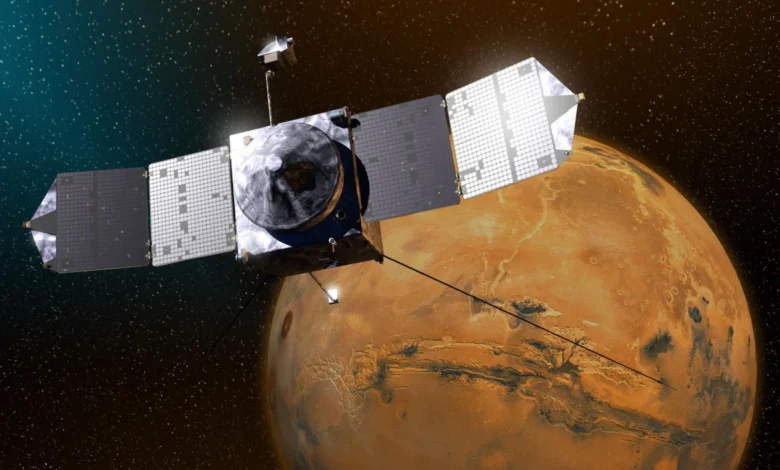
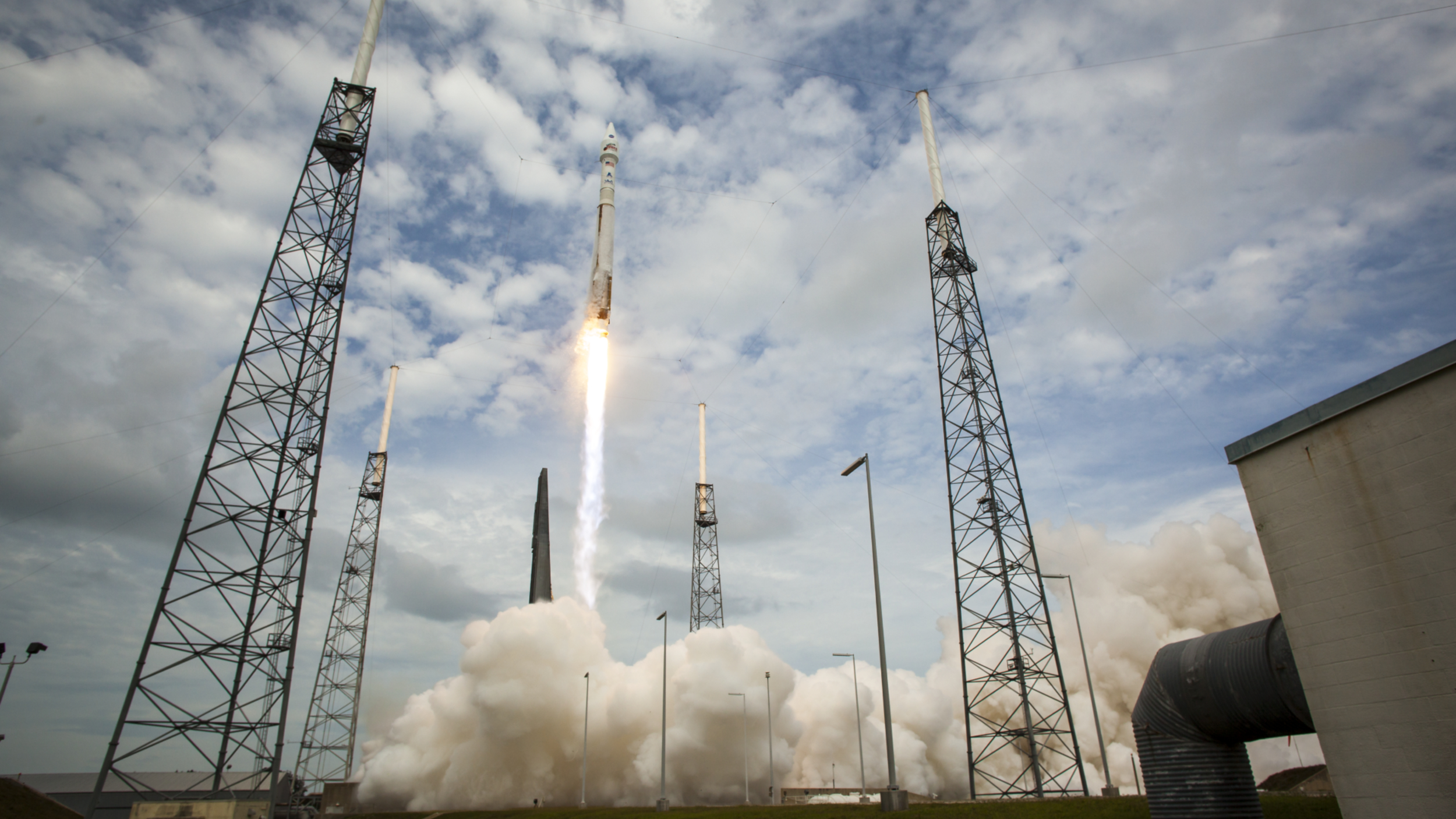
On November 18, 2013, the landscape of planetary science shifted when a powerful Atlas V rocket lifted off from Florida’s Cape Canaveral Space Force Base, carrying NASA’s Mars Atmosphere and Volatile EvolutioN (MAVEN) spacecraft into the cosmos. Designed to tackle one of the most enduring mysteries of the solar system, MAVEN embarked on an ambitious journey to solve a profound planetary riddle: how a world that was once warm, wet, and potentially habitable transformed into the cold, arid, and desolate desert we see today.
For more than a decade, the MAVEN orbiter far exceeded its original operational expectations, transforming humanity’s understanding of Martian climate evolution, atmospheric physics, and space weather dynamics. Though the mission officially concluded in June 2026 following an unexpected mechanical failure, the wealth of data captured by the spacecraft will continue to drive scientific discovery, planetary modeling, and human mission planning for generations to come.
Unlocking the Secrets of a Lost Atmosphere
To understand the scope of the MAVEN mission, scientists first had to look backward into planetary history. Decades of data gathered by orbiters, landers, and rovers have painted a clear picture of an ancient Mars defined by flowing rivers, vast lakes, and possibly an expansive northern ocean. Geological formations, mineral deposits, and carved riverbeds provide undeniable evidence that liquid water once flowed freely across the Martian surface.
However, sustaining liquid water requires a stable climate and atmospheric pressure capable of preventing immediate evaporation or freezing. Today, Mars possesses a remarkably thin atmosphere composed primarily of carbon dioxide, boasting a surface pressure less than one percent of Earth’s. Without a thick, insulating blanket of greenhouse gases, the planet could no longer retain the warmth necessary to support surface water, causing it to freeze, sublimate, and slowly vanish.
Scientists hypothesized that the atmosphere itself had not simply vanished overnight, but had been systematically stripped away over the course of billions of years. To test this theory, NASA commissioned MAVEN as the very first spacecraft dedicated entirely to exploring the upper atmosphere of Mars and examining its interactions with the solar wind—a relentless stream of charged particles continuously blasted outward by the sun.
Journey to the Red Planet and Scientific Architecture
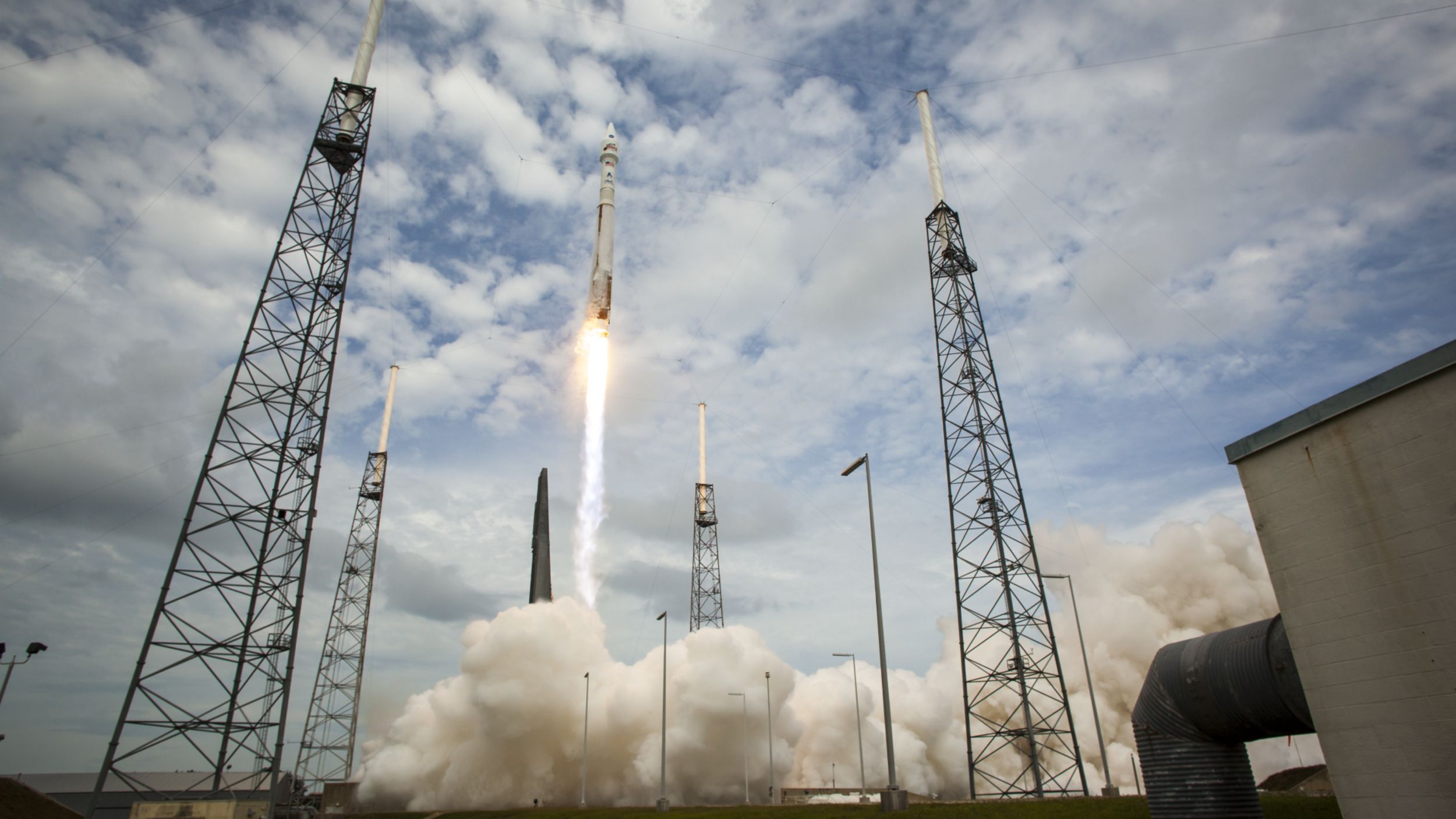
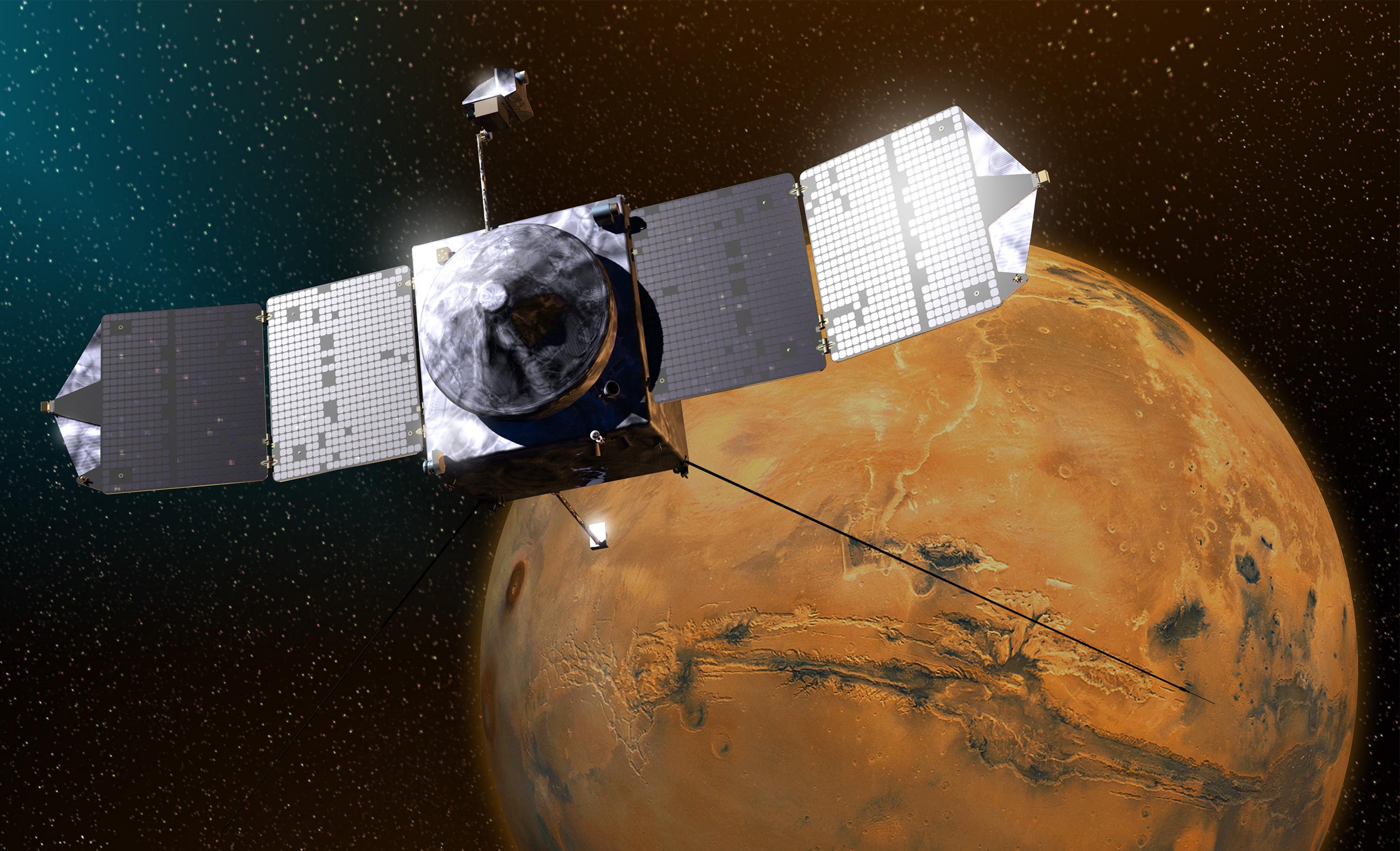
Following its successful launch in late 2013, MAVEN embarked on a ten-month interplanetary cruise, covering hundreds of millions of miles across the inner solar system. On September 21, 2014, the spacecraft successfully executed a flawless orbital insertion burn, sliding gracefully into an elliptical orbit around the Red Planet.
Once on station, MAVEN deployed three sophisticated suites of scientific instruments designed to probe different layers of the Martian atmospheric envelope:
- Imaging Ultraviolet Spectrograph (IUVS): This instrument was tasked with studying the global characteristics and composition of the upper atmosphere and ionosphere, tracking how volatile molecules like hydrogen, carbon, and oxygen escape into space.
- Neutral Gas and Ion Mass Spectrometer (NGIMS): By directly sampling the atmosphere, this instrument measured the composition and isotope ratios of neutral gases and ions, offering critical clues about the history of atmospheric loss.
- Fields and Particles Suite (a collection of six distinct instruments): This comprehensive setup analyzed the solar wind, interplanetary magnetic fields, and how the Martian ionosphere responds to incoming space weather events and solar storms.
Together, these instruments allowed researchers to measure the exact rate at which Mars loses gas to space today. By scaling these measurements backward through geological time, scientists confirmed that solar storms and the continuous stripping action of the solar wind played a dominant role in eroding the Martian atmosphere, ultimately driving the planet’s dramatic climate transformation.
An Unexpectedly Extended Lifespan
Originally, NASA designed MAVEN to carry out its primary science objectives for just one full Earth year following its arrival at Mars. That initial mission profile concluded successfully in 2016. Yet, due to robust engineering, careful fuel management, and stellar operations by the mission team at the University of Colorado Boulder’s Laboratory for Atmospheric and Space Physics (LASP) and NASA’s Goddard Space Flight Center, the spacecraft kept performing.
MAVEN became a workhorse of NASA’s Mars fleet. As it continued its scientific observations over the next decade, the orbiter also took on a vital secondary duty: serving as a high-bandwidth communications relay for surface missions, including the Curiosity and Perseverance rovers. The spacecraft effectively bridged the gap between deep-space assets and Earth, ensuring that critical data from the surface of Mars could reach scientists back home without interruption.
The Final Months and the End of the Mission
By late 2025, MAVEN had spent more than 11 years operating in the harsh
environment of Martian orbit. The beginning of the end arrived quietly in December 2025, when mission controllers noticed a sudden and unexpected silence from the spacecraft. MAVEN transmitted its final routine telemetry signal on December 6, 2025, just as it slipped behind the disc of Mars from the perspective of Earth.
When the orbiter was scheduled to emerge from behind the planet, no signal was received. Weeks of radio silence prompted an intensive investigation by NASA engineers. Subsequent analysis revealed a catastrophic sequence of events: as MAVEN passed behind the planet, it encountered an attitude control anomaly that sent the aging spacecraft into an uncontrolled, rapid spin. This unexpected spin disrupted the alignment of its high-gain antenna with Earth and compromised its ability to keep its solar panels oriented toward the sun, leading to a critical power depletion that ultimately doomed the vehicle.
Despite mounting a months-long recovery campaign, attempting various reboot protocols and hailing the silent orbiter from the Deep Space Network, engineers were unable to reestablish contact. In June 2026, NASA officially declared the MAVEN mission concluded, bringing down the curtain on one of the most successful planetary science endeavors in modern history.
Reflections from Mission Leadership
The loss of the spacecraft was deeply felt by the scientific community that had lived and breathed the mission for over a decade. Shannon Curry, MAVEN’s principal investigator based at the University of California, Berkeley, reflected on the profound emotional attachment the team developed toward the probe.
"Best. Mars. Mission. Ever," Curry remarked when the mission’s end was confirmed. She noted that the engineering and science teams "really experienced the loss of a loved one with the end of the mission here," emphasizing the intimate connection researchers form with robotic emissaries exploring distant worlds.
From an institutional perspective, NASA leadership highlighted the enduring legacy of the orbiter. Louise Prockter, NASA director of planetary science, emphasized the crucial role MAVEN’s data plays in shaping humanity’s future in space.
"The science MAVEN has given us is key to informing what kind of radiation protection and safety measures we must take before sending humans to Mars," Prockter stated following the mission’s closure. "The data collected from MAVEN will continue to provide valuable insight into Mars for decades to come."
Broader Impact and Implications for Human Exploration
As NASA and international partners look toward the horizon of crewed interplanetary travel, the insights provided by MAVEN are more relevant than ever. Understanding the dynamics of the Martian upper atmosphere and ionosphere is not merely an academic exercise in ancient climatology; it is a vital safety requirement for future astronauts.
Because Mars lacks a global intrinsic magnetic field like Earth’s, its surface and upper atmosphere are directly exposed to intense solar radiation, cosmic rays, and high-energy particles unleashed during solar flares and coronal mass ejections. MAVEN’s long-term tracking of solar storms and their impact on the Martian atmosphere has provided space weather forecasters and habitat designers with the baseline data needed to shield future human explorers from hazardous radiation levels.
Furthermore, MAVEN’s detailed accounting of planetary evolution contributes to the broader search for life in the universe. By understanding how terrestrial planets lose their volatiles and atmospheres, astrobiologists can better define the parameters of the habitable zone around distant stars, identifying which exoplanets might retain their atmospheres long enough for complex life to take root.
Though MAVEN’s operational life has ended, its scientific voyage is far from over. The archives of data transmitted back to Earth will fuel doctoral dissertations, atmospheric models, and planetary research papers for decades, ensuring that the little spacecraft that chased the ghosts of Martian water will forever remain a cornerstone of space exploration history.