Cosmic Archeology: HZDR Researchers Launch SUPREME Project to Map Earth’s Radioactive History via Lunar and Deep-Sea Samples

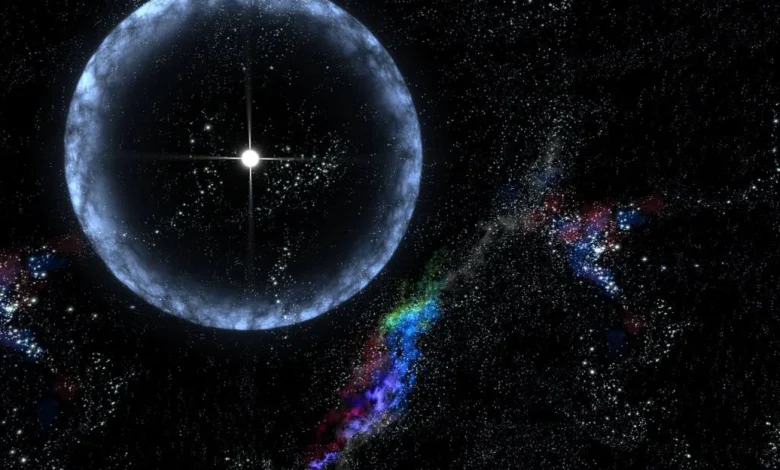
The Solar System is often conceptualized as an isolated bubble drifting through the vacuum of space, protected by the heliosphere and the gravitational stability of our Sun. However, this perception is increasingly challenged by modern astrophysics, which posits that Earth is a dynamic participant in a chaotic galactic neighborhood. A groundbreaking research initiative, the SUPREME project, has officially launched at the Helmholtz-Zentrum Dresden-Rossendorf (HZDR) to reconstruct the last 500 million years of cosmic influence on our planet. Led by Professor Anton Wallner, the project seeks to identify the signatures of supernovae and stellar explosions that have seeded Earth and the Moon with heavy elements, potentially influencing the very trajectory of biological evolution.
The project recently secured a €3 million ($3.29 million USD) Advanced Grant from the European Research Council (ERC). This highly competitive funding, part of an €838 million ($918.86 million USD) package distributed to 319 leading research groups, underscores the scientific community’s growing interest in "cosmic archeology." By analyzing rare radioactive isotopes trapped in terrestrial and lunar archives, the SUPREME team aims to bridge the gap between nuclear physics and geological history.
The Mechanism of Cosmic Seeding: The R-Process
To understand the significance of the SUPREME project, one must first understand how heavy elements arrive on Earth. While the early universe was comprised primarily of hydrogen, helium, and trace amounts of lithium, the complex chemistry required for life—and the heavy metals foundational to modern technology—was forged in the crucibles of stars.
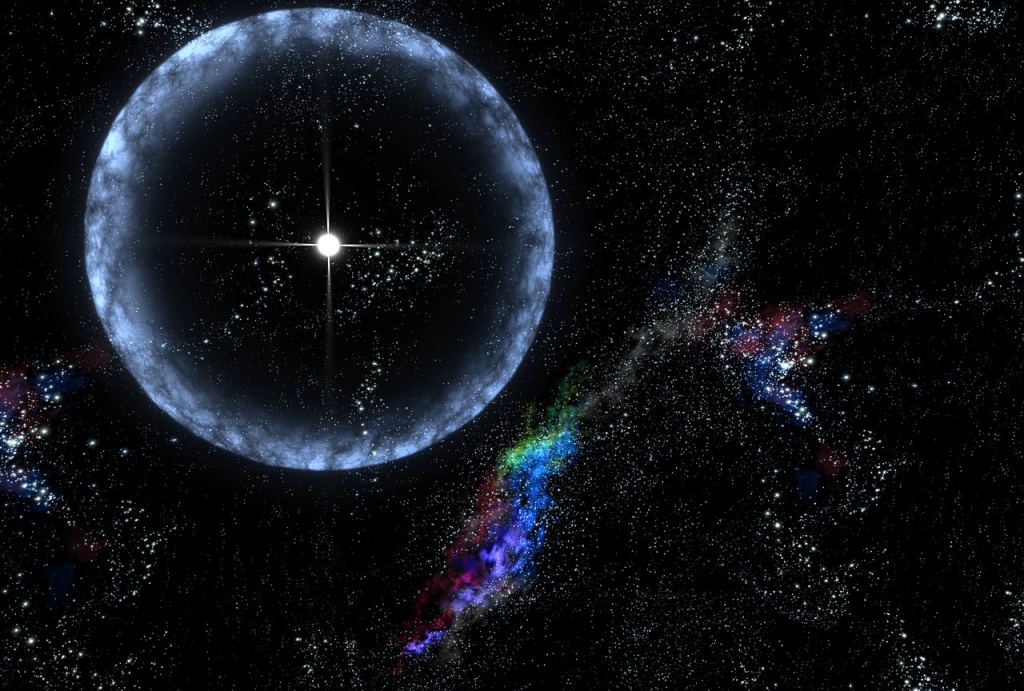
When massive stars exhaust their nuclear fuel, they collapse and explode in supernovae, releasing a torrent of energy and matter. It is within these cataclysmic events that the rapid neutron-capture process, or "r-process," occurs. In this environment, atomic nuclei are bombarded with neutrons so rapidly that they have no time to decay, allowing for the formation of heavy, unstable isotopes such as plutonium-244, curium-247, and uranium. These elements are ejected into the interstellar medium, eventually finding their way into the geological strata of planets like Earth.
The SUPREME project builds upon a landmark discovery made in June 2026, when HZDR scientists successfully measured concentrations of curium-247 and plutonium-244 in interstellar matter collected on Earth. This confirmed that the signature of r-process events is not merely theoretical but physically preserved in the planet’s crust and deep-sea sediment layers.
A Chronology of Cosmic Influence
The project focuses on a specific window of time: the last 500 million years. This timeframe is significant as it encompasses the Cambrian Period (roughly 538.8 to 485 million years ago), a pivotal epoch in biological history. During the Cambrian Explosion, life on Earth diversified at an unprecedented rate, transitioning from simple organisms to the complex, multi-cellular precursors of modern fauna.
By cross-referencing geological archives with astronomical data, the SUPREME team hopes to answer whether spikes in radiation from nearby supernovae contributed to environmental pressures that may have influenced evolutionary transitions. The chronology of the project’s investigation is divided into three primary research phases:
- Data Acquisition (2025–2027): Collection and preparation of deep-sea sediments, polar ice cores, and lunar samples provided by NASA.
- Isotopic Analysis (2027–2029): Utilization of the HAMSTER (Helmholtz Accelerator Mass Spectrometer Tracing Environmental Radionuclides) facility to isolate individual atoms of heavy elements.
- Synthesis and Modeling (2029–2030): Mapping the detected isotopes against the geological timeline to identify the timing, frequency, and intensity of nearby stellar events.
Technological Innovations: The HAMSTER Facility
The success of the SUPREME project relies heavily on the HAMSTER facility, which was commissioned at HZDR in 2025. Accelerator mass spectrometry (AMS) has long been the gold standard for detecting rare isotopes, but the HAMSTER system introduces a new dimension of precision. By incorporating innovative laser-based background reduction technology, the facility can filter out interference at the atomic level.
This sensitivity is critical because the isotopes of interest—such as plutonium-244—have half-lives that make them exceptionally rare after millions of years of decay. Being able to count individual atoms allows the researchers to create a "cosmic clock," effectively dating the arrival of interstellar debris with a margin of error significantly smaller than previous methods allowed.
Institutional and Political Perspectives
The receipt of the ERC Advanced Grant is viewed not only as a victory for the HZDR but as a validation of European scientific infrastructure. Sebastian Gemkow, the Minister of Science for Saxony, highlighted the strategic importance of this achievement. "Securing one of the European Union’s most competitive research grants is an outstanding accomplishment," Gemkow stated. "This distinction is not only a major milestone in the recipients’ scientific careers but also a significant gain for Saxony as a leading research and innovation hub."
Professor Sebastian M. Schmidt, Scientific Director of HZDR, emphasized that the project addresses fundamental questions about the origin of elements. "This award is a remarkable recognition of Anton Wallner’s internationally leading research," Schmidt noted. "SUPREME addresses fundamental questions about the origin of the elements and the history of our cosmic environment while building on measurement capabilities that are unique worldwide."
Broader Implications for Science
The implications of the SUPREME project extend far beyond pure astrophysics. If the researchers can successfully correlate supernova activity with geological or biological changes, it could reshape the field of astrobiology. Understanding how Earth has been "seeded" by heavy elements provides insight into the habitability of other planets. If the distribution of elements like gold, silver, and platinum—which are essential for certain chemical processes—is dictated by the frequency of nearby stellar explosions, then the "galactic habitability zone" may be defined by more than just distance from a host star.
Furthermore, the study of lunar samples provides a unique advantage. Unlike Earth, the Moon lacks an atmosphere and active plate tectonics, meaning its surface acts as a pristine "tape recorder" of cosmic activity spanning billions of years. By comparing the lunar data with terrestrial records, the team will be able to distinguish between global events (which affect both bodies) and localized terrestrial phenomena.
Addressing Fundamental Questions
The SUPREME project is fundamentally aimed at resolving two primary uncertainties in modern science:
- Biological Impact: To what extent have cosmic rays and heavy-element deposition from supernovae influenced the mutation rates and evolutionary pressures experienced by life on Earth over the last half-billion years?
- Nucleosynthesis Dynamics: How does the r-process actually manifest in nature? By measuring the exact ratios of various heavy isotopes, the team can provide experimental data to test theoretical models of stellar nucleosynthesis—the processes that create the atoms forming the periodic table.
As the team prepares to process samples using the HAMSTER facility, the global scientific community remains expectant. The combination of rare isotope detection and advanced geological archival research promises to turn the Earth and Moon into a laboratory for galactic history.
By looking back at the debris of dead stars, the SUPREME project is not just counting atoms; it is reconstructing the environment that allowed for the emergence of complex life. The findings are expected to contribute to a more nuanced understanding of our place in the galaxy, proving that while Earth is a lonely planet, it is inextricably linked to the violent, creative life cycles of the stars that surround it. Through this initiative, the HZDR continues to position itself at the forefront of the effort to read the history of the universe through the very atoms that make up our world.