NASA Neil Gehrels Swift Observatory Resumes Science Operations Following Failed Rescue Mission

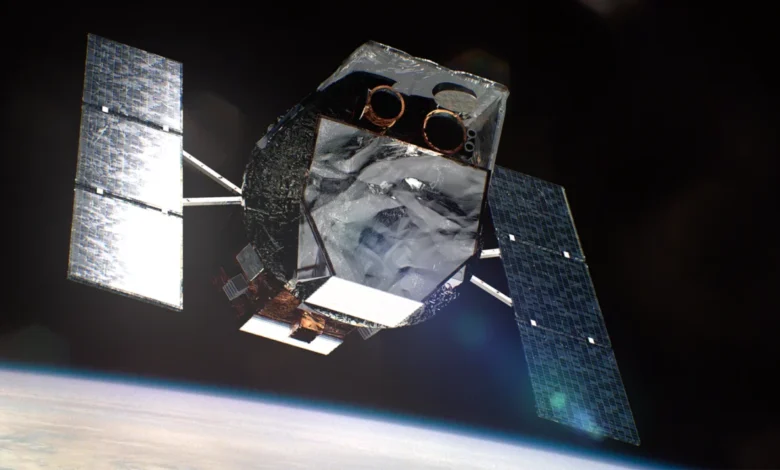
The Neil Gehrels Swift Observatory, a cornerstone of high-energy astrophysics for over two decades, has officially resumed science operations. Following a precarious period of reduced functionality while awaiting a high-stakes salvage mission, NASA mission controllers successfully reactivated the observatory’s Ultraviolet/Optical Telescope and X-ray Telescope on August 26, 2026. This return to active data collection marks a significant, albeit likely final, chapter for the satellite, which has been instrumental in mapping the most violent phenomena in the universe since its launch in 2004. While the Ultraviolet/Optical and X-ray instruments are back online, the Burst Alert Telescope (BAT)—the instrument responsible for detecting the initial onset of gamma-ray bursts—remains in a standby state as engineers work to restore its full capabilities.
A Legacy of Gamma-Ray Discovery
Since its deployment into low Earth orbit in November 2004, the Swift Observatory has revolutionized the field of transient astronomy. Its primary objective was to solve the mystery of gamma-ray bursts (GRBs)—the most powerful explosions in the universe, occurring when massive stars collapse or neutron stars collide. Swift was uniquely designed to detect these fleeting, high-energy events and autonomously swivel its onboard telescopes to capture the "afterglow" in optical, ultraviolet, and X-ray wavelengths.
Over its 22-year mission, Swift has cataloged thousands of these events, providing unprecedented data on the formation of black holes and the death of massive stars. Its longevity is a testament to the engineering prowess of the Goddard Space Flight Center and its international partners. However, the very orbit that allowed for its high-cadence observations has become its primary liability. Unlike modern space observatories equipped with onboard propulsion systems, Swift lacks the ability to perform orbital maintenance maneuvers. It is subject to the unrelenting pull of atmospheric drag, a force that has intensified significantly due to recent solar cycles.
The Atmospheric Drag Crisis
The Earth’s upper atmosphere is not a static environment; it expands and contracts in response to solar activity. During periods of high solar output, the atmosphere swells, increasing the density of particles at higher altitudes. For a satellite like Swift, which orbits at a relatively low altitude, this increased atmospheric density acts like a braking mechanism.
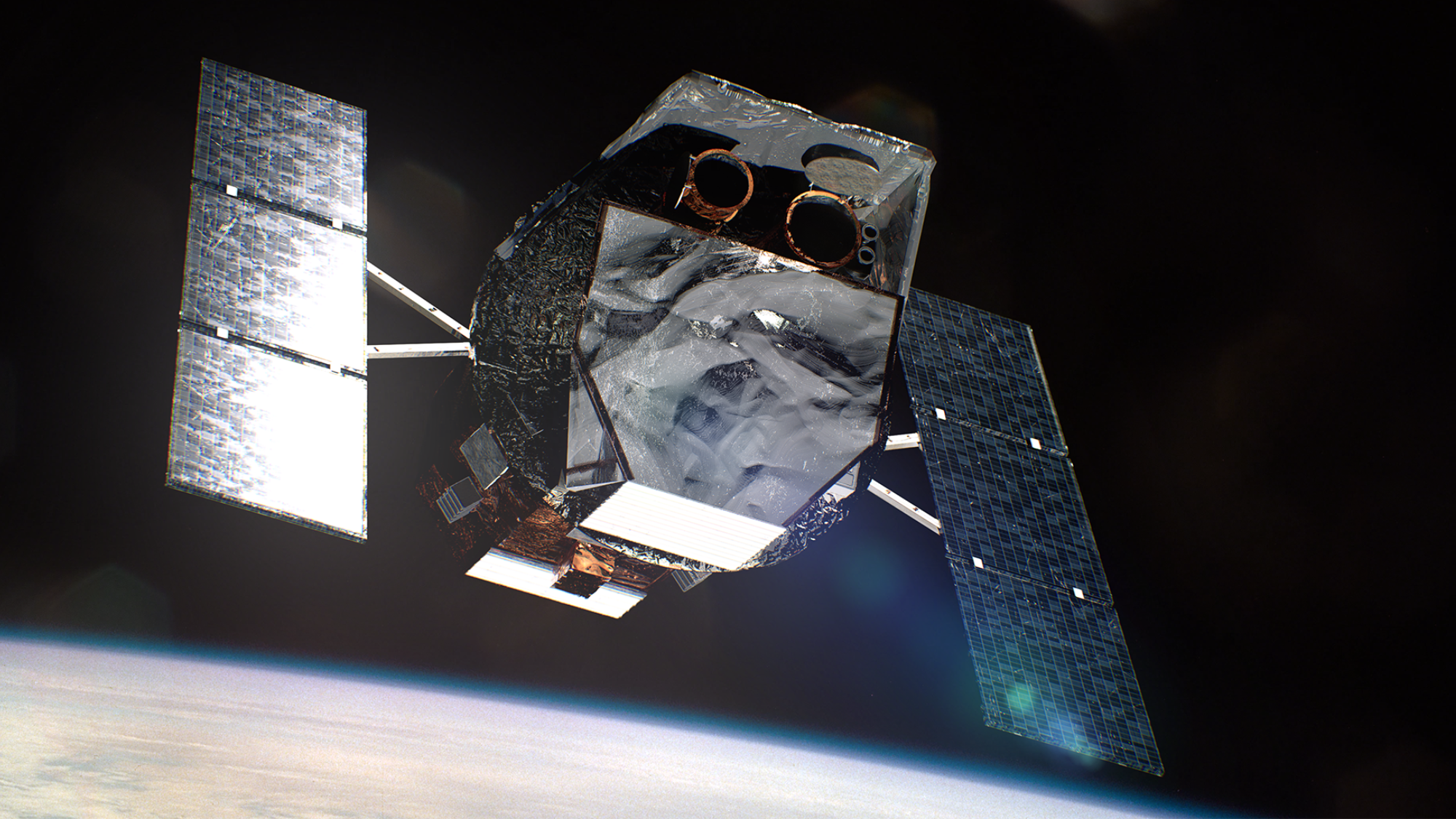
By early 2025, mission planners realized that the satellite’s orbital decay was accelerating far beyond initial models. As the density of the thermosphere increased, the drag force began stripping away the satellite’s velocity. NASA’s decision to enlist Katalyst Space—a commercial entity specializing in in-space servicing—was an ambitious attempt to extend the mission by physically docking with the observatory and boosting it into a higher, more stable orbit. This "life-extension" mission represented a new paradigm in orbital sustainability, aiming to prove that commercial craft could salvage taxpayer-funded assets rather than letting them fall to atmospheric incineration.
The Failed Rescue Mission
The rescue plan, centered on the Link spacecraft, faced a series of technical hurdles that ultimately culminated in an abort. The Link mission was designed to rendezvous with, capture, and re-boost the Swift observatory. However, the mission’s technical challenges began to manifest during its final approach.
On August 19, 2026, the mission reached a critical juncture when the Link spacecraft experienced an uncontrollable spin during its approach sequence. This anomaly rendered a safe docking attempt impossible. Without a reliable way to stabilize and move the aging observatory, NASA officially abandoned the salvage operation. Despite the failure of the docking attempt, the Link mission was not a total loss for the aerospace industry. In the following weeks, Katalyst Space conducted a series of telemetry and propulsion tests to gather data on in-space maneuvers, providing valuable insights for future satellite-servicing missions.
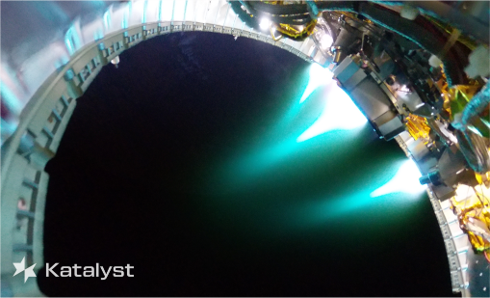
Katalyst CEO Ghonhee Lee noted the proximity of the attempt, stating that the spacecraft had approached within nine miles of the observatory. While the maneuver did not achieve the desired outcome, the photographic evidence captured by Link on August 30, showing its xenon-fueled thrusters firing against the backdrop of the observatory, serves as a poignant reminder of the technical difficulty of orbital rendezvous operations.
Chronology of the Swift Extension
The current operational status of the observatory is the result of a deliberate, phased recovery plan:
- February 2026: NASA initiates a "safe mode" for Swift, shutting down primary instruments to conserve power and reduce the impact of atmospheric drag while awaiting the rescue mission.
- August 19, 2026: NASA formally announces the abandonment of the Link salvage mission due to technical complications with the rescue spacecraft.
- August 26, 2026: Mission controllers successfully reactivate the Ultraviolet/Optical and X-ray telescopes.
- September 4, 2026: NASA confirms that Link is continuing to provide data on servicing capabilities, even as it moves away from the mission area.
- Current Status: The observatory is operating in a limited, "best-effort" capacity while monitoring the rate of orbital decay.
Implications for Future Astrophysics
The return of Swift to science operations provides a brief window for astronomers to complete critical observations. NASA estimates that the observatory will remain in a viable orbit for another 30 to 60 days, descending toward an altitude of approximately 185 miles (300 kilometers).
The implications of this final phase are two-fold. First, it offers a "bonus" period of data collection that the scientific community had effectively written off earlier this year. Second, it serves as a stark case study in the limitations of current satellite maintenance technology. The failure of the Link mission highlights the risks inherent in "active debris removal" and "orbital life extension." As the number of objects in low Earth orbit continues to grow, the industry is closely watching how NASA manages the final descent of such a high-value asset.
The Final Descent
When Swift reaches the 300-kilometer threshold, the physics of atmospheric drag will become unavoidable. At this altitude, the satellite will experience exponential increases in atmospheric resistance. The resulting descent will be rapid, and the spacecraft will no longer be able to maintain the precise pointing required for astronomical observations.
NASA has indicated that once the satellite crosses this threshold, it will be decommissioned and left to perform a controlled re-entry, where it will eventually burn up in the Earth’s atmosphere. The expected window for this re-entry is between October and December 2026.
While the end of the Swift mission is imminent, its contribution to science remains profound. Over its two decades in space, Swift transitioned from a mission focused solely on gamma-ray bursts to a versatile observatory capable of monitoring everything from tidal disruption events—where a black hole shreds a star—to the evolution of comets within our own solar system. As the observatory prepares for its final fiery descent, the global astronomical community continues to utilize the data flowing back to Earth, ensuring that Swift’s legacy persists long after its physical form has ceased to orbit the planet. The mission stands as a hallmark of 21st-century exploration, demonstrating the immense value of international cooperation and the bittersweet reality of operating in the harsh environment of space.
Related posts: