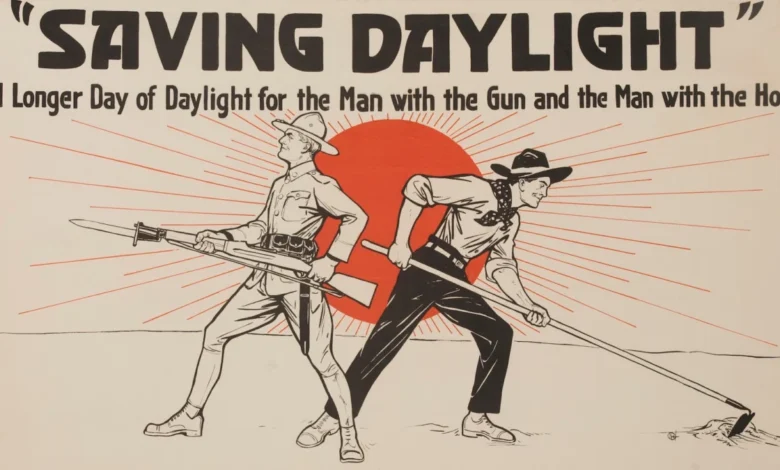
As the calendar turns toward November, millions of people across the United States prepare for the annual ritual of "falling back," a process that shifts the nation’s clocks by one hour and marks the end of Daylight Saving Time (DST). While this biannual adjustment is often met with widespread grumbling about lost sleep and disrupted routines, it remains a permanent fixture of the American experience. Despite its ubiquity, the history of Daylight Saving Time is clouded by persistent myths that misattribute its origins and obscure the complex political battles that have defined its existence. To understand why the practice persists, one must look past the folklore and examine the economic, agricultural, and legislative realities that have shaped the way we measure our days for over a century.
Debunking the Agricultural Myth
The most enduring misconception regarding the origin of Daylight Saving Time is the belief that it was established to benefit the American farmer. This narrative suggests that agricultural workers, reliant on the natural cycle of sunlight for their labor, lobbied for a system that would extend their evening hours. Historical evidence, however, suggests the exact opposite.
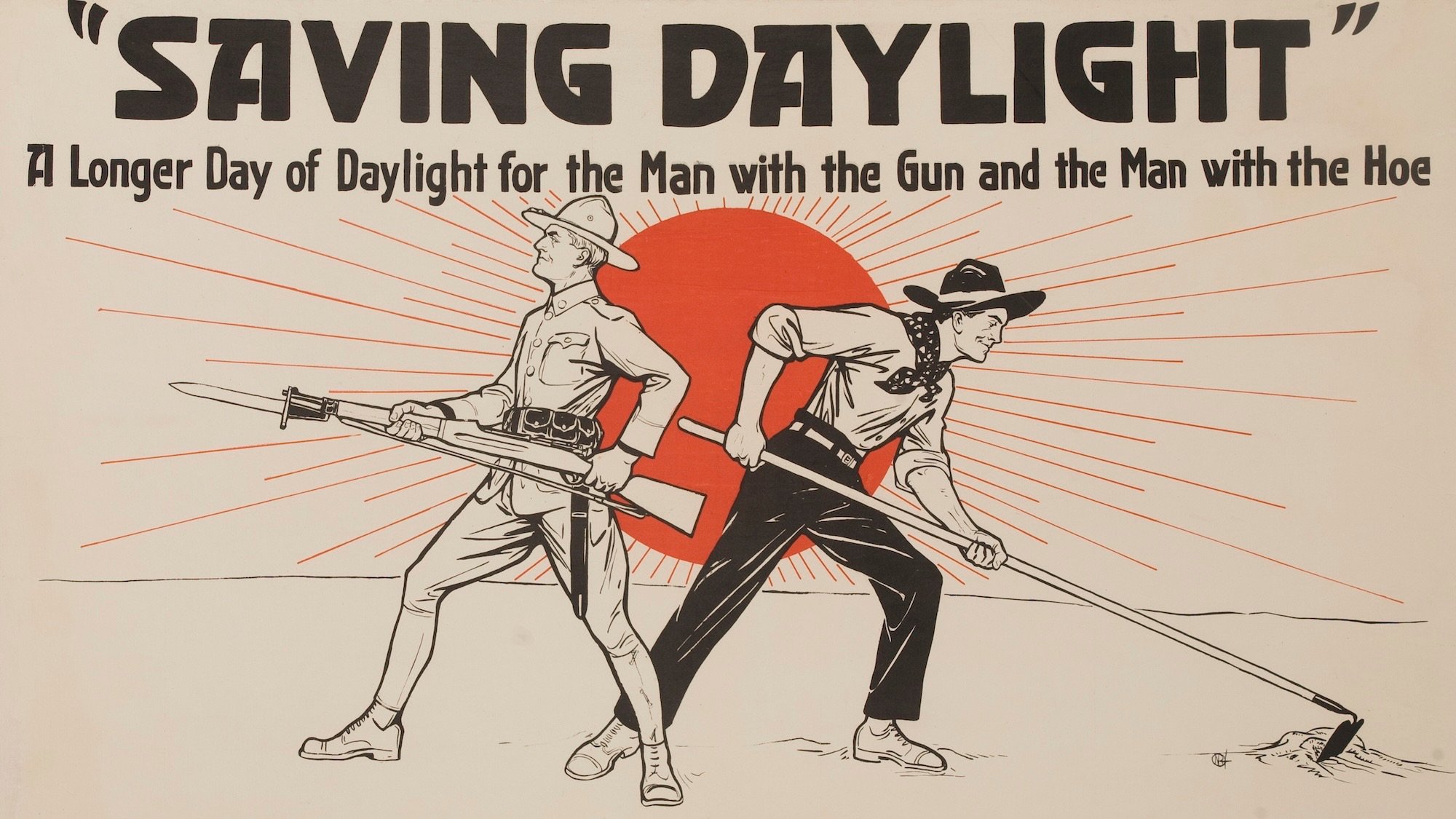
During the period leading up to the implementation of DST in the United States, the agricultural industry was its most vocal opponent. Farmers operated on a schedule dictated by the movement of the sun and the needs of their livestock—factors that the clock could not alter. In 1918, when the U.S. first adopted the practice as a wartime measure, the farming lobby argued that moving the clock forward created a logistical nightmare. It forced them to navigate a two-tiered system where their own start times remained tied to the sunrise, while the rest of the world—including their suppliers, transport networks, and markets—shifted to a new, artificial schedule.
Legislative records from the post-World War I era highlight this friction. When Congress moved to repeal the act in 1919, President Woodrow Wilson vetoed the measure, acknowledging the burden it placed on rural communities. In his veto message to the House of Representatives, Wilson conceded that the law imposed "very considerable and in some respects very serious inconveniences" on farmers. Despite his recognition of these grievances, the industrial and commercial benefits—primarily energy conservation and extended evening commerce—took precedence in the eyes of the federal government. This tension created a fractured landscape where cities adopted the shift to accommodate factory workers and commuters, while rural areas often ignored the change, leading to a patchwork of time zones that persisted for decades.
The Benjamin Franklin Fallacy
Another pervasive myth is the claim that Benjamin Franklin invented Daylight Saving Time. This story often cites an essay written by Franklin in 1784 titled "An Economical Project," in which he calculated the cost of candles in Paris and jokingly suggested that the city’s residents could save money by waking up with the sun.
While Franklin’s wit was ahead of his time, his proposal was clearly satirical. He suggested firing cannons at sunrise to wake citizens, taxing shutters, and rationing wax. The Franklin Institute, the premier museum dedicated to his legacy, has explicitly clarified that Franklin was not proposing a standardized time-shifting mechanism. Daylight Saving Time as a formal, government-sanctioned policy did not emerge until the late 19th century, well over a century after Franklin’s death.
The true intellectual lineage of DST belongs to George Hudson, a New Zealand entomologist. In 1895, Hudson presented a paper to the Wellington Philosophical Society proposing a two-hour shift in the clocks. His motivation was personal: as an insect collector, he wanted more daylight in the evenings to pursue his hobby after his shift at the post office. While his idea was initially met with academic skepticism, it eventually gained traction as the world entered an era of industrialization where standardized time became increasingly critical to economic synchronization.
A Chronology of Time-Shifting
The evolution of timekeeping in the United States has been marked by inconsistency and legislative experimentation:
- 1918: The U.S. government implements the Standard Time Act, officially establishing DST to conserve fuel during World War I.
- 1919: Congress votes to repeal the act, but is met with a presidential veto. The repeal eventually succeeds, and the country abandons the practice, leaving it to individual states and municipalities to decide whether to continue.
- 1942–1945: During World War II, the federal government mandates "War Time," a permanent, year-round daylight saving period, to maximize industrial output.
- 1966: The Uniform Time Act is passed, establishing a standard system for states that choose to observe DST.
- 1974: In response to the energy crisis, the U.S. implements a year-round DST trial. The policy is quickly reversed due to public backlash regarding the safety of children traveling to school in the dark.
- 2007: The Energy Policy Act of 2005 takes effect, extending the duration of DST to its current structure, beginning in early March and ending in early November.
The 1970s Energy Crisis and Public Backlash
The most significant modern lesson in the risks of modifying time policy occurred in the 1970s. Faced with the OPEC oil embargo and rising energy costs, the Nixon administration implemented permanent Daylight Saving Time in January 1974. The goal was to reduce electricity consumption during the evening peak.

Initial public approval was high, with polling data from December 1973 showing nearly 79 percent of Americans in favor of the change. However, as the realities of dark winter mornings set in, the sentiment shifted dramatically. By February 1974, approval had plummeted to 42 percent. The primary driver of this shift was a public concern for child safety. Parents were deeply troubled by the prospect of children waiting for buses and walking to school in the pre-dawn darkness. The federal government’s attempt to legislate daylight into existence proved that public convenience and safety concerns often outweigh macro-economic arguments for energy efficiency.
Broader Implications and Current Debates
The ongoing conversation regarding the "Sunshine Protection Act" and the potential for permanent DST highlights a continuing divide between public desire and scientific consensus. Proponents argue that ending the biannual switch would improve mental health, reduce the frequency of traffic accidents associated with the transition, and boost the retail and tourism sectors.
However, the scientific community often points to the health risks associated with a permanent shift. Experts in circadian rhythms frequently argue that "Standard Time" is more closely aligned with human biological clocks. They contend that permanent DST would result in later sunrises, leading to chronic sleep deprivation for students and commuters during the winter months.
From an economic perspective, the debate remains unresolved. While retail groups often push for extended evening light to drive consumer spending, the actual energy savings observed in modern studies are negligible compared to the 1970s. As technology has evolved, the primary drivers of energy consumption have shifted from lighting to heating and cooling, which are less impacted by the hour of the day.
The persistence of the Daylight Saving Time debate serves as a reminder of how deeply ingrained social constructs are in our daily lives. Whether the United States eventually moves to permanent Standard Time or permanent Daylight Saving Time, the history of the practice serves as a warning that any change to the clock is not merely a technical adjustment, but a profound shift in the way society interacts with the natural world. As we prepare to turn our clocks back once more, the debate over whether this practice is an outdated relic or a necessary component of modern efficiency remains as relevant as ever.