Critical NGINX HTTP/2 Vulnerability CVE-2026-123007 Allows Remote Code Execution and Potential Root Access

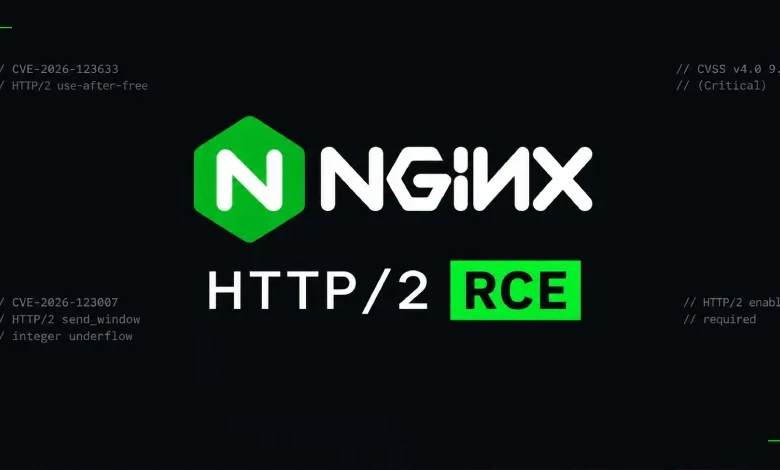
A significant security vulnerability affecting the widely used NGINX web server has been identified, potentially exposing millions of internet-facing servers to remote code execution (RCE). The flaw, tracked as CVE-2026-123007 and colloquially dubbed "nginx2root," resides in the handling of HTTP/2 protocol frames. By exploiting this weakness, unauthenticated attackers can execute arbitrary code on affected systems, effectively compromising the integrity of web applications and the underlying infrastructure. This development has triggered an urgent industry-wide response, as NGINX powers a substantial portion of the global web, including high-traffic sites, content delivery networks, and microservices architectures.
The Anatomy of the Flaw
The vulnerability is rooted in a legacy code path that has persisted in NGINX’s open-source implementation since version 1.9.5, which was released on September 22, 2015. For over a decade, this flaw remained undetected, allowing for the possibility of unauthorized manipulation of worker processes. When an attacker sends a specially crafted sequence of HTTP/2 requests to a vulnerable server, it can trigger an integer underflow condition. If successfully exploited—and assuming that Address Space Layout Randomization (ASLR) can be bypassed or is absent—the attacker can achieve code execution.
Security researchers from Wiz and Xint have successfully demonstrated that this is not merely a theoretical risk. In controlled laboratory environments, these teams bypassed ASLR protections and achieved remote code execution simply by targeting a reachable HTTP/2 port. The implications are profound; because NGINX operates as a reverse proxy and load balancer in many enterprise environments, the compromise of a worker process can provide an attacker with a foothold to intercept traffic, exfiltrate sensitive data, or pivot to internal network resources.
Chronology and Escalation
The discovery of CVE-2026-123007 is part of a larger, coordinated security disclosure involving five distinct vulnerabilities in the NGINX software suite. On October 14, 2026, initial security releases were made available, followed by comprehensive patches on the date of this report.
The timeline of the vulnerability’s lifecycle is as follows:

- September 22, 2015: The vulnerable code path is introduced in NGINX version 1.9.5.
- October 14, 2026: Initial security patches (versions 1.31.7 and 1.30.6) are released for related flaws, signaling a period of heightened scrutiny.
- Late October 2026: Researchers at Wiz, Xint, and Rapid7 finalize their findings, revealing that the HTTP/2 implementation is critically flawed.
- Current Date: F5, the parent company of NGINX, releases versions 1.31.9 and 1.30.7, providing the definitive fix for the "nginx2root" vulnerability along with four other critical bugs.
While there have been no confirmed reports of active exploitation in the wild as of today, the public availability of a proof-of-concept (PoC) on GitHub creates an urgent window of risk. Security teams are currently racing to patch their environments before threat actors can weaponize the exploit code for broader, automated campaigns.
Escalation to Root: The Container Context
One of the most alarming aspects of this vulnerability is the potential for privilege escalation. According to analysis provided by the Computer Incident Response Center Luxembourg (CIRCL), the code execution achieved via CVE-2026-123007 initially occurs within the security context of the NGINX worker process. However, the threat does not end there.
Researchers discovered that if an NGINX server is running inside a Docker container, an attacker can leverage an additional, separate vulnerability within the Linux kernel’s Stream Control Transmission Protocol (SCTP) implementation to break out of the containerized environment. By chaining the NGINX exploit with the kernel-level flaw, an attacker can potentially achieve root access on the underlying host machine. This "container escape" capability significantly increases the risk profile for cloud-native organizations that rely heavily on containerization for their deployment pipelines.
The Broader Vulnerability Landscape
The NGINX update addresses five distinct flaws, all of which carry a CVSS 4.0 score of 9.2, indicating a critical severity level. While CVE-2026-123007 is the most prominent, administrators must account for the other four, as each requires specific, yet common, configurations:
- CVE-2026-123633: Affects systems where HTTP/2 is enabled and requests are passed to a backend server while the NGINX worker is experiencing connection limits.
- CVE-2026-123634: Targets the resolver mechanism when proxying server names using variables, specifically when combined with Server-Side Includes (SSI) or mirroring.
- CVE-2026-121810: Pertains to environments where HTTP/3 is explicitly enabled.
- CVE-2026-113425: Impacts configurations where NGINX is utilized specifically as a mail proxy.
The specificity of these requirements—such as the need for HTTP/2 or HTTP/3 to be active—means that the attack surface is not uniform across all NGINX deployments. However, given that HTTP/2 is the industry standard for modern web traffic, the vast majority of production servers are likely within the scope of this threat.
Mitigation and Remediation Strategies
The primary recommendation from F5 and independent security experts is an immediate upgrade to the patched versions: 1.31.9 or 1.30.7. For those utilizing NGINX Plus, the relevant versions are 37.3.0.1 and 37.0.8.1.

A critical nuance in the remediation process is the method of deployment. Simply performing a "reload" of the NGINX service is insufficient, as this action maintains existing connections and keeps the older, vulnerable executable in memory. Administrators must perform a full restart or utilize the NGINX live binary upgrade process to ensure the new, secure code is fully initialized and all old worker processes are terminated.
For organizations unable to immediately patch, temporary workarounds have been proposed:
- Disable HTTP/2: By modifying the
listendirective to remove thehttp2parameter, organizations can effectively close the vector for CVE-2026-123007 and CVE-2026-123633. - Kernel Hardening: To mitigate the risk of container escape via the SCTP protocol, administrators should consider blacklisting the SCTP kernel module by adding
install sctp /bin/falseto the system’s modprobe configuration. - Configuration Restrictions: For the resolver-related flaw, avoiding the use of variables in proxy configurations and disabling SSI can prevent exploitation.
Detecting Potential Intrusions
Detecting an attempt to exploit CVE-2026-123007 is notoriously difficult, as the attack takes place at the protocol layer and may not trigger standard HTTP access logs. Security teams should monitor for the following indicators:
- Anomalous Process Behavior: NGINX worker processes that spawn unexpected child processes or terminate abruptly.
- Core Dumps: Frequent crashes resulting in core dumps may indicate failed exploitation attempts or unstable interaction with the vulnerable code.
- Network Anomalies: Long-lived HTTP/2 connections characterized by high volumes of incoming traffic but an absence of corresponding application-layer requests.
- Outbound Activity: Unexpected DNS lookups or outbound network connections originating from the web server, which could signal a payload callback.
Implications for Infrastructure Security
The discovery of a decade-old vulnerability in such a foundational piece of internet infrastructure highlights the ongoing challenges of "technical debt" in open-source software. NGINX has been the bedrock of web performance for years, and its ubiquity means that even minor flaws can have global consequences.
The fact that this vulnerability was successfully chained with a Linux kernel bug to achieve container escape serves as a sobering reminder for DevOps and security operations teams: isolation layers like Docker are not silver bullets. A robust security posture must rely on a "defense-in-depth" strategy, combining rapid patching, strict egress filtering, and proactive threat hunting.
As the industry moves forward, the focus will undoubtedly shift toward auditing legacy protocol implementations. The complexity of HTTP/2 and HTTP/3—which are designed for speed and efficiency—has proven to be a double-edged sword, introducing significant state-machine complexity that is difficult to secure. For now, the priority remains clear: identify, patch, and monitor. Organizations that fail to act swiftly risk not only the compromise of their own infrastructure but also the exposure of their users’ data, given the central role NGINX plays in the modern digital ecosystem.