Samsung Early Black Friday Deals 2026: A Comprehensive Guide to Significant Hardware Price Reductions

The retail landscape for 2026 is witnessing a significant shift as major consumer electronics manufacturers, led by Samsung, launch aggressive early-access promotions well ahead of the traditional Black Friday calendar. Historically, Black Friday was localized to the Friday following Thanksgiving in the United States, but the current market environment has compressed the holiday shopping season into a multi-week event. This strategic pivot aims to mitigate supply chain bottlenecks, distribute shipping loads, and secure consumer loyalty in an increasingly competitive fiscal fourth quarter. Samsung’s current catalog of early-access discounts covers a broad spectrum of its ecosystem, ranging from entry-level audio peripherals to high-performance computing hardware and premium display technologies.

The Evolution of the Black Friday Timeline
The transition from a single-day retail event to an extended seasonal window is a direct response to changing consumer purchasing habits. Data from the National Retail Federation suggests that a growing segment of shoppers begins researching and executing holiday purchases as early as October. By initiating these promotions in mid-November, Samsung is effectively countering the "wait-and-see" approach that often characterizes late-year shopping. This strategy allows consumers to bypass the logistical congestion that typically occurs during the final week of November, while simultaneously allowing the manufacturer to clear inventory for next-generation product cycles expected in the early months of 2027.
Audio Peripherals: Elevating the Entry-Level Segment
One of the most notable entries in this promotional cycle is the Samsung B-Series Soundbar HW-B400F (2025 model), which is currently positioned at a 50% discount. Priced at $69.99, down from a $139.99 list price, this unit represents a strategic effort to capture the budget-conscious segment of the home entertainment market.

Industry analysis indicates that the demand for auxiliary audio solutions has surged as television manufacturers prioritize thin display profiles over acoustic resonance. The HW-B400F addresses this by providing a 2.0-channel system with a 40W maximum output, utilizing Dolby Audio support and proprietary features like Voice Enhance. By integrating HDMI (ARC) and Bluetooth connectivity, Samsung ensures compatibility with a wide range of existing displays, making it a viable solution for secondary living spaces, bedrooms, or studio environments where space efficiency is a primary constraint.
Computing Hardware: Performance Across Tiers
Samsung’s laptop and tablet offerings in this year’s early sale demonstrate a clear segmentation strategy. For the everyday user, the Galaxy Book 6 (14-inch) serves as a baseline, featuring an Intel Core 5 processor and 8GB of RAM. Priced at $599.99—a 25% reduction from its $799.99 list price—it targets the growing remote-work and student demographic. Its design philosophy centers on portability, weighing approximately 2.98 pounds, and emphasizes battery longevity, which the company claims can reach up to 12 hours of continuous use in standard workflows.

At the other end of the spectrum is the Galaxy Book 6 Ultra X7, a 16-inch workstation priced at $2,149.99. This model is engineered for professionals requiring higher computational overhead, featuring 32GB of RAM and a 1TB SSD. While it lacks the discrete RTX-class graphics that power-users might demand for high-end gaming or 3D rendering, its Intel Core Ultra X7 processor and Dynamic AMOLED 2X touchscreen provide a robust platform for digital content creation. This tiering highlights Samsung’s attempt to consolidate its market share in the Windows laptop space by offering distinct choices for both casual and power users.
Tablet Versatility: From Media Consumption to Productivity
The tablet market has seen renewed interest, and Samsung’s current promotions target two distinct user archetypes. The Galaxy Tab A11+ ($199.99) is marketed toward media consumption and family use, leveraging an 11-inch 90Hz display and quad-speaker configuration tuned with Dolby Atmos. A significant factor in the long-term value of this device is Samsung’s software commitment, which promises seven years of updates—a move that aligns with recent industry trends toward greater device longevity.

Conversely, the Galaxy Tab S10 FE ($349.99) targets productivity. By including the S Pen in the box, Samsung eliminates a common barrier to entry for students and creative professionals. The inclusion of an IP68 rating for water and dust resistance, combined with an 8,000 mAh battery, positions this tablet as a durable, field-ready device. The 36% discount on this model is particularly aggressive, aimed at capturing users who require stylus-based input but find the flagship S-series tablets cost-prohibitive.
Display Technologies: QLED vs. OLED Market Positioning
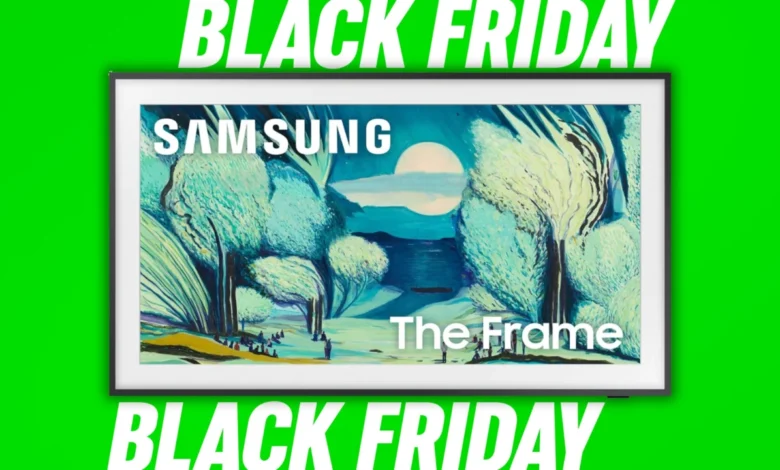
Perhaps the most significant portion of Samsung’s early Black Friday strategy involves its television segment, where it is balancing its legacy QLED prowess with its newer OLED offerings. The 55-inch The Frame (2025 model) is priced at $697.99, a 36% reduction from its standard price. This product remains a unique offering in the market, designed to function as home decor via "Art Mode" when not in use. While technical purists may note that its matte screen finish results in a lower contrast ratio compared to standard glossy panels, its integration of 144Hz VRR support ensures that it remains competitive for casual gaming.

In contrast, the Samsung 55-inch S85H OLED 4K TV, discounted to $997.99, is marketed for its visual fidelity. Utilizing the NQ4 AI Gen2 processor, this unit emphasizes color accuracy—Pantone Validated—and deep contrast ratios. The inclusion of G-SYNC and FreeSync Premium support signals that Samsung is actively targeting the gaming demographic that demands low-latency, high-refresh-rate performance. This dichotomy in the display lineup reflects a broader market trend where consumers are increasingly choosing between "lifestyle-integrated" displays and "performance-optimized" displays.
Economic and Industry Implications
The ripple effects of these early discounts extend beyond consumer savings. By front-loading these sales, retailers and manufacturers can gain early insights into consumer sentiment for the 2026 holiday season. If these initial, aggressive price points fail to generate the anticipated volume, it may signal a broader cooling in consumer discretionary spending. Conversely, a strong uptake in these early weeks could indicate that despite macroeconomic fluctuations, the demand for high-end consumer electronics remains resilient when presented with significant value propositions.

Furthermore, these deals underscore the integration of Artificial Intelligence in hardware. Almost every product listed—from the OLED TVs with AI upscaling to the tablets with long-term software support—utilizes software-based enhancement to justify its price point. As the industry moves toward 2027, the emphasis on AI-driven features is likely to become the primary differentiator between hardware tiers, rather than simple increases in clock speed or screen resolution.
Summary of Promotional Offerings
The following table summarizes the current price structure for the highlighted Samsung devices:

| Product | Original Price | Sale Price | Discount |
|---|---|---|---|
| B-Series Soundbar HW-B400F | $139.99 | $69.99 | 50% |
| Galaxy Tab A11+ | $299.99 | $199.99 | 33% |
| Galaxy Tab S10 FE | $549.99 | $349.99 | 36% |
| Galaxy Book 6 (14-inch) | $799.99 | $599.99 | 25% |
| The Frame 55-inch TV | $1,097.99 | $697.99 | 36% |
| Samsung OLED 55-inch TV | $1,297.99 | $997.99 | 23% |
| Galaxy Book 6 Ultra X7 | $2,899.99 | $2,149.99 | 26% |
As the calendar approaches the traditional Black Friday date, industry observers expect other manufacturers to match or attempt to undercut these prices. However, Samsung’s broad horizontal integration—controlling the supply of displays, memory, and processors—gives it a distinct advantage in maintaining margins even while offering these significant price reductions. Consumers looking to capitalize on these deals should consider that while the prices are compelling, the long-term value lies in the software support and build quality inherent in the current 2025/2026 product cycles. Whether for the casual user or the professional, the current market climate presents a rare window of high-value entry into the Samsung ecosystem.