Major Optimizely Vulnerability Compromises 178 Elite Websites With Advanced Multi-Purpose Malware and Zero-Click Mobile Exploits

In an alarming display of the vulnerabilities inherent in modern web infrastructure, a security breach involving the digital optimization platform Optimizely recently allowed malicious actors to silently compromise at least 178 premier websites worldwide. Over a critical 24-hour window, visitors to trusted global destinations—including major news outlets, financial institutions, and communication tech giants—were unwittingly targeted with sophisticated data-stealing malware and mobile exploit kits. The incident underscores a systemic weakness in how organizations manage third-party software dependencies, highlighting the pervasive danger of unmonitored scripts running on high-traffic domains.
The Anatomy of the Supply Chain Compromise
The breach centered on Optimizely, an industry-standard platform widely utilized by enterprises to customize user experiences, manage content, and conduct A/B testing on their web properties. According to detailed findings published by security firm Report URI, malicious JavaScript code was surreptitiously injected into customer projects via the Optimizely platform on November 16.
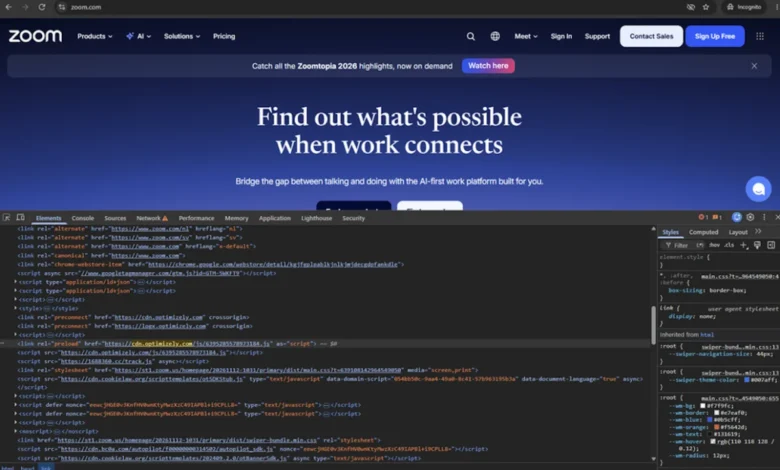
Unlike traditional breaches that require direct hacking of a target’s internal servers, this supply chain attack leveraged a vulnerability in a trusted third-party vendor. Because Optimizely snippets are intentionally placed near the absolute top of a webpage’s HTML structure to render instantly—often before any user consent dialog or tracking banner can load—the malicious payload executed the exact microsecond a user landed on an affected page. No user interaction, click, or explicit permission was required to trigger the infection.
Throughout the 24-hour campaign, the threat actors continuously adapted their infrastructure. Report URI researcher Scott Helme documented that the malicious JavaScript payload was rebuilt 26 distinct times over the course of a single day. This dynamic payload dropped a multi-purpose malware kit designed to siphon sensitive user data, including active browser cookies, payment card information, and high-resolution screenshots. Furthermore, the malware featured malicious capabilities designed to intercept cryptocurrency transactions, actively swapping out valid wallet addresses for those controlled by the attackers.
Targeting Mobile Users with Zero-Click Exploits
Compounding the severity of the incident, the compromised websites also served specialized exploit code meticulously engineered to target known vulnerabilities in legacy Apple iOS devices, specifically older iPhones and iPads.
Security analysts identified these elements as zero-click exploit kits, known within the cybersecurity community by monikers such as DarkSword and Coruna. These sophisticated frameworks chain together a series of distinct browser and operating system vulnerabilities. Once loaded by an unsuspecting visitor using an outdated mobile device, the exploit could execute silently in the background, seizing complete administrative control of the hardware and harvesting stored personal and professional data without the user ever interacting with a prompt or link.
The Broader Ecosystem Vulnerability: Content Security Policies
The Optimizely incident has reignited intense debate within the cybersecurity community regarding the widespread absence of robust Content Security Policies (CSPs) across major corporate web properties. CSPs are an essential defensive mechanism designed to restrict and control the specific domains from which a browser is permitted to load third-party scripts, stylesheets, and other resources.
However, despite the clear risks, industry data indicates that CSP deployment remains alarmingly low. According to metrics gathered by crawler.ninja—a platform that continuously scans the top one million websites daily—only about 10 percent of the web’s busiest sites maintain effective CSP frameworks.
The fallout from the Optimizely attack vividly illustrates this widespread vulnerability. An analysis conducted by Report URI of

the 178 affected organizations revealed a startling security posture:
- 68 of the impacted websites maintained absolutely no Content Security Policy whatsoever, leaving their users entirely defenseless against arbitrary script injection.
- 50 websites utilized a CSP, but their configurations were overly permissive, inadvertently allowing both the malware payload to load and the subsequent data exfiltration to occur.
- Only 24 of the affected sites—a mere 15 percent of the total—had implemented CSP rules robustly enough to completely block the malicious payload from executing.
Zach Edwards, a researcher at Infoblox and co-founder of the ad-tracking firm DecryptAds, noted that commercial pressures frequently override security best practices when it comes to third-party integrations. Marketing departments demand immediate data collection and seamless user tracking, leading organizations to embed third-party JavaScript without the necessary technical guardrails.
"With literally all websites which embed third-party JavaScript resources, if you don’t have a content security policy, then if any of those partners get compromised, new domains can be injected into your website via JavaScript which won’t be stopped," Edwards explained. "We’re in the age of JavaScript supply chain attacks, and yet almost no one is talking about why content security policies were invented and how this is largely the solution for operators."
Chronology and Official Corporate Response
The unfolding of the security incident followed a rapid timeline characterized by immediate vendor remediation and subsequent transparency reporting:
- November 16: Optimizely identifies a critical security incident wherein an unauthorized party exploits a vulnerability within the Optimizely Experimentation platform, successfully injecting malicious JavaScript into select customer projects.
- November 16 (Same Day): Security researchers at Report URI detect anomalous network traffic and begin cataloging the malicious JavaScript payloads being served by high-profile domains, including the BBC, CNN, Equifax, Ledger, and Zoom.
- November 17: Optimizely deploys emergency containment measures, officially closing the vulnerable path, releasing a definitive software fix, and systematically purging injected code from all impacted customer projects. The company additionally terminates active user sessions, revokes compromised access tokens, and resets administrative credentials for affected accounts. Concurrently, enhanced filtering rules are deployed via Cloudflare to intercept malicious code delivery.
- November 18: Optimizely publishes a formal, comprehensive Incident Report (PDF) detailing the initial findings of their forensic investigation and outlining remediation steps for enterprise clients.
In an official written statement regarding the breach, Optimizely management emphasized the speed of their internal reaction. "We acted swiftly to contain the incident and have fully remediated the identified vulnerability," the company stated. While confirming that the immediate threat has been neutralized, Optimizely noted that they continue to collaborate with specialized third-party forensic experts to conduct a comprehensive post-incident investigation.
Implications for Enterprise Security and End Users
Security experts point out that the Optimizely incident serves as a definitive wake-up call regarding the fragile nature of modern web supply chains. Scott Helme of Report URI noted that the event highlights a fundamental paradigm shift in web architecture: trusted code can no longer be assumed to remain trustworthy, and an organization’s digital perimeter can be breached without any compromise of its own foundational infrastructure or source code.
"Organizations are running all this code, but they don’t know what it’s doing," Helme remarked. "This is why we keep seeing such large-scale breaches in places where there are no checks and rules in place on the code we’re running, so this was kind of inevitable. Once an attacker gets to the point of running code on your site, the question is what do they want to do with that and can they write the script to do it. Now with AI, that’s not a problem anymore."
Despite the massive scale of the campaign—spanning nearly 180 premier web destinations—preliminary impact assessments suggest that the direct financial yield for the threat actors was relatively modest. Report URI estimates indicate that the perpetrators managed to successfully siphon approximately $7,500 in cryptocurrency from victims, alongside an undisclosed volume of compromised payment card records and browser session cookies. However, security analysts emphasize that the low monetary yield was more a reflection of the rapid response time by security researchers and the vendor than a limitation in the malware’s capabilities.
For ordinary internet users, defending against sophisticated supply chain attacks of this magnitude presents a persistent challenge. While traditional security advice historically focused on keeping local operating systems patched and installing robust antivirus software, the modern threat landscape requires a different approach. Script-blocking extensions such as NoScript offer granular control over executing JavaScript, but their complexity and tendency to break standard website functionality limit their adoption primarily to advanced technical users.
Instead, cybersecurity professionals increasingly view modern ad-blocking and content-filtering software as the frontline firewall for everyday web browsing. By automatically intercepting unauthorized third-party script requests before they can render in the browser, these tools significantly reduce the attack surface for drive-by malware deployments and zero-click browser exploitation.
As enterprises move forward in the wake of the Optimizely breach, industry observers anticipate a renewed emphasis on mandatory Content Security Policy enforcement, stricter vendor risk management, and a fundamental re-evaluation of how deeply third-party analytics and optimization tools are embedded into the critical rendering paths of the world’s most visited websites.