Anthropic prepares for historic Nasdaq debut as the AI sector faces its most significant liquidity event to date

The landscape of Silicon Valley is poised for a transformative moment as Anthropic, the San Francisco-based artificial intelligence powerhouse, prepares to commence trading on the Nasdaq exchange tomorrow. This initial public offering represents a watershed moment for the technology sector, capping a meteoric rise that has seen the company evolve from a research-focused startup to a global juggernaut in less than six years. With a reported revenue of $17 billion in the third quarter alone, the company’s financial trajectory is unprecedented, defying traditional growth models and setting a new benchmark for venture-backed enterprises in the modern era.
The Chronology of an AI Titan
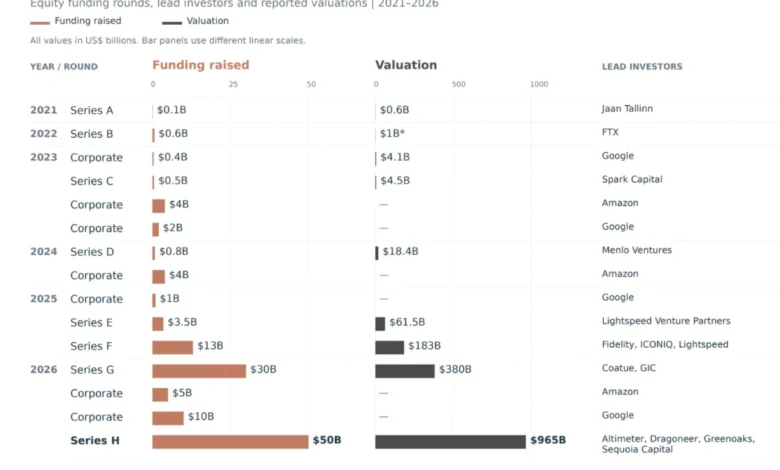
Anthropic’s journey from inception to the public markets has been characterized by an aggressive, high-stakes strategy. Founded in 2021 by former OpenAI executives, the company quickly secured significant backing, beginning with a Series A funding round led by Jaan Tallinn. Over the subsequent years, the firm solidified its position through a series of high-profile capital injections. By May of this year, the company had reached a valuation of $965 billion during its Series H round, drawing support from a coalition of heavyweights including Google, Amazon, Spark Capital, Menlo Ventures, Lightspeed Venture Partners, Coatue, and Sequoia Capital.
The velocity of this ascent is historically unique. While industry peers like OpenAI captured the public imagination with the 2022 release of ChatGPT—reaching 100 million monthly active users in record time—Anthropic utilized a different tactical pivot. The release of Claude Code last year served as a catalyst for enterprise integration. Current filings indicate that 11,900 companies are now utilizing the product, with each spending upwards of $100,000 over the trailing 12-month period. This represents a 12-fold increase in high-value enterprise adoption year-over-year, a rate of growth that the company characterizes as the fastest in recorded enterprise software history.
Financial Metrics and the Cost of Innovation
The impending IPO is projected to value the company at approximately $1.4 trillion, with plans to raise $88.5 billion through the public offering and concurrent private placements. These figures, while staggering, must be contextualized against the massive capital requirements inherent in large language model development. The company’s S-1 filing reveals nearly $900 billion in committed compute purchase and lease agreements, underscoring the extreme barrier to entry in the generative AI market.
This capital expenditure reflects the "arms race" dynamic currently defining the sector. To maintain competitive parity, AI firms must secure enormous quantities of high-end GPUs and cloud infrastructure. Anthropic’s reliance on these commitments highlights the inherent tension between its rapid revenue growth and the compounding operational costs required to sustain its technological lead. Investors and analysts alike are now turning their attention to whether the company can convert its current demand into a durable, self-sustaining business model that survives the transition from venture-funded growth to public market accountability.
Strategic Vision: Beyond the Chatbot
Anthropic’s roadmap for 2027 and beyond signals an expansion into specialized AI agents designed for knowledge work and scientific discovery. The company has explicitly identified biology and rare-disease research as key sectors for potential disruption. This is not merely an exercise in corporate social responsibility; it is a calculated effort to diversify revenue streams away from general-purpose consumer chatbots and toward high-value, high-impact enterprise and scientific applications.

The focus on global utility is framed within the company’s public-benefit corporate structure. As a Public Benefit Corporation (PBC), Anthropic is legally obligated to weigh its commercial pursuits against the potential for public good. This governance model involves a Long-Term Benefit Trust, which possesses no financial stake in the company but is tasked with evaluating the broader societal impacts of Anthropic’s technology, including implications for national security, global health, and economic stability. The company’s recent launch of "Mythos" is frequently cited as a case study in this balancing act, demonstrating how technical capability can be deployed alongside rigorous safety and ethical guardrails.
Navigating Systemic Risks
The S-1 filing provides a candid, if sobering, overview of the risks associated with the firm’s business model. Beyond the standard market and execution risks, Anthropic identifies several existential challenges. These include the potential for cyber and biological attacks facilitated by AI, the threat of unpredictable model behavior, the risks posed by authoritarian surveillance, and the potential for widespread economic disruption as AI displaces traditional labor.
Furthermore, there is a distinct competitive risk regarding data privacy and intellectual property. Many of the enterprise clients currently adopting Anthropic’s technology are doing so with a degree of hesitation. There is a persistent fear among industry partners that the data provided to train or fine-tune models could inadvertently assist the AI provider in developing features or products that eventually compete directly with the client’s own core business. Mitigating these concerns is essential for Anthropic’s long-term retention of its enterprise customer base.
Broader Market Implications
The entrance of Anthropic into the public market serves as a bellwether for the entire artificial intelligence industry. If the IPO meets its projected valuation, it will likely trigger a wave of renewed interest—and perhaps increased regulatory scrutiny—across the AI landscape. For the broader market, Anthropic’s performance will be a primary indicator of whether the current AI "gold rush" is built on a foundation of sustainable demand or if the industry is approaching a correction phase.
Silicon Valley observers have noted that this event marks the end of an era defined by the rise of social media and traditional SaaS, and the beginning of a capital-intensive, infrastructure-heavy era of AI. The scale of the capital being deployed by Anthropic is unprecedented, and its public debut will serve as the first real-time test of whether public equity markets can stomach the risks of a company that is simultaneously a software firm, a heavy-infrastructure operator, and a research institution.
The Path Forward
As Anthropic begins its tenure as a public entity, stakeholders will be scrutinizing three primary metrics: the ability to scale compute efficiency, the retention of enterprise clients in a competitive market, and the effective management of its governance trust against the demands of institutional shareholders. The company has successfully navigated the private markets with agility and speed, but the public market demands a different cadence—one of consistent quarterly execution, transparency, and long-term stability.
The company’s ability to reconcile its lofty mission statement with the cold, hard realities of the balance sheet will be the defining narrative of its first year on the Nasdaq. Whether Anthropic can prove that it is a generational company capable of building a sustainable, profitable future in the shadow of its own massive compute costs remains the central, unresolved question of the 2026 tech cycle. For now, the company stands at the precipice of a new reality, representing both the extraordinary promise and the significant, untested risks of the artificial intelligence era. As the opening bell rings, the global technology community will be watching to see if the company’s performance matches its ambition, or if the sheer weight of its infrastructure requirements necessitates a shift in strategy.