Mauritius Joins Artemis Accords as 70th Signatory Marking Global Expansion of Lunar Exploration Cooperation

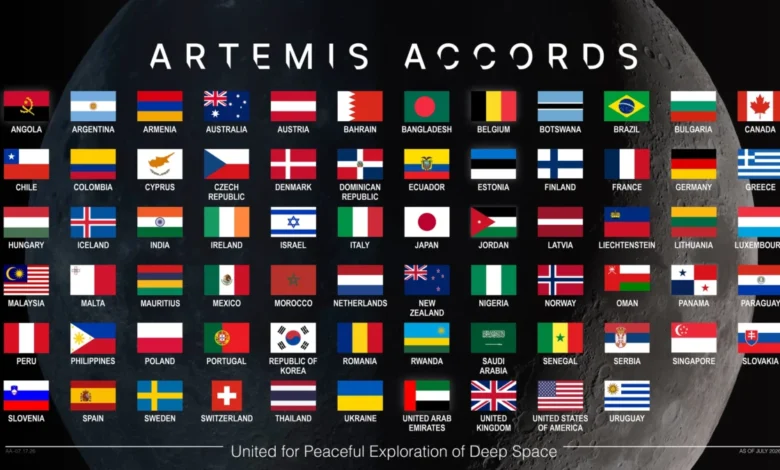
The island nation of Mauritius officially entered the international arena of lunar exploration on July 17, 2026, by signing the Artemis Accords, becoming the 70th nation to commit to the United States-led framework for responsible and sustainable space exploration. The signing ceremony, held in the Mauritian city of Ébène, was led by Navindsing Jugmohunsing of the Ministry of Tertiary Education, Science and Research. The event was attended by high-ranking officials from the U.S. State Department, while NASA Deputy Administrator Matt Anderson provided keynote remarks via a video link from Washington, D.C.
This accession represents a significant milestone for both the Republic of Mauritius and the Artemis program. As a small island developing state (SIDS) located in the Indian Ocean, Mauritius’s participation highlights the growing inclusivity of the global space community. The signing occurred just twenty-four hours after Serbia became the 69th signatory during a ceremony at NASA Headquarters, underscoring an accelerating trend of international diplomatic alignment regarding the future of the lunar frontier.
A Strategic Vision for Small Island Nations in Space
For Mauritius, the decision to join the Artemis Accords is rooted in the practical application of space technology to address terrestrial challenges. During the signing ceremony, Navindsing Jugmohunsing emphasized that the nation’s entry into the accords is a "defining chapter" in its burgeoning space journey. He noted that for a nation surrounded by the vast waters of the Indian Ocean, space-based assets are critical for protecting coastlines, monitoring climate change, and managing maritime resources.
The Mauritian government views space exploration not merely as a scientific endeavor but as a platform for economic innovation and environmental stewardship. By joining the accords, Mauritius seeks to ensure that the voices of smaller nations are represented in the development of space governance. The commitment to the Accords is expected to unlock new opportunities for Mauritian scientists and engineers to collaborate with international partners on satellite data analysis, Earth observation, and the development of sustainable maritime technologies.
NASA Deputy Administrator Matt Anderson echoed these sentiments, stating that the foundation of future exploration rests on "capable partners and a shared commitment to responsible exploration." The inclusion of Mauritius brings a unique geographic and environmental perspective to the coalition, reinforcing the idea that space should remain peaceful and beneficial for all of humanity, regardless of a nation’s size or historical involvement in the space race.
The Rapid Expansion of the Artemis Framework
The Artemis Accords were established in October 2020 by NASA and the U.S. State Department. The initiative began with just eight founding signatories: the United States, Australia, Canada, Italy, Japan, Luxembourg, the United Arab Emirates, and the United Kingdom. In the six years since its inception, the coalition has grown nearly ninefold, reaching 70 members by July 2026.

This rapid growth reflects a global consensus on the need for a standardized set of "rules of the road" for the moon and beyond. The year 2026 has been particularly active for the program, with Mauritius being the 11th country to sign since the start of the calendar year. This momentum is viewed by analysts as a diplomatic success for the United States, as it seeks to establish a multilateral framework that builds upon the 1967 Outer Space Treaty.
Mike Gold, the president of Redwire Space and a former NASA associate administrator who was instrumental in drafting the accords, noted that the growth from eight to 70 nations is a testament to the universal hope represented by space exploration. Gold remarked that the Accords are now "inseparable" from the Artemis program itself, serving as the diplomatic infrastructure that supports the physical infrastructure being built for the lunar surface.
Core Principles of the Artemis Accords
The Artemis Accords are designed to provide a practical implementation of the obligations contained within the Outer Space Treaty. By signing, nations agree to a set of principles that guide their activities in deep space. These include:
- Peaceful Exploration: All activities must be conducted for peaceful purposes in accordance with international law.
- Transparency: Signatories are required to publicly share their national space policies and scientific plans.
- Interoperability: Nations are encouraged to use common technical standards to ensure that different spacecraft and habitats can work together, increasing safety and efficiency.
- Emergency Assistance: A commitment to provide aid to personnel in distress in outer space, reinforcing the "Astronaut Agreement."
- Registration of Space Objects: Proper registration of spacecraft to help manage traffic and prevent collisions.
- Release of Scientific Data: A commitment to share scientific data openly with the global community.
- Preserving Space Heritage: Protecting historically significant sites, such as the Apollo landing sites.
- Space Resources: Ensuring that the extraction and utilization of resources on the moon, Mars, and asteroids are done in a way that supports safe and sustainable activities.
- Deconfliction of Activities: Implementing "safety zones" to prevent harmful interference between different nations’ operations.
- Orbital Debris: Planning for the mitigation of space debris and the safe disposal of spacecraft.
These principles are particularly relevant as NASA prepares for the Artemis III mission, which aims to return humans to the lunar surface for the first time in over five decades. The establishment of "safety zones" and the utilization of lunar ice for life support and fuel are critical components of NASA’s long-term goal of establishing a permanent base near the lunar South Pole.
Geopolitical Context and the International Lunar Research Station
The expansion of the Artemis Accords takes place against a backdrop of increasing competition in space exploration. While the U.S. leads the Artemis program, China and Russia have partnered to develop the International Lunar Research Station (ILRS), a rival project aimed at establishing a lunar base by the mid-2030s.
The intersection of these two programs has created a complex diplomatic landscape. Notably, three signatories of the Artemis Accords—Senegal, Serbia, and Thailand—have also signed agreements to cooperate with the Chinese-led ILRS. Serbia’s decision to sign the Artemis Accords just one day prior to Mauritius is seen as a significant move, as it demonstrates that nations are willing to participate in both frameworks to maximize their scientific and economic opportunities.
Mike Gold characterized the participation of ILRS-aligned nations in the Artemis Accords as a "special victory" for peaceful space exploration. He argued that when nations commit to the values of the Accords, such as transparency and deconfliction, it reduces the risk of conflict on the lunar surface. The "launching of values" to the moon is considered as vital as the launching of the astronauts themselves, ensuring that the next era of discovery is defined by cooperation rather than confrontation.

Timeline of Recent Artemis Accords Signings (2025–2026)
The acceleration of signings in the past 18 months highlights the strategic importance of the accords:
- Early 2025: Several European and Latin American nations join, bringing the total to 55.
- Late 2025: A surge in African and Southeast Asian participation as NASA clarifies the role of non-launching nations in the Artemis supply chain.
- May 2026: Thailand signs the Accords, becoming a key bridge between the Artemis and ILRS frameworks.
- July 16, 2026: Serbia signs at NASA Headquarters in Washington, D.C.
- July 17, 2026: Mauritius signs in Ébène, becoming the 70th nation.
Implications for Future Space Governance
The entry of Mauritius into the Artemis Accords signals a shift toward a more decentralized and globalized space economy. For decades, space was the exclusive domain of a few superpowers. Today, the 70 signatories of the Accords represent a diverse array of economies, from the G7 industrial powers to emerging markets and island nations.
This broad coalition will likely influence the development of future international laws regarding space mining and property rights. While the Outer Space Treaty prohibits national appropriation of celestial bodies, the Artemis Accords provide a framework for the private and public extraction of resources. As more nations join, this framework gains legitimacy as the "de facto" international standard for lunar commerce.
Furthermore, the participation of Mauritius underscores the importance of the "Moon to Mars" strategy. By developing the necessary legal and technical norms on the moon, NASA and its 69 partners are laying the groundwork for the eventual human exploration of Mars. For small nations like Mauritius, being part of this journey ensures they are not left behind in the next great era of human expansion.
As the global community looks toward the end of the decade, the Artemis Accords have transformed from a niche diplomatic initiative into a cornerstone of international relations. The 70-nation milestone achieved with Mauritius’s signature reflects a world that is increasingly looking toward the stars to find common ground, ensuring that the final frontier remains a domain of shared progress and enduring peace.
Related posts: