Businesses using autonomous AI agents are still subject to existing competition, consumer, and data protection law, according to four UK watchdogs.

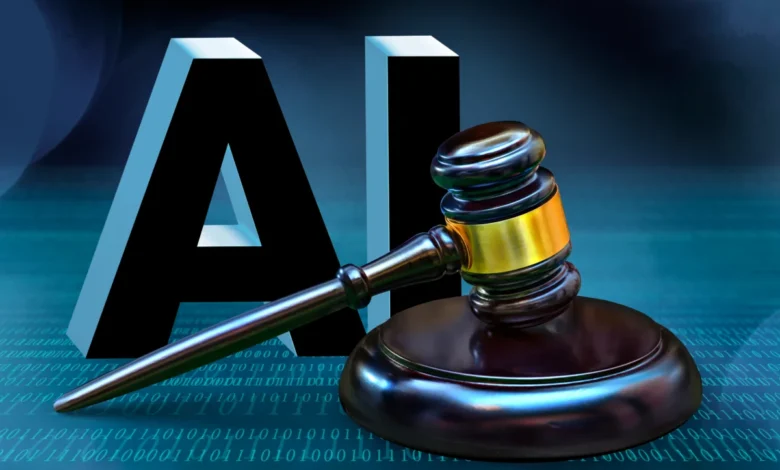
The landscape of enterprise technology is currently undergoing a fundamental transformation, shifting away from passive software tools toward proactive, autonomous systems capable of executing complex workflows, making financial transactions, and negotiating contracts on behalf of individuals and organizations. However, this evolution has also introduced profound regulatory ambiguities. In a concerted intervention, a coalition of the United Kingdom’s premier digital regulators has issued a stern, unequivocal warning to commercial enterprises: deploying autonomous artificial intelligence agents does not absolve organizations of their legal liabilities. When an AI agent errs, miscommunicates, or breaches regulatory statutes, the ultimate accountability rests squarely on the shoulders of the human operators and corporate entities that deployed the technology.
This definitive stance was laid out in a joint statement published by the Digital Regulation Cooperation Forum (DRCF). The organization serves as a critical coordination nexus for four of the UK’s most influential regulatory bodies: the Competition and Markets Authority (CMA), the Financial Conduct Authority (FCA), the Information Commissioner’s Office (ICO), and the communications regulator, Ofcom. The regulators’ message cuts through the technological mystique often surrounding machine learning and generative AI, emphasizing that neither complexity nor autonomy serves as a legal shield against compliance failures.
The Promise and Perils of the Agentic Economy
The rise of the "agentic economy"—a term used to describe a marketplace driven by autonomous software entities—holds immense promise for economic productivity and consumer convenience. According to the DRCF, these advanced personal and enterprise agents have the potential to fundamentally revolutionize how everyday users interact with digital services. By seamlessly navigating markets, communicating directly with businesses, executing secure purchases, and orchestrating multi-step digital processes, autonomous agents could unlock unprecedented levels of efficiency and innovation across sectors.
Yet, this autonomy creates a complex web of legal and ethical challenges. Traditional legal frameworks were built on human intentionality, direct corporate action, and transparent digital interfaces. When a machine learning algorithm initiates a transaction, alters a pricing model, or processes sensitive personal data without direct, real-time human supervision, the boundaries of liability blur.
Recognizing these friction points, the DRCF has urged firms involved in developing or deploying personal agents to exercise rigorous oversight. Enterprises must carefully evaluate how consumers can reliably discern when an agent is acting on their behalf, how authority to execute actions is explicitly granted, and how personal data is ingested, processed, and stored throughout the agent’s lifecycle. Transparency and verifiable consent are not merely best practices; they are prerequisites for maintaining lawful operations within the shifting digital marketplace.
Cutting Through the Regulatory Noise
The DRCF did not mince words when addressing the legal status of these technologies. In their joint declaration, the watchdogs made it explicitly clear that existing legal and regulatory frameworks are fully applicable to personal AI agents. This expansive umbrella of compliance covers competition law, consumer protection statutes, strict data privacy mandates, online safety regulations, specialized financial services rules, rigorous payment security protocols, and overarching cybersecurity requirements.
"An AI agent’s autonomy does not diminish the responsibility of organisations that deploy it to comply with applicable law and relevant regulation," the statement emphasized. This principle dismantles the nascent "black box" defense—the notion that because a neural network’s internal decision-making process is opaque or probabilistic, the deploying organization cannot be held accountable for its erratic or unlawful outputs.
This regulatory certainty comes at a time of widespread corporate confusion. Across the global technology sector, legal departments are grappling with gray areas in AI governance. Research and advisory firms such as Gartner have repeatedly warned that corporations are increasingly facing contentious legal challenges stemming from "AI-induced" decisions. These disputes range from discriminatory automated hiring practices and flawed credit scoring algorithms to deceptive marketing claims generated by autonomous customer service agents. Legal scholars and corporate attorneys have similarly voiced alarm, noting that existing regulatory regimes struggle to keep pace with the exponential velocity of artificial intelligence development.
A Timeline of Regulatory Coordination in the UK
To fully understand the weight of the DRCF’s recent intervention, it is necessary to examine the chronological progression of regulatory oversight within the United Kingdom’s digital landscape.
The DRCF was formally established in July 2020, initially formed as a voluntary cooperation initiative between the CMA and the ICO. Its primary objective was to ensure a coherent, joined-up regulatory approach to the overlapping challenges posed by digital platforms, data privacy, and market competition. By 2021, the initiative expanded to officially include Ofcom and the FCA, transforming the forum into a multi-regulatory powerhouse designed to tackle complex technological convergence.
Over the subsequent years, the forum shifted its focus from foundational digital platforms—such as social media algorithms and major search engines—toward generative artificial intelligence and autonomous systems. As generative AI models transitioned rapidly from academic research laboratories to mainstream commercial deployment throughout 2023 and 2024, the DRCF identified agentic AI as the next major regulatory frontier.
The urgency of this mission was underscored just weeks prior to the joint statement, when the four regulatory bodies issued a comprehensive Call for Input regarding their upcoming 2027–2028 work plan. This consultative process was explicitly designed to preempt regulatory friction, eliminate redundant oversight, and bridge potential gaps between the distinct mandates of the CMA, FCA, ICO, and Ofcom. By synchronizing their regulatory horizons, the watchdogs sought to provide the business community with a predictable, unified framework while safeguarding consumers against the rapid, unpredictable scaling of autonomous enterprise technologies.
Broader Implications and Industry Impact
The implications of the DRCF’s joint statement extend far beyond the borders of the United Kingdom. Because the UK serves as a major global financial and technological hub, regulatory stances established by bodies like the CMA and the ICO frequently influence international compliance standards, echoing the global ripple effect once seen with the European Union’s General Data Protection Regulation (GDPR).
For enterprises utilizing or building AI agents, the message demands an immediate operational pivot. Compliance strategies can no longer be treated as an afterthought or outsourced entirely to third-party software vendors. Organizations must implement robust internal governance structures, often referred to as AI Management Systems (AIMS), to audit, monitor, and constrain the operational boundaries of their autonomous tools.
Furthermore, the enforcement stance articulated by the UK watchdogs signals a zero-tolerance approach toward corporate negligence disguised as technological complexity. If an enterprise agent engages in anti-competitive price-fixing, violates consumer rights through misleading interactions, or mishandles personal data in violation of privacy laws, regulatory penalties will be levied directly against the deploying enterprise.
As the agentic economy continues to mature, the dividing line between successful innovation and costly regulatory failure will depend heavily on corporate accountability. Businesses are encouraged to innovate rapidly, but they must do so with the clear understanding that the law recognizes no distinction between human-driven commercial acts and those executed by autonomous digital proxies.