SHARPening the view of unresolved globular clusters in ultra diffuse galaxies and the future of dark matter cosmology


As the global astronomical community prepares for the highly anticipated "first light" of the Extremely Large Telescope (ELT) in March 2029, researchers are increasingly focused on how this monumental piece of infrastructure will resolve some of the most persistent enigmas in modern astrophysics. Among the primary targets for the ELT’s immense 39.3-meter segmented mirror is the ongoing crisis regarding the Lambda Cold Dark Matter (Lambda-CDM) model—the current standard framework for understanding the evolution of the universe. A newly proposed instrument, NEXUS@SHARP, aims to utilize the ELT’s unprecedented sensitivity to investigate the nature of Ultra-Diffuse Galaxies (UDGs), which have long defied conventional cosmological predictions.
The Lambda-CDM Paradigm and the UDG Problem
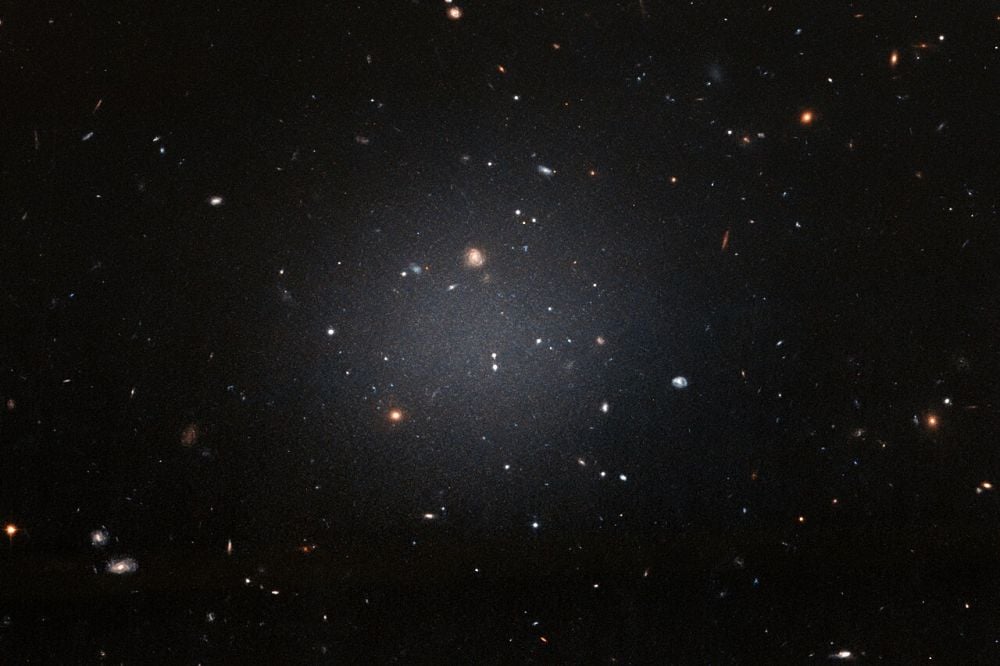
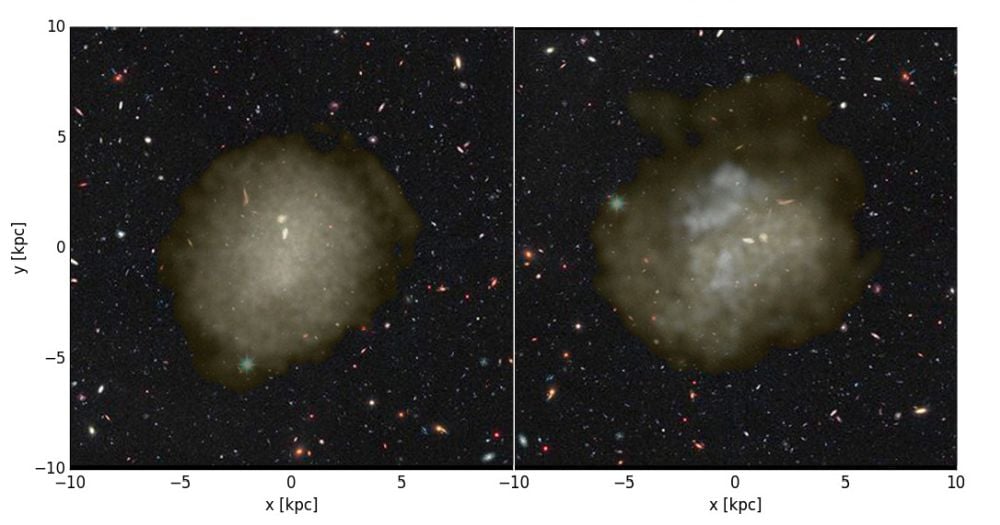
The Lambda-CDM model has served as the bedrock of cosmology since the late 20th century, effectively explaining the cosmic microwave background and the large-scale distribution of matter. However, the model faces significant challenges when observed at the scale of individual galaxies. One of the most glaring discrepancies involves Ultra-Diffuse Galaxies. These objects present a unique observational paradox: they possess the physical dimensions of a galaxy as large as our own Milky Way, yet they contain significantly fewer stars, sometimes by a factor of several thousand.
In the Lambda-CDM framework, the size of a galaxy is generally dictated by the mass of its dark matter halo—a vast, invisible structural shell that exerts gravitational influence on the visible baryonic matter within. Under current theories, a galaxy the size of a UDG should be teeming with stars. The fact that these galaxies are "puffy," dim, and sparsely populated suggests that our understanding of how dark matter halos correlate with visible matter remains incomplete.
NEXUS@SHARP: A Technological Leap in Spectroscopy
To address this, a team led by Marco Mirabile of the INAF-Astronomical Observatory of Abruzzo and the Gran Sasso Science Institute has proposed the development of NEXUS@SHARP. The acronym stands for Spectrograph for High Angular Resolution Physics (SHARP), coupled with a Multi-Object Spectrograph (NEXUS) designed to operate in the near-infrared spectrum.
The instrument is designed to overcome a fundamental limitation in current deep-space observation: the inability of existing telescopes to resolve the faint, distant globular clusters (GCs) surrounding UDGs. While telescopes like the James Webb Space Telescope (JWST) and the Keck Observatory have revolutionized our view of the early universe, the ELT’s sheer light-collecting area—roughly five times larger than the current largest optical telescopes—will allow NEXUS to perform high-resolution spectroscopy on these GCs with unprecedented efficiency.
The "multiplexing" capability of NEXUS is critical. By enabling the capture of data from dozens of globular clusters simultaneously, the instrument reduces the required observation time for a single UDG from weeks to mere hours. This efficiency is the key to creating a statistically significant survey of these elusive objects, turning a handful of case studies into a robust dataset capable of testing cosmological models.
Chronology of the Search for Dark Matter
The quest to identify the nature of dark matter has evolved through several distinct phases:
- 1970s–1980s: Vera Rubin and others provide definitive evidence for dark matter through galactic rotation curves, establishing the "missing mass" problem.
- 1990s–2000s: The Lambda-CDM model becomes the standard, successfully explaining the cosmic web but leaving the "Small Scale Crisis" (the discrepancy between predicted and observed small galaxies) open.
- 2015–2020: The discovery of UDGs like Dragonfly 44 highlights the limitations of existing models, as these galaxies appear to be "failed" versions of larger systems.
- 2026: Researchers publish the scientific potential of NEXUS@SHARP in the journal New Astronomy, formally proposing it as a diagnostic tool for the ELT.
- March 2029: Scheduled first light for the ELT, marking the start of a new era in ground-based observation.
Two Scenarios: Failed Galaxies vs. Puffed-Up Dwarfs
The scientific debate regarding UDGs centers on two primary formation theories. The first suggests that UDGs are "failed" massive galaxies. In this scenario, the galaxy began forming as a standard, massive system but was "quenched" early in its history, preventing the formation of a dense stellar disk. These galaxies would be older, metal-poor, and dominated by an unusually large number of globular clusters—a relic of their thwarted development.
The second theory posits that UDGs are simply "puffed-up" dwarf galaxies. In this view, intense feedback from supernovae or other galactic events has pushed stars outward, creating a diffuse appearance without changing the fundamental, low-mass nature of the galaxy.
NEXUS@SHARP will allow astronomers to distinguish between these scenarios by calculating two independent mass metrics. The first is the dynamical mass, derived from the radial velocity of the globular clusters—essentially measuring how much gravity is required to keep them in orbit. The second is the "GC-count" mass, based on the established observation that the number of globular clusters in a galaxy correlates linearly with the mass of its dark matter halo. If the dynamical mass and the GC-count mass align and indicate a high total mass, it confirms the "failed massive galaxy" theory. If they align at a low mass, the "puffed-up dwarf" model is validated.
Broader Scientific Implications
The potential for NEXUS@SHARP to provide empirical data on dark matter halos cannot be overstated. If the data from these globular clusters confirms that UDGs contain the mass predicted by Lambda-CDM but simply lack the stellar populations, it would solidify the current model while refining our understanding of galactic quenching.
Conversely, if the measurements reveal a fundamental mismatch—for instance, if the dynamical mass is significantly lower than the halo mass predicted by standard theory—it could signal a need for "New Physics." This could range from modifications to the laws of gravity (such as Modified Newtonian Dynamics) to a reevaluation of the properties of dark matter particles themselves, such as the debate over "Warm" versus "Cold" dark matter.
Official and Institutional Outlook
While the instrument is currently in the proposal phase, the scientific community views the ELT’s instrumentation suite as the most critical component of the observatory’s long-term success. Spokespeople for the European Southern Observatory (ESO) have noted that the ELT is designed specifically to accommodate "next-generation" instruments that can adapt to evolving scientific questions.
"The ability to observe out to 70 megaparsecs with the detail provided by the ELT’s primary mirror," notes the research team in their paper, "positions this instrument as a definitive tool for constraining the formation channels of the most elusive galaxy populations in the local universe."
As the March 2029 date approaches, the integration of NEXUS@SHARP into the ELT’s development pipeline will remain a focal point for researchers working at the intersection of galactic archaeology and fundamental cosmology. The instrument does not merely promise a better picture of the distant universe; it promises a better understanding of the invisible scaffolding that has allowed the universe to grow into the complex structure we observe today. Whether these findings reinforce the Lambda-CDM model or force a radical revision of modern physics, the data obtained will likely define the field of extragalactic study for the next generation of astronomers.