Microsoft announces the public preview of the Copilot harness in Foundry Agent Service to streamline complex AI agent development.

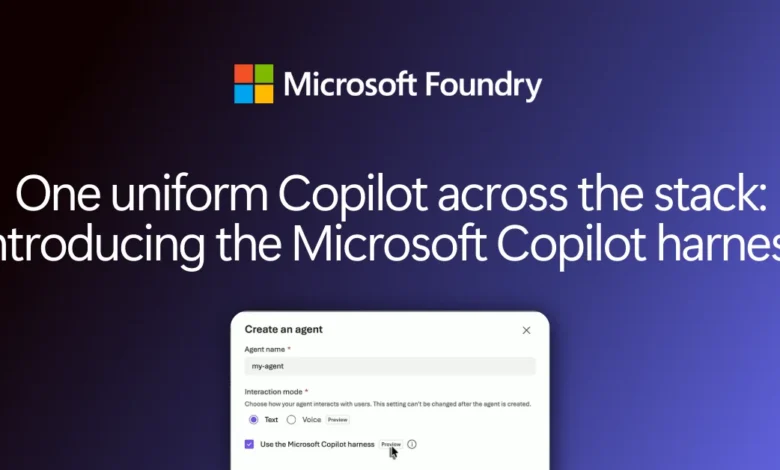
The rapid evolution of generative AI has transitioned from simple chat-based interactions to sophisticated autonomous agents capable of performing multi-step workflows. However, for many enterprise developers, the underlying infrastructure required to maintain context, execute tool calls, and ensure reliability remains a significant barrier to entry. To address this, Microsoft has introduced the Microsoft Copilot harness within the Foundry Agent Service, a new managed execution environment designed to simplify the assembly of complex agentic systems.
This development arrives as the industry grapples with the "plumbing" problem of AI: while Large Language Models (LLMs) provide the reasoning, the surrounding orchestration layer—the "harness"—is often bespoke, repetitive, and resource-intensive to build. By providing a unified, opinionated foundation, Microsoft aims to shift the developer focus from maintaining infrastructure to refining agent expertise and business outcomes.
The Evolution of Agentic Architectures
The shift toward agentic workflows marks a pivotal moment in software engineering. Early implementations of LLMs were largely stateless, requiring developers to manually manage session history and context windows. As tasks grew more complex—requiring web searches, data analysis, and multi-modal tool interaction—the complexity of the "agent loop" increased exponentially.
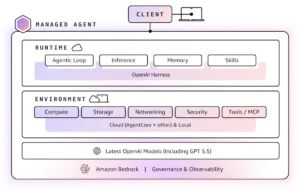
Microsoft’s strategy is rooted in the recognition that developers often spend a disproportionate amount of time building identical execution machinery: managing file systems, handling long-running task interrupts, and coordinating between various LLM calls and external tools. The Microsoft Copilot harness serves as a pre-built, managed execution system that abstracts these tasks. Under this model, Microsoft manages the agent loop and the sandbox environment, while the developer provides the domain-specific "skills," procedural knowledge, and data connections.
Key Components of the Foundry Agent Service
The public preview of the Copilot harness is not merely a single feature, but a structural update to the broader Microsoft Foundry ecosystem. By leveraging the Azure Developer CLI (azd), teams can now define agents declaratively. This approach allows for version control of agent logic, ensuring that the "instructions" (the agent’s personality and procedural guidelines) and "skills" (the functional tools at its disposal) are treated as first-class code.
The integration of the Copilot harness brings four fundamental building blocks to the developer’s toolkit:
- Managed Contextual State: Automatic management of working memory as tasks evolve, reducing the risk of "hallucinations" stemming from lost context.
- Orchestration Logic: Coordinated execution of model and tool steps, adhering to predefined policy boundaries and latency limits.
- Sandbox Security: A containerized environment that handles the execution of code, ensuring that tasks like data analysis or external API calls occur in a controlled, isolated space.
- Resilience Framework: Built-in mechanisms to handle long-running workflows, allowing agents to pause and resume without losing progress.
General Availability of Long-Running Resilience
While the Copilot harness is in public preview, Microsoft has simultaneously reached a significant milestone with the general availability (GA) of long-running resilience for hosted agents. This is a critical development for enterprise use cases, such as automated supply chain management or deep data analysis, which can take hours or even days to complete.
In a traditional setup, a network glitch or a timeout could cause an agent to lose its state, potentially leading to redundant actions or incomplete reports. The new resilience layer tracks checkpoints, allowing the system to detect interruptions and automatically restart from the last known good state. This requires a "resilient design" approach from developers: the application logic must be able to verify whether a task (such as writing a file or sending an email) has already been completed before re-attempting it. This ensures that the agent remains reliable and avoids the "double-spend" problem in automated workflows.
Industry Impact and Developer Perspectives
The implications for enterprise productivity are substantial. By reducing the "time-to-market" for sophisticated AI tools, organizations can deploy specialized agents that function with higher consistency.
Chris Evans, Chief Technology Officer at Confluence Technologies, noted that the implementation of the Copilot harness allowed his team to deploy a production-ready solution in less than a week. "That speed will help us bring our vision of AI that runs within and alongside our products to market faster," Evans stated, highlighting the reduction in overhead associated with infrastructure management.
Similarly, Fashable CEO Orlando Ribas Fernandes emphasized the importance of governance and human-in-the-loop controls. In their application—which involves complex sourcing and negotiation—the agent is responsible for discovery and calculation, but the "commercially binding decisions" remain strictly under human oversight. This alignment with corporate governance is a major selling point for sectors like finance, law, and high-stakes manufacturing.
Strategic Implications for the AI Ecosystem
This rollout represents a clear strategic move by Microsoft to solidify its position as the preferred platform for enterprise-grade AI. By offering a tiered approach—ranging from standard prompt agents to managed harnesses and custom-hosted environments—Microsoft provides a "path of least resistance" for developers at varying levels of complexity.
- Prompt Agents: Suitable for straightforward tasks where the LLM’s native reasoning is sufficient.
- Copilot Harness: Ideal for complex, multi-step tasks requiring managed execution and file handling.
- Hosted Agents: Designed for power users who require full control over their framework, middleware, and runtime behaviors.
From an economic perspective, the shift to a consumption-based pricing model, scheduled to commence in December 2026, reflects the industry’s broader move toward commoditizing compute power. By keeping the harness runtime free during the preview phase, Microsoft is incentivizing early adoption and experimentation, essentially lowering the barrier for developers to test the viability of their agentic architectures.
Analysis of Technical Challenges
Despite the benefits, the adoption of managed agent harnesses is not without challenges. The primary hurdle remains the "black box" nature of automated loops. As agents become more capable of executing long-running, multi-step tasks, the ability to trace, debug, and audit these decisions becomes paramount. While the Foundry Agent Service provides the execution foundation, the burden of ensuring the quality of the instructions and the safety of the skills remains with the developer.
Furthermore, the requirement that developers write idempotent code—code that can be run multiple times without changing the result beyond the initial application—is a new standard for many software engineers. Moving from static application development to stateful, autonomous agent development requires a paradigm shift in how error handling and state management are approached.
Looking Ahead
As of the latest update, existing agents within the Foundry ecosystem remain unchanged, and the ability to switch to the Copilot harness post-creation is not yet supported. This suggests that while the platform is rapidly evolving, there is a clear distinction between the legacy architecture and the new managed services.
The introduction of these tools is expected to accelerate the proliferation of "agentic AI" in the enterprise sector. By providing a standardized way to handle the complexities of long-running, tool-using agents, Microsoft is effectively moving the industry toward a more modular and predictable development cycle. As companies continue to integrate AI into their core operations, the ability to offload the maintenance of the agent loop to a managed service like Foundry will likely become a competitive necessity.
For developers looking to get started, the integration with existing tools such as Visual Studio Code and the Azure Developer CLI ensures that these agentic workflows are not siloed but are instead fully integrated into standard DevOps practices. As the public preview continues, the focus will likely shift toward expanding the library of pre-built skills and improving the transparency of the orchestration layer to ensure that these autonomous agents remain both effective and accountable.