Apple Launches Long-Awaited OLED MacBook Pro Featuring Touch Integration and Dynamic Island

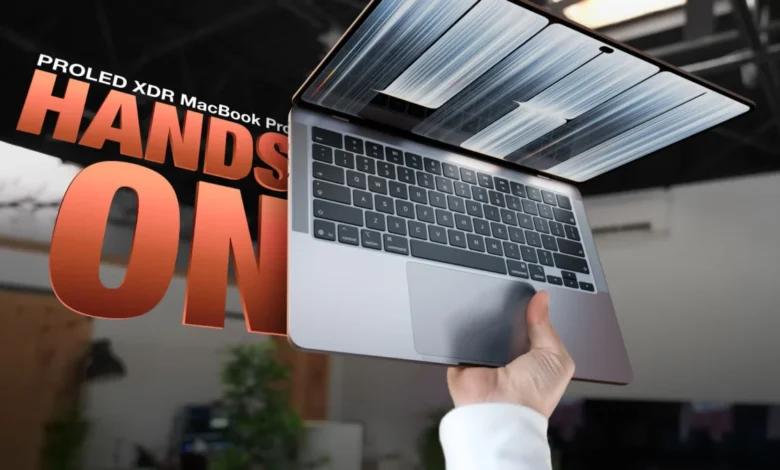
Apple has officially released its next-generation high-end notebook lineup, bringing long-anticipated display and structural updates to its flagship portable computer series. Hitting retail shelves and customer doorsteps on Friday, November 6, 2026, the newly introduced PROLED MacBook Pro models mark the first major redesign of the product architecture in five years. Available in 14-inch and 16-inch form factors, the updated machines introduce cutting-edge organic light-emitting diode (OLED) panel technology to the macOS ecosystem, alongside touchscreen capabilities and an iPhone-style Dynamic Island interface.
The launch follows a strategic October reveal event in Los Angeles, dispelling months of industry speculation that the hardware would adopt a rumored "MacBook Ultra" moniker. Starting at $2,899 for the 14-inch configuration and $3,399 for the 16-inch variant, the new notebooks are positioned at the premium tier of the consumer and professional laptop market, existing alongside the company’s traditional mini-LED offerings.
Chronology and Product Evolution
The path to the 2026 OLED MacBook Pro spans multiple years of rumored hardware shifts, supply chain reports, and iterative display developments across Apple’s broader product portfolio.
For half a decade, the architectural layout of the MacBook Pro remained largely static, relying on refined mini-LED backlighting technologies that delivered high peak luminance levels and commendable local dimming zones. However, industry analysts and consumers increasingly anticipated a transition to OLED panels, similar to the technology Apple gradually integrated into its iPhone lineup and select iPad models.
Speculation intensified during the weeks leading up to the official unveiling. On October 19, 2026, Apple distributed media invitations for an exclusive hardware showcase in Los Angeles scheduled for October 28, utilizing the "Pro and tell" tagline. This effectively laid to rest rumors surrounding a potential "MacBook Ultra" branding strategy—a naming convention that had previously shifted during the development cycle of other hardware lines, such as the iPhone.
On October 28, 2026, Apple officially pulled back the curtain on the new notebooks, detailing their technical specifications, pricing tiers, and design philosophies. Exactly nine days later, on November 6, the devices arrived in consumers’ hands, triggering immediate hands-on evaluations and technical teardowns from technology journalists and industry analysts worldwide.
Hardware Refinements: Thinner Profiles and Lighter Materials
Despite maintaining a visual lineage similar to their mini-LED predecessors, the newly redesigned MacBook Pro units are noticeably sleeker. Apple’s engineering team managed to shave physical dimensions across both screen sizes while reinforcing structural integrity.
The 14-inch model is approximately half a millimeter thinner and tips the scales at just over three pounds, achieving a weight reduction of roughly half a pound compared to previous generations. The larger 16-inch variant is nearly a millimeter thinner, weighing in at four pounds—a reduction of approximately 0.7 pounds. While fractional on paper, these reductions deliver an immediate tactile difference upon unboxing, enhancing overall portability for professionals on the move.
In a nod to nostalgic design elements, Apple has reinstated the illuminated rear Apple logo on the PROLED MacBook Pro. This stylistic choice acts as a distinct visual identifier, allowing observers to immediately recognize the presence of the high-end OLED hardware. Furthermore, the 16-inch model features slightly reduced display bezels, expanding the active viewing area from 16.2 inches to 16.3 inches.
Technical Deep Dive: The PROLED Display and Touch Integration
The definitive selling point of the new lineup is the proprietary PROLED XDR display. Because OLED technology enables individual pixels to self-illuminate and turn completely off, the machines achieve absolute black levels. This architectural difference eliminates the "blooming" artifacts commonly observed on mini-LED panels when bright elements appear against dark backdrops.
High dynamic range (HDR) performance benefits significantly from this contrast ratio, paired with elevated peak brightness levels designed to combat challenging ambient lighting conditions, including direct outdoor sunlight.
In a departure from longstanding macOS tradition, Apple has introduced touch-enabled screen functionality to the laptop form factor. Operating similarly to touch inputs on iPhones and iPads, users can navigate web pages, tap user interface elements, execute drag-and-drop actions, and utilize pinch-to-zoom gestures directly on the glass.
To accommodate touch navigation without disrupting traditional cursor-and-keyboard workflows, macOS has received targeted user interface adjustments. Menu items expand incrementally wider upon touch contact compared to standard mouse clicks, and diminutive window-resizing targets scale upward in size when approached by a finger.
Hardware stability under touch interaction has also been addressed. Apple integrated a reinforced hinge mechanism designed to minimize display oscillation when pressure is applied to the screen. While media reviews indicate that slight panel movement can still occur depending on the exact location of the touch point, the mechanical adjustments successfully mitigate excessive wobble.
Complementing the touch-enabled display is the incorporation of a Dynamic Island—replacing the physical camera notch found on previous generations. Housing the front-facing camera hardware, system sensors, and integrated AI capabilities via Siri and Live Activities, the Dynamic Island bridges the design vocabulary of Apple’s mobile operating systems with macOS.
Internal Specifications and Pricing Architecture
While the exterior design and display architecture represent a generational leap forward, the internal computing infrastructure remains tied to the previous hardware cycle. Due to component readiness timelines, the new machines feature the same M5 Pro and M5 Max system-on-chips found in the existing mini-LED models.
This architectural continuity has drawn mixed reactions from market analysts. With entry-level pricing set at $2,899 for the 14-inch configuration, consumers are effectively paying a $400 premium over equivalent mini-LED configurations. That financial delta buys the OLED panel, the reduced weight and thickness profile, the glowing rear logo, and touch capabilities, but does not yield generational improvements in raw processing performance.
Market Implications and Industry Outlook
The introduction of the OLED MacBook Pro establishes a new benchmark for premium laptop display technology, challenging competing PC manufacturers to accelerate their own adoption of high-end panel options in professional computing tiers.
For creative professionals, photographers, and video editors working within color-critical environments, the absolute black levels and enhanced HDR luminance of the PROLED display offer tangible workflow benefits. However, the inclusion of touch input remains a polarizing feature among desktop and laptop purists who rely heavily on trackpad and keyboard shortcuts. Industry observers note that while touch functionality serves as a convenient secondary input method, it is unlikely to fundamentally alter primary computing habits for the majority of professional users.
As Apple continues to run its mini-LED and OLED MacBook Pro lines concurrently, market demand over the coming quarters will determine whether the $400 OLED premium becomes the accepted standard for the company’s professional ecosystem or remains a niche choice for users prioritizing absolute display fidelity and physical portability.