Amazon Web Services Announces Public Preview of Managed Agents Powered by OpenAI Integration

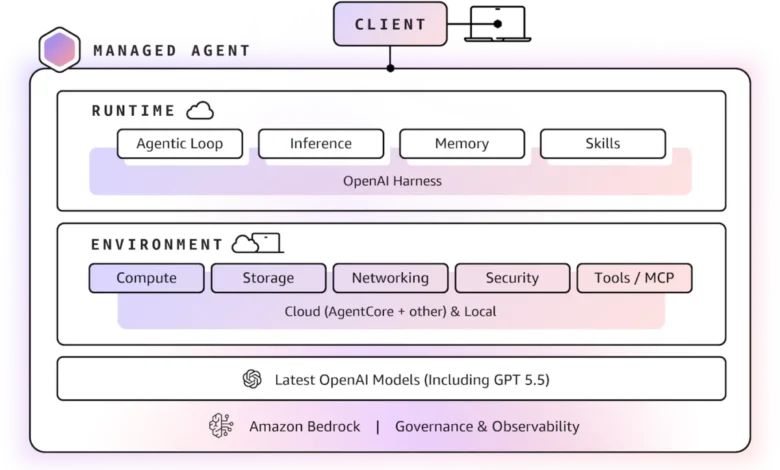
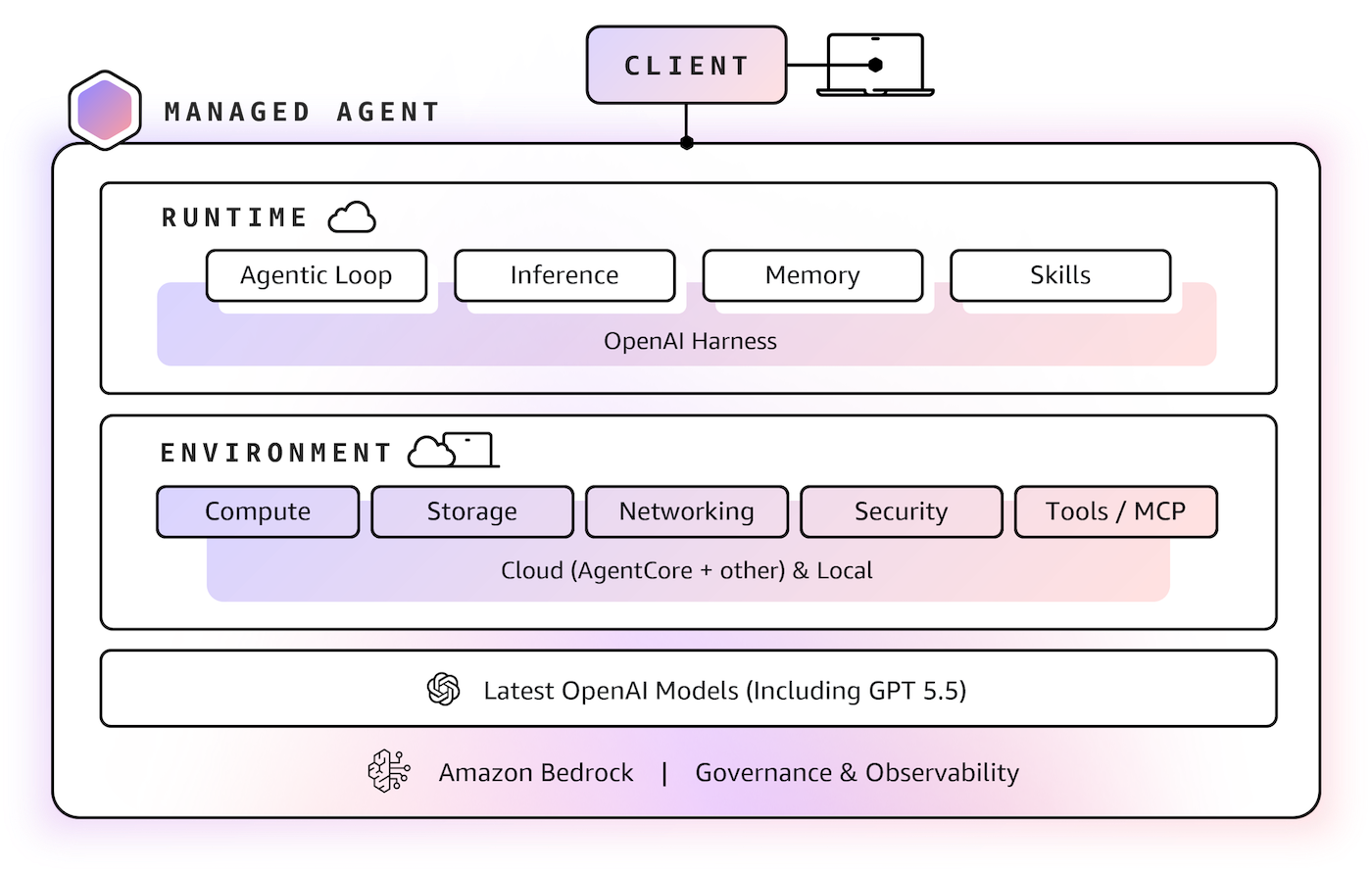
Amazon Web Services (AWS) has officially launched the public preview of Amazon Bedrock Managed Agents powered by OpenAI, marking a significant milestone in the convergence of major cloud infrastructure and advanced generative artificial intelligence frameworks. Built on a customized, AWS-native version of OpenAI’s widely utilized Agents API, this integration is engineered to embed advanced AI reasoning directly into secure cloud environments. The announcement provides developers and enterprise architects with the capability to construct sophisticated, autonomous agents optimized specifically for OpenAI models while maintaining rigorous compliance, granular identity management, and native AWS security governance protocols.
The strategic rollout addresses a growing market demand for enterprise-grade AI deployment options. Organizations striving to harness state-of-the-art foundational models have historically faced complex integration hurdles when bridging third-party artificial intelligence services with proprietary cloud ecosystems. By natively embedding the OpenAI Agents API architecture into the Amazon Bedrock framework, AWS aims to streamline these workflows, allowing teams to leverage existing AWS IAM (Identity and Access Management) policies, encryption standards, and monitoring tools.
Architecture and Flexible Execution Environments
To accommodate diverse development pipelines and operational requirements, AWS has engineered the Amazon Bedrock Managed Agents platform with two distinct execution environments. Developers can choose between a self-hosted compute configuration or the fully managed Amazon Bedrock AgentCore Runtime.
The self-hosted compute option is tailored for engineers who prefer to utilize existing development machines, custom container images, or established on-premises and cloud-based compute clusters. This flexibility allows development teams to retain absolute control over their local testing loops, debugging parameters, and specialized hardware allocations during the initial coding and experimentation phases.
Conversely, the Amazon Bedrock AgentCore Runtime is designed for production-grade deployments, offering managed runtime sessions alongside configurable storage options securely contained within the user’s AWS account. This managed alternative offloads the operational burden of scaling, infrastructure provisioning, and session state management to AWS, ensuring high availability and low-latency response times for enterprise applications. According to technical documentation released alongside the preview, the architecture securely orchestrates API calls, context windows, and multi-step reasoning tasks while isolating customer data to satisfy stringent regulatory and privacy mandates.
Expanding Generative AI Horizons on Amazon Bedrock
The introduction of the OpenAI-powered managed agents coincides with a broader expansion of frontier models accessible through the Amazon Bedrock ecosystem. AWS continues to champion a multi-model strategy, enabling enterprise customers to select the precise artificial intelligence model that best aligns with their specific use cases, performance benchmarks, and cost constraints.
Industry analysts note that this approach prevents vendor lock-in, empowering businesses to switch or combine models as foundational technology evolves. The addition of customized OpenAI agents within Bedrock broadens this portfolio, giving developers access to advanced natural language understanding, complex task decomposition, and multi-turn conversational capabilities backed by AWS enterprise reliability.

Lifecycle Management and Service Updates
Alongside the artificial intelligence announcements, AWS released its routine update regarding product lifecycle changes, reflecting the continuous evolution and optimization of its vast cloud portfolio. Effective September 29, 2026, the company outlined upcoming transitions for several services and features to help enterprise clients plan their cloud migration and infrastructure modernization strategies.
Under the updated product lifecycle guidelines, select legacy services are transitioning into a Maintenance phase, meaning they will no longer be accessible to new customers starting October 29, 2026. Following the maintenance window, these services will advance toward eventual sunset phases, while other older components have reached their official End of Support status as of the late September update.
AWS representatives emphasized that these lifecycle adjustments are standard procedure designed to clear the path for modern, higher-performing, and more secure cloud primitives. To minimize operational disruptions, AWS has provided migration documentation, alternative service recommendations, and technical support pathways for enterprise clients currently utilizing the affected tools. Organizations navigating these transitions are encouraged to review the official AWS Product Lifecycle Changes documentation or consult directly with AWS Support teams to establish tailored migration timelines.
Industry Implications and Enterprise Impact
The integration of OpenAI technology into the AWS-native framework signals a maturing cloud landscape where artificial intelligence interoperability supersedes proprietary isolation. Market observers suggest that enterprises will benefit substantially from combining the advanced reasoning capabilities of frontier models with the enterprise-ready compliance, scalability, and security of AWS.
As businesses increasingly deploy autonomous agents to handle complex workflows—ranging from automated customer service triage to advanced data analysis and software development assistance—the need for robust governance has never been more critical. By anchoring these agents within established cloud governance structures, AWS and OpenAI are addressing foundational enterprise concerns surrounding data privacy, auditability, and unauthorized access.
Community Engagement, Events, and Future Outlook
As the public preview period for Amazon Bedrock Managed Agents gets underway, AWS is directing developers, startup founders, and cloud architects toward a series of upcoming educational events and community initiatives. Engagement opportunities include virtual workshops, startup-focused networking sessions, and developer-centric gatherings leading up to the highly anticipated annual AWS re:Invent conference and regional AWS Community Days.
Furthermore, builders are encouraged to join the AWS Builder Center to collaborate on architectural solutions, share implementation best practices, and access continuous learning materials designed to support the rapid adoption of new cloud and artificial intelligence capabilities. As the technology sector digests these announcements, industry participants will be closely monitoring early enterprise deployments of the managed agents to gauge performance, cost-efficiency, and real-world utility. Additional updates, technical deep-dives, and architectural blueprints are expected to be released via the official AWS News Blog and the What’s New with AWS portal in the coming weeks.