Meta Announces Thirteen Billion Dollar Data Center Investment in Sturgeon County Alberta to Boost AI Infrastructure and Local Economy

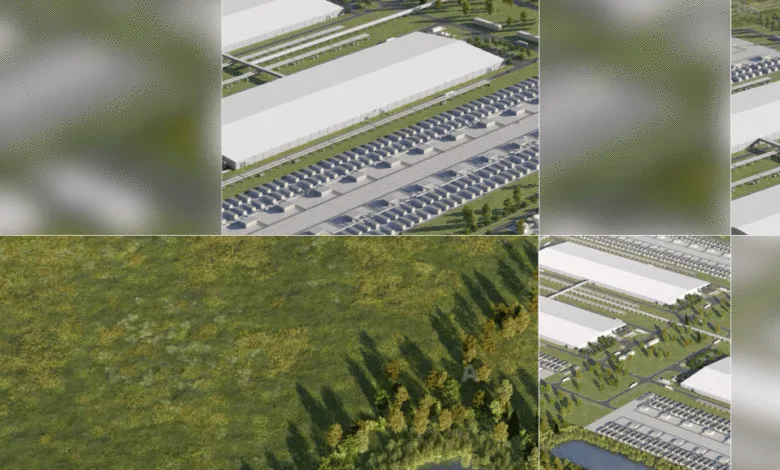
Meta Platforms Inc. has officially broken ground on a massive 1-gigawatt (GW) data center facility in Sturgeon County, Alberta, marking the company’s first physical infrastructure foray into Canada. The project, which represents a total capital investment of more than CAD $13 billion, is set to become the 33rd facility in Meta’s global fleet and a cornerstone of its next-generation artificial intelligence (AI) infrastructure. This development signals a significant shift in the North American tech landscape, as one of the world’s largest technology companies chooses the Canadian prairies to anchor its expanding compute requirements for the era of generative AI and advanced digital connectivity.
The Sturgeon County facility is not merely a storage warehouse for data; it is being engineered specifically to handle the intensive computational demands of Meta’s AI workloads. As the company continues to integrate AI into its suite of products—including Facebook, Instagram, WhatsApp, and its burgeoning line of wearable technology—the need for high-density, high-performance computing power has reached a critical threshold. By establishing a 1GW site, Meta is positioning itself to support billions of users globally while tapping into Alberta’s unique energy and industrial ecosystem.
Economic Impact and Workforce Development
The economic scale of the project is unprecedented for the region. With a total investment exceeding CAD $13 billion, the project represents one of the largest private-sector investments in Alberta’s history outside of the traditional oil and gas sectors. The construction phase alone is expected to provide a substantial boost to the local labor market. Meta anticipates that approximately 3,000 construction workers will be on-site during the peak of the building process, creating a surge in demand for skilled trades including electricians, pipefitters, structural engineers, and project managers.
Once the facility transitions from construction to operation, it will support more than 300 permanent, high-skilled jobs. These roles will range from data center technicians and engineers to security personnel and administrative staff. To ensure a local pipeline of talent, Meta has indicated it will leverage programs such as the America’s Workforce Academy—and similar regional initiatives—to provide free skilled trade training, helping local residents gain the certifications necessary to maintain and operate the sophisticated hardware housed within the facility.
Beyond direct employment, Meta is committing CAD $60 million toward local infrastructure improvements. This funding is earmarked for the enhancement of roads and water infrastructure in Sturgeon County, ensuring that the arrival of a massive industrial facility does not strain existing municipal services but rather improves them for the general public. Additionally, the company will launch its annual Data Center Community Action Grants in the region, offering direct financial support to local nonprofits that focus on education, environmental sustainability, and community development.
Technical Specifications and the AI Mandate
The Sturgeon County data center is being built during a pivotal moment in the evolution of data center architecture. Traditional data centers were designed primarily for "cold storage" and standard web serving. However, the rise of Large Language Models (LLMs) and real-time AI processing requires a different hardware profile. Meta’s new facility will be optimized for AI-specific hardware, including custom-designed racks and high-bandwidth networking components necessary to facilitate the massive data transfers required by AI training and inference.
The 1GW capacity is a particularly notable figure. In the world of data centers, a gigawatt is a staggering amount of power, capable of supporting millions of high-end GPUs (Graphics Processing Units) working in concert. This capacity places the Sturgeon County site among the most powerful data centers in the world, reflecting Meta’s commitment to staying at the forefront of the global AI arms race. The facility will play a key role in developing the "metaverse" and enhancing Meta’s AI-driven recommendation engines, which are central to the company’s advertising and user engagement models.
Strategic Energy Integration and Grid Reliability
One of the primary challenges of operating a 1GW facility is the impact on the local electrical grid. Alberta’s energy market, managed by the Alberta Electric System Operator (AESO), is unique in Canada for its deregulated structure. Meta has emphasized that it is taking a proactive approach to ensure its operations do not drive up costs for local consumers or compromise grid stability.
The company is fully funding the new generation and grid infrastructure required to support the site. By working in close collaboration with Greenlight Limited Partnership, Altalink, Capital Power, and the AESO, Meta has planned its energy procurement years in advance. This collaborative approach involves building new transmission lines and substations that will not only serve the data center but also improve the overall reliability of the Alberta grid.
In alignment with Meta’s global sustainability goals, the electricity used by the Sturgeon County data center will be matched 100% with clean and renewable energy. This is achieved through Power Purchase Agreements (PPAs) that fund the construction of new wind and solar farms in the region. By adding new renewable capacity to the grid rather than simply consuming existing supply, Meta is helping to accelerate the decarbonization of Alberta’s power sector.
Pioneering Water Stewardship and Cooling Technology
Data centers are traditionally high-water-use facilities, often relying on evaporative cooling to keep servers from overheating. However, as water scarcity becomes a global concern, Meta has committed to becoming "water positive" by 2030. This means the company intends to restore more water to local watersheds than it consumes in its global operations.
For the Sturgeon County project, Meta is implementing a water-efficient, closed-loop liquid-cooled system paired with dry cooling technology. In this configuration, there is virtually no operational water use for the cooling process. Instead, the heat generated by the servers is transferred to a liquid coolant which is then cooled by air in a closed circuit, similar to a car’s radiator. This design limits the site’s water consumption to domestic uses, fire protection, and routine maintenance. Meta will also pay the full costs of water and wastewater service infrastructure, ensuring no financial burden falls on the taxpayers of Sturgeon County.
The Alberta Advantage: Why Sturgeon County?
The selection of Sturgeon County as the site for Meta’s first Canadian data center is the result of several strategic factors. Located just north of Edmonton, Sturgeon County is part of the Alberta Industrial Heartland, a region known for its robust industrial infrastructure and proximity to major transportation routes.
Alberta offers several "natural" advantages for data center operations. The province’s cool climate allows for more efficient "free cooling" during many months of the year, reducing the energy required to maintain optimal temperatures for hardware. Furthermore, Alberta’s political and regulatory environment has recently become more aggressive in courting the technology sector as the province seeks to diversify its economy beyond fossil fuels.
Industry analysts suggest that the move into Canada also provides Meta with geographic diversity and data sovereignty options. As privacy laws and data regulations evolve globally, having a major footprint in Canada allows Meta to serve its Canadian and northern U.S. user base with lower latency while adhering to local data governance frameworks.
Broader Context and Industry Implications
Meta’s $13 billion investment is part of a broader trend of "hyperscale" data center expansion across the globe. Competitors such as Google, Microsoft, and Amazon (AWS) have also been ramping up their physical infrastructure to meet the demands of the AI boom. However, Meta’s specific focus on 1GW-scale, AI-optimized sites represents a significant escalation in the size and power density of these facilities.
The project also highlights the growing intersection between the tech industry and the energy sector. As tech giants become some of the world’s largest energy consumers, they are increasingly functioning as "anchor tenants" for new renewable energy projects and grid upgrades. In Alberta, Meta’s presence could act as a catalyst for further tech investment, potentially transforming the region into a northern hub for high-performance computing.
Chronology of the Project
While the groundbreaking marks the official start of physical construction, the project has been in the planning stages for several years. The timeline for such a massive undertaking typically follows a structured path:
- 2023-2024: Site selection, environmental assessments, and initial negotiations with utility providers and municipal leaders in Sturgeon County.
- Early 2025: Finalization of energy agreements with AESO, Capital Power, and Altalink.
- Mid-2025: Official announcement and groundbreaking ceremony.
- 2025-2027: Primary construction phase, involving the build-out of the shell, electrical substations, and cooling systems.
- 2027-2028: Installation of server racks, AI hardware, and networking infrastructure.
- 2028 and Beyond: Full operational status and the commencement of the Community Action Grants program.
Conclusion
The arrival of Meta in Sturgeon County represents a transformative moment for Alberta’s economy and Canada’s standing in the global technology sector. By committing to a $13 billion investment, Meta is not only securing its own future in the AI landscape but also providing a massive stimulus to the regional economy. Through its focus on grid reliability, water stewardship, and renewable energy, the project aims to set a benchmark for how hyperscale tech infrastructure can be integrated into a community responsibly. As the first shovels hit the ground, the eyes of the tech world will be on Sturgeon County, watching the rise of one of the most powerful computing hubs in North America.
Related posts: