The ability of an octopus to navigate through apertures seemingly far too small for its body size has long captivated marine biologists and casual observers alike. This remarkable feat of biomechanics, which allows these soft-bodied cephalopods to bypass physical barriers that would stop almost any other creature of similar mass, is not merely a party trick of nature. It is a sophisticated evolutionary adaptation that facilitates survival in the complex, crevice-filled environments of the ocean floor. Recent research conducted by marine biologists at the National University of Singapore has finally begun to quantify the mechanics behind these maneuvers, revealing that the process is far more nuanced than simple elastic deformation.
The Biological Constraints of the Cephalopod Form
For decades, the prevailing scientific consensus regarding how an octopus navigates a tight space focused on its anatomy. Unlike vertebrates, which are restricted by a rigid internal skeleton, the octopus possesses a mostly fluid, muscular form. The only significant hard structure in an octopus’s body is the cranial cartilage—a protective case of cartilage that shields the brain and central nervous system.
Historically, researchers posited that this cranial case functioned as the primary limiting factor for movement. The logic was straightforward: if the cranial case could not compress, the octopus could not squeeze through any opening smaller than the width of that structure. To test this hypothesis, Wenci Xin and her research team set out to measure the correlation between the inter-ocular distance (the space between the eyes, which serves as a proxy for the cranial case width) and the animals’ actual physical performance in controlled environments. The study, published in the Journal of Experimental Biology, utilized both the Mayan octopus (Octopus maya) and the common octopus (Octopus vulgaris), providing a comparative look at how different species approach the challenge of navigation.
Experimental Methodology and Observation
The study’s experimental design was intentionally rigorous. Researchers constructed a series of clear, modular acrylic boxes connected by apertures of varying diameters. By utilizing transparent materials, the team was able to capture high-resolution video footage of the octopuses as they encountered these barriers. The specimens were given time to acclimate to their environments before being presented with the testing apparatus.
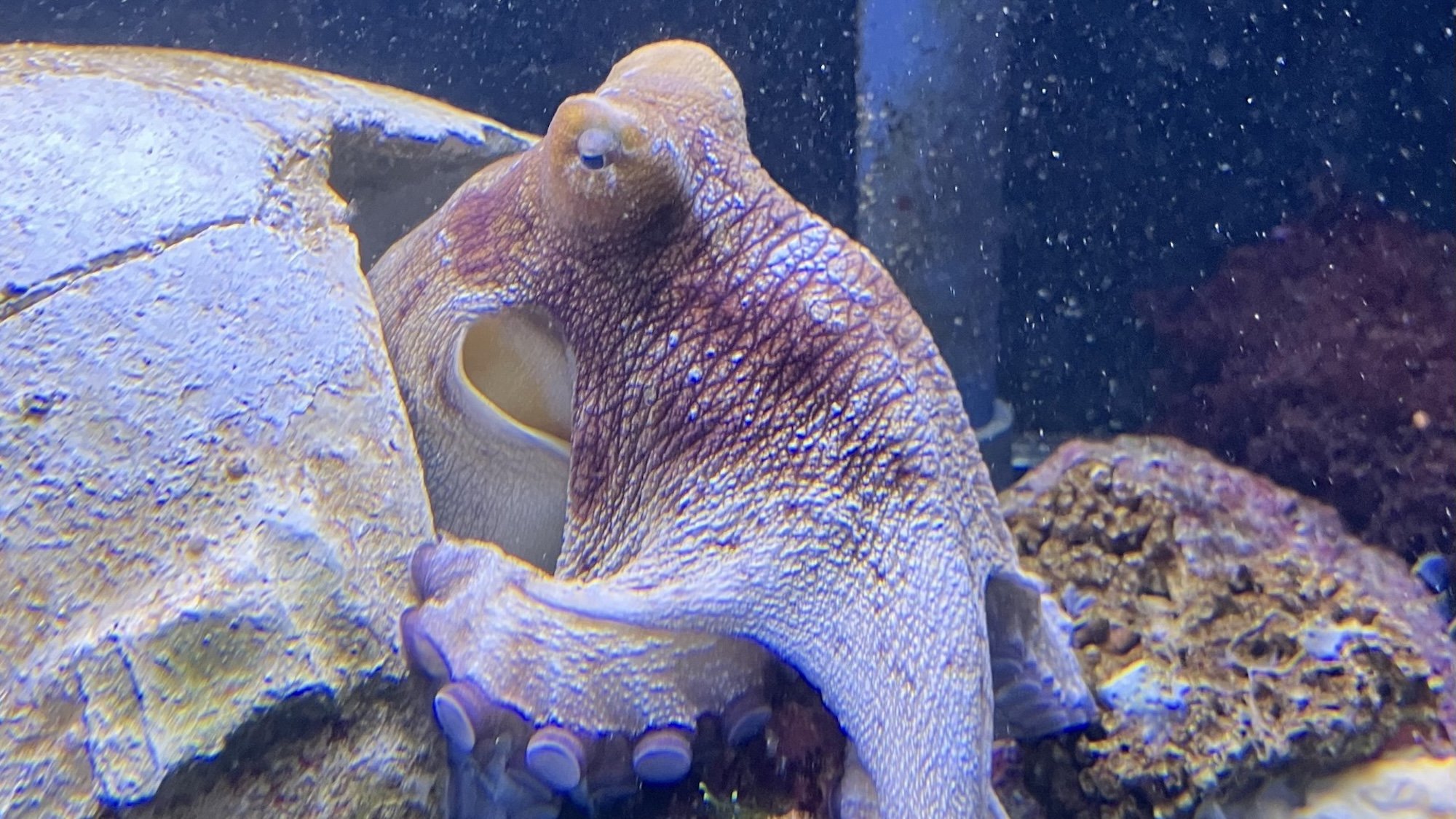
The initial findings revealed a consistent, multi-stage tactical approach when the octopuses encountered openings that were larger than their cranial width but still considered "tight." The process typically began with a sensory phase: the octopus would extend one or two of its leading arms—usually the left front pair—to probe the opening. This tactile assessment serves as a crucial data-gathering step, allowing the animal to gauge the size of the passage and detect potential threats or obstacles on the other side.
Once the initial probe was successful, the octopus would feed several more arms through the opening. In a display of impressive coordination, the cephalopod would then use the suckers on those leading arms to anchor itself to the interior wall of the entry point. By stiffening these limbs, the animal created a fulcrum, allowing it to exert force and pull its mantle and the remainder of its body through the aperture. On average, this transition was completed in approximately 20 seconds, showcasing a high degree of fluid control and muscular coordination.
Divergent Strategies and Species-Specific Behavior
One of the most significant revelations of the study was the emergence of species-specific behavior when the aperture size was restricted further. When faced with openings that approached or slightly exceeded the width of their cranial cartilage, the common octopus (Octopus vulgaris) exhibited a distinct, two-phase strategy. First, it would thread its remaining arms through the opening. Then, it would compress its mantle, the muscular sac housing its internal organs, to minimize its cross-sectional area, successfully "scooting" the bulk of its body through the tightest portion of the transition.
In contrast, the Mayan octopus (Octopus maya) demonstrated a more conservative, perhaps even cautious, behavioral profile. When confronted with these narrower passages, the Mayan octopuses often opted to abandon the attempt entirely. They showed no immediate interest in forcing their way through, instead opting to remain in their current chamber. It was only when presented with a second, wider alternative that the Mayan octopuses displayed interest in moving. This suggests that the decision to "squeeze" is not purely a physical reflex but is governed by cognitive assessment and risk-reward calculation. The animal effectively determines whether the effort required to compress its body is justified by the perceived benefit of reaching the next chamber.
Supporting Data and Statistical Context
The measurements taken by the research team provided a baseline for understanding these physical limitations. The inter-ocular distance for the specimens ranged between 0.6 and 1.3 inches. When the holes were significantly smaller than this range, even the most determined individuals failed to initiate a full-body passage. This confirms that while the octopus is a master of flexibility, the cranial cartilage remains a definitive, non-compressible hard limit.

The timing data is equally revealing. The 20-second average for a successful transition suggests that the process is not haphazard. It is a practiced motor sequence, likely honed by the evolutionary pressure to hide from predators or hunt within narrow rock crevices. The consistency of this timing across multiple trials points to a "learned" behavior rather than a frantic struggle.
Broader Implications for Bio-Robotics and Marine Science
The implications of this research extend far beyond the study of marine life. In the burgeoning field of soft robotics, engineers are constantly looking to nature for inspiration on how to design machines capable of traversing complex, confined environments—such as search-and-rescue operations in rubble or underwater exploration of narrow pipe systems.
The mechanism identified by Xin and her team—using anchor-and-pull maneuvers combined with variable body stiffening—provides a clear blueprint for soft-robotic locomotion. Current soft robots often struggle with "anchoring," a problem the octopus solves with effortless precision. By mimicking the octopus’s ability to create a temporary anchor point with its limbs, engineers may be able to develop more efficient, maneuverable devices that can navigate environments previously thought to be inaccessible to machines.
Furthermore, the study highlights the necessity of considering cognitive, as well as physical, factors in animal behavior. The fact that the Mayan octopuses demonstrated a "veto" behavior—choosing not to engage with an opening they deemed too difficult—suggests a level of internal evaluation that warrants further study. It indicates that the animal is constantly monitoring its own body proportions against environmental constraints.
The Evolution of the "Squeeze"
From an evolutionary standpoint, the ability to exploit tight spaces is a major competitive advantage. For a creature with a high metabolic rate and no protective shell, the ability to retreat into a narrow crevice is the primary defense against large predatory fish and marine mammals. This "squeeze" behavior has likely undergone intense selective pressure, resulting in the high degree of neurological control seen today. The arms of an octopus are not merely appendages; they are semi-autonomous sensory and motor units that allow the animal to map its surroundings in real-time.

As climate change continues to impact marine ecosystems, the environments these creatures inhabit—such as coral reefs and coastal rock formations—are shifting. Understanding how octopuses interact with their physical environment is crucial for conservation efforts. If their habitat becomes less structurally complex, their ability to utilize these specific survival strategies may be hampered, with cascading effects on local populations.
Future Research Directions
While the current study has provided a significant leap forward, the researchers emphasize that this is only the beginning. Future work will likely involve tracking the neurological signals associated with the "decision" to squeeze, as well as testing these behaviors in environments with variable pressure and salinity, which could affect the elasticity of the octopus’s soft tissue.
The study by the National University of Singapore team has successfully demystified one of the most intriguing aspects of cephalopod behavior. By replacing vague notions of "squishiness" with concrete data on cranial constraints and multi-phase motor sequences, scientists have gained a clearer picture of how these intelligent invertebrates navigate their world. The octopus, with its fluid form and strategic mind, continues to serve as one of the most effective examples of evolutionary success in the marine environment, providing a model that continues to challenge our understanding of what it means to be physically adaptive. Whether in the depths of the ocean or the future laboratories of robotics, the lessons learned from the octopus’s squeeze will undoubtedly resonate for years to come.
Related posts: