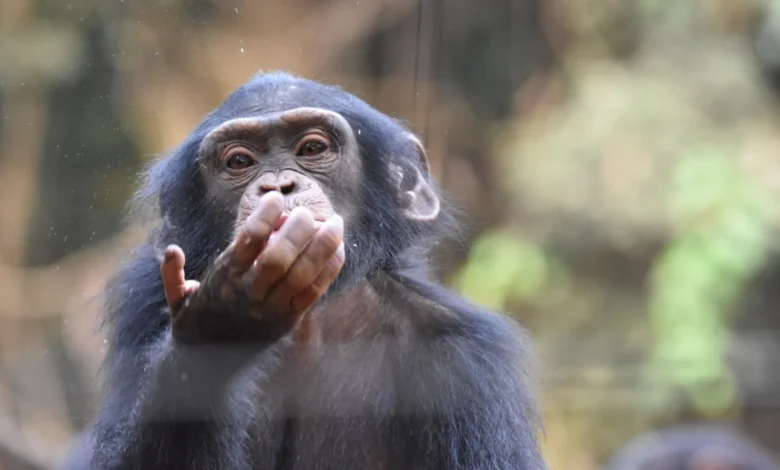
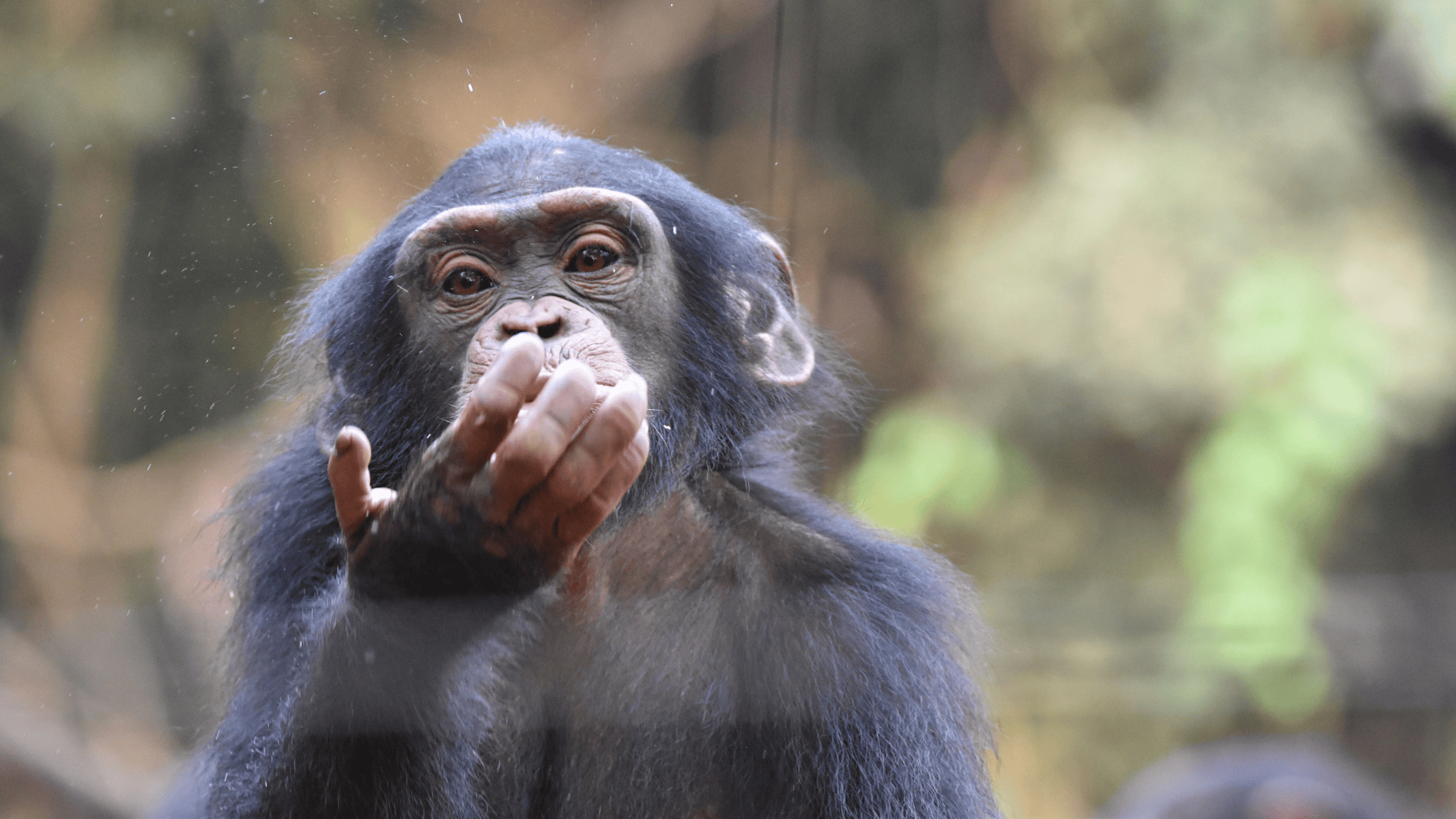
The long-held scientific assumption that non-human primate communication is primarily hard-wired by biology has been fundamentally challenged by recent research published in the Proceedings of the National Academy of Sciences. A study focusing on the “raspberry” vocalization—a sound produced by chimps by pressing their lips together and blowing air—reveals that these primates utilize social learning and cultural convention to determine when and how to deploy specific signals. This discovery bridges a significant evolutionary gap between the rigid, instinct-driven vocalizations typically associated with animals and the flexible, learned linguistic structures characteristic of human language.
A Departure from Biological Determinism
For decades, primatologists and evolutionary biologists maintained that, unlike human speech, which is culturally transmitted, chimpanzee vocalizations were largely genetically encoded. In this view, a chimpanzee would produce a specific call regardless of its social environment or the behavioral norms of its peers. The recent study, which analyzed the behavior of 91 chimpanzees ranging from infants to 55-year-olds, suggests a more nuanced reality. By observing both wild populations in the Ivory Coast’s Taï National Park and captive populations at the Tacugama Chimpanzee Sanctuary in Sierra Leone, researchers discovered that the usage of the raspberry sound varies significantly based on environmental influence and the presence of adult role models.
The study provides compelling evidence that while the physical capacity to produce the raspberry sound may be innate, the social context in which the call is used is learned. In the wild, Taï National Park chimpanzees consistently utilize the raspberry as a specific signal during grooming sessions. Conversely, juvenile chimpanzees at the Tacugama sanctuary exhibited far more eclectic and variable usage of the same sound. This disparity indicates that when young chimpanzees are raised without consistent adult role models, they experiment with signals in various social contexts. Once an adult is introduced to the group, the younger chimpanzees begin to refine their usage, mirroring the adult’s behavior and eventually settling into a standardized "convention."
Chronology of the Research and Methodology
The research project was conducted over an extensive period, drawing on decades of observational data to reach its conclusions. The investigation began with a comparative analysis of established wild communities, where researchers identified a consistent "signal convention" regarding the raspberry call. The subsequent phase involved longitudinal observations at the Tacugama sanctuary, where researchers were able to track how orphaned or peer-raised chimpanzees developed their vocal repertoire in the absence of a traditional social hierarchy.
The key observation occurred when researchers introduced an older, experienced chimpanzee to the sanctuary group. Within a relatively short timeframe, the younger chimps began to shift their communication patterns to align with the newcomer. This process mirrors human sociolinguistic development, where children learn the meaning and situational appropriateness of words through interaction with their community. The findings suggest that the raspberry is not merely an emotional release, but a socially mediated signal that facilitates group cohesion and interaction, such as extending the duration of grooming bouts.
Supporting Data and Comparative Linguistics
The significance of these findings is bolstered by the stark differences in usage patterns between the observed groups. In the wild, the raspberry call is almost exclusively tethered to grooming, a social activity that reinforces hierarchy and hygiene within the troop. In the sanctuary, however, the lack of traditional adult influence led to what researchers described as a "highly flexible" usage.
This variability is a hallmark of learned communication. If the sound were strictly instinctual, one would expect the raspberry to be triggered by the same stimuli across all groups, regardless of their upbringing. The fact that sanctuary-raised chimps treated the sound as a general-purpose vocalization until they were socialized by an adult confirms that the "meaning" of the sound is socially constructed. This is analogous to how human dialects evolve: while the biological capacity for speech is universal, the specific application of words—such as the regional variations in naming objects or expressing concepts—is a result of cultural transmission.
Expert Perspectives on Vocal Learning
The implications of this study are being discussed widely within the fields of cognitive science and evolutionary psychology. Richard Moore, a philosopher of mind and language at the University of Warwick and co-author of the study, noted that the research underscores a fundamental continuity between human and chimpanzee communication. According to Moore, communal practice—the process by which peers agree upon the meaning of a sound—is what fixes that meaning in place.
Antoine Valet, a cognitive scientist at the Institute of Cognitive Sciences (CNRS), emphasized that the findings force a re-evaluation of the entire chimpanzee vocal repertoire. "Even aspects of chimpanzee vocal communication that seemed fixed and unlearned may be shaped by learning," Valet stated. This perspective shifts the focus from asking what chimpanzees can say to how they learn to use what they can say. Catherine Crockford, a behavioral ecologist at CNRS, added that while the functional efficiency of the raspberry during grooming—perhaps because it mimics the lip movements used to extract parasites—might have prompted its adoption, the existence of a "convention" remains the primary driver of its usage.
Implications for Evolutionary Biology
The study of chimpanzee vocal conventions provides a rare window into the precursors of human language. If chimpanzees possess the capacity to adopt and standardize vocal signals through social interaction, it suggests that the evolutionary roots of human language are much deeper than previously thought.
The findings also challenge the "discontinuity hypothesis," which argues that human language is a unique biological leap with no direct animal equivalent. By demonstrating that chimpanzees engage in a form of proto-linguistic social agreement, the research suggests that the foundations of human communication—such as the ability to assign meaning to sounds based on communal consensus—were likely present in the common ancestor of humans and chimpanzees.

Future Research Directions
While this study provides a breakthrough in understanding primate vocalizations, it also opens the door to numerous unanswered questions. Researchers are now looking to determine if other chimpanzee calls, which were previously assumed to be innate, also follow these patterns of cultural transmission. Furthermore, the study raises questions about the limitations of this learning. Can chimpanzees invent entirely new sounds, or are they restricted to modifying the usage of a pre-existing, biologically determined set of vocalizations?
The scientific community is expected to prioritize longitudinal studies that monitor the transmission of these signals across generations. By observing how vocal traditions are passed from one generation to the next, researchers hope to map the "cultural map" of chimpanzee communities. Such efforts will likely require a multidisciplinary approach, combining field observation, acoustic analysis, and neuro-cognitive modeling to fully decode the complex communicative landscape of our closest living relatives.
A New Understanding of Primate Intelligence
In summary, the research on chimpanzee raspberry calls marks a definitive shift in our understanding of animal communication. It moves away from the simplistic view of primates as reactive creatures governed by pre-programmed vocal instincts and toward a view of them as socially integrated beings capable of establishing and maintaining shared cultural conventions.
As we continue to observe these primates, it becomes increasingly clear that the boundaries between "instinct" and "learned behavior" are far more permeable than ever imagined. The ability to learn, adapt, and refine vocalizations in response to the social environment is not a human exclusivity, but a shared trait that highlights the profound complexity of the primate mind. This study serves as a critical milestone in the ongoing quest to define the origins of language and the nature of intelligence in the animal kingdom, proving that even a simple "raspberry" can speak volumes about the evolutionary journey we share with our closest kin.