Voyager 1 Reaches One Light-Day Milestone as NASA Celebrates Nearly 50 Years of Interstellar Exploration

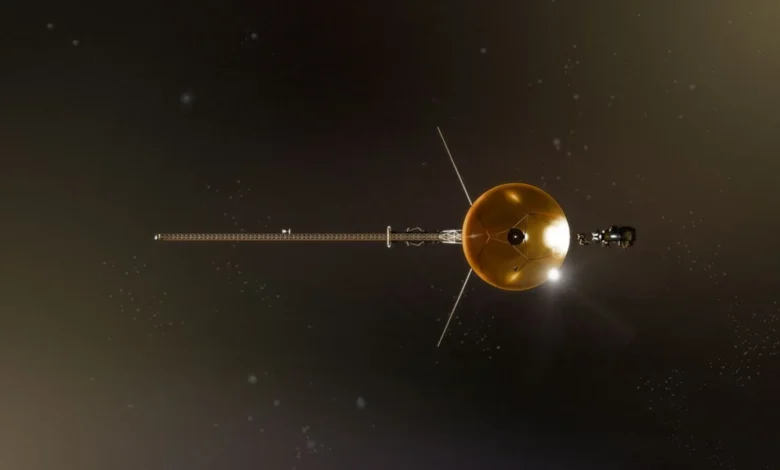
On Wednesday, Nov. 18, NASA’s Voyager 1 spacecraft will achieve a staggering milestone in the history of human engineering: it will have traveled one light-day from Earth. This signifies that the probe is now more than 16 billion miles (25.9 billion kilometers) away from our home planet, a distance so vast that a signal sent at the speed of light—the fastest speed allowed by the laws of physics—requires a full 24 hours to bridge the gap. Launched in 1977, Voyager 1 remains the most distant human-made object in existence, a lonely sentinel continuing its trek through the dark, cold reaches of interstellar space.
To commemorate this historic achievement, NASA has organized a series of events, including a global light-based tribute and a high-level technical discussion at the Jet Propulsion Laboratory (JPL) in Southern California. The milestone serves not only as a measurement of distance but as a testament to the longevity and enduring legacy of one of the most successful exploration programs in human history.
A Half-Century Journey: The Voyager Timeline
The Voyager mission was conceived during the early 1970s to take advantage of a rare planetary alignment that occurs only once every 176 years. This "Grand Tour" geometry allowed the probes to visit Jupiter, Saturn, Uranus, and Neptune using gravity-assist maneuvers, which drastically reduced the fuel required for such an ambitious journey.
- 1977: Voyager 2 launches on August 20, followed by Voyager 1 on September 5.
- 1979: Voyager 1 reaches Jupiter, revealing the volcanic activity on Io, a major scientific breakthrough.
- 1980: Voyager 1 encounters Saturn, providing detailed imagery of its rings and the moon Titan.
- 1989: Voyager 2 completes its primary mission with a successful flyby of Neptune.
- 2012: Voyager 1 crosses the heliopause, becoming the first human-made object to enter interstellar space.
- 2018: Voyager 2 follows suit, crossing into the interstellar medium.
- 2024: Voyager 1 reaches the one light-day distance milestone.
For nearly 50 years, the twin probes have functioned far beyond their original design parameters. Initially intended for a five-year mission, the resilience of the spacecraft’s hardware and the ingenuity of the mission controllers at JPL have allowed the probes to continue transmitting data back to Earth, providing humanity with its first direct measurements of the interstellar medium.
Shine Bright for Voyager: A Global Tribute
Recognizing the poetic nature of this "light-day" distance, NASA is inviting the public to engage with the mission on Tuesday, Nov. 17. The event, titled "Shine Bright for Voyager’s Light-Day," encourages participants worldwide to create a symbolic wave of light after sunset. By visiting the official NASA website, users can utilize their smartphones or tablets to flash the spacecraft’s call sign, "VGR," in Morse code.
This interactive event is designed to bridge the gap between the public and the distant, often abstract, reality of space exploration. NASA officials hope the initiative will foster a greater appreciation for the mission’s scale and the technical prowess required to maintain communication with a craft that is now essentially operating in the void between stars. Participants are encouraged to document their participation by tagging @NASA on social media platforms, effectively creating a global, digital constellation of support for the aging spacecraft.
Technical Resilience in the Void
On Thursday, Nov. 19, the Jet Propulsion Laboratory will host a moderated panel at the von Kármán Auditorium. This venue is historically significant, as it served as the nerve center for the original Voyager mission briefings during the 1980s. The event will feature mission veterans and current leadership discussing the technical hurdles of operating a probe that is powered by decaying radioisotope thermoelectric generators (RTGs).
The discussion is expected to cover how the team manages the depletion of power, the degradation of instruments, and the immense difficulty of sending commands across 16 billion miles. As the spacecraft continues to age, the engineering team has been forced to make increasingly difficult decisions, such as powering down non-essential heaters and scientific instruments to ensure the critical systems remain operational for as long as possible.
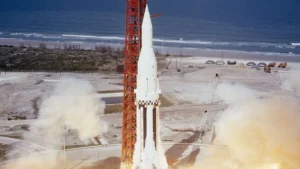
The event will also provide a first look at an upcoming NASA+ documentary, slated for release in 2027 to coincide with the 50th anniversary of the mission. This documentary is expected to provide a comprehensive retrospective on the Voyager legacy, from the launch pad at Cape Canaveral to the deep, silent reaches of the galaxy.
Implications of the Voyager Mission
The scientific importance of Voyager 1 and 2 cannot be overstated. By crossing the heliosphere—the protective bubble of charged particles created by the Sun—the probes have transitioned into the interstellar medium. They are currently sampling the material that exists between stars, providing researchers with data on galactic cosmic rays, magnetic fields, and the density of interstellar plasma.
Beyond the raw scientific data, the Voyager mission serves as a philosophical benchmark for human potential. The "Golden Record" carried by both probes contains the sounds and images of Earth, intended to represent humanity to any extraterrestrial civilization that might encounter the craft in the distant future. As Voyager 1 pushes further into the unknown, it acts as a permanent, physical record of the 20th century’s peak scientific aspirations.
The mission is managed by Caltech under the direction of the NASA Heliophysics Division. Communication with the probes is handled by the Deep Space Network (DSN), a global array of massive radio antennas that remain the only way to "hear" the faint whispers of the Voyager probes as they continue their journey.
Media and Public Access
For those interested in following the proceedings, NASA will stream the panel discussion live on Thursday, Nov. 19, at 12 p.m. EST (9 a.m. PST). The session will include a Q&A segment with the audience and media, addressing both the past achievements and the uncertain future of the mission.
Media organizations seeking to participate in the event—either in person or virtually—are required to adhere to strict credentialing policies. On-site access for U.S. and foreign national media requires advance RSVP to the JPL public affairs office, ensuring that the logistics of the event remain secure and organized.
Looking Toward the Future
As Voyager 1 marks the one light-day milestone, it serves as a sobering reminder of the scale of the universe and the limitations of human technology. While the spacecraft is expected to run out of power entirely within the next few years, the information it has provided will continue to be studied for decades to come.
The legacy of the Voyager mission is not just in the data it collected, but in the precedent it set. It proved that humanity could reach beyond its own neighborhood and touch the outer planets, and eventually, the space between the stars. As the mission approaches its 50th anniversary, the focus has shifted from exploration to preservation—keeping the signal alive for as long as physics will allow. For as long as those signals reach Earth, Voyager 1 remains a living link to the furthest reaches of our exploration, a pioneer in the true sense of the word, sailing into the eternal night with the hopes and history of Earth inscribed on its frame.
The upcoming events are a celebration not just of a machine, but of the collective effort of thousands of engineers, scientists, and planners who, nearly five decades ago, looked at the horizon and decided to build a messenger that would outlive them all. As the world watches the light of the Voyager mission, we are reminded that in the vastness of space, even the smallest signal can carry a profound message of human curiosity and resilience.
Related posts: