SpaceX Falcon 9 Launches Final O3b mPOWER Satellites in Historic 700th Falcon Family Mission

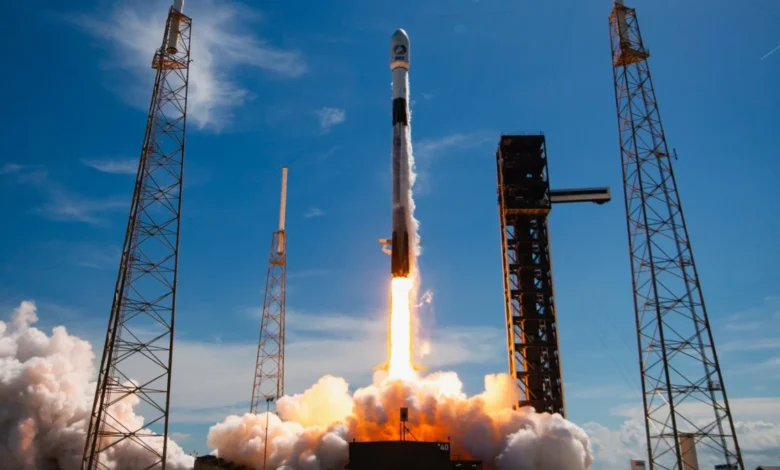
SpaceX achieved a major milestone in modern aerospace history today, successfully launching the final three telecommunications satellites for Luxembourg-based provider SES and simultaneously notating the 700th flight of the Falcon rocket family.
Liftoff occurred precisely at 2:49 p.m. EDT (1849 GMT) from Space Launch Complex 40 at the Cape Canaveral Space Force Station in Florida. The workhorse Falcon 9 rocket roared off the pad, slicing through the Floridian sky to deliver the heavy payloads into medium Earth orbit (MEO). This successful mission marks the completion of the advanced O3b mPOWER constellation, a next-generation network designed to revolutionize high-speed connectivity for enterprise, government, and maritime clients across the globe.
The launch underscores the staggering cadence and reliability that SpaceX has cultivated over nearly two decades of commercial launch operations. With operational milestones multiplying rapidly, industry observers note that the company continues to reshape the economics of global access to space.
A Legacy of Flight: Tracing the Falcon Family Milestone
Reaching 700 flights is an unprecedented achievement in the history of rocketry, placing the Falcon family in an elite category of space transportation systems. The lineage of this remarkable rocket family began more than two decades ago in March 2006, with the inaugural test flight of the lightweight Falcon 1.
While the Falcon 1 struggled initially—achieving only two successes out of its five total flights—it served as a crucial proving ground for the propulsion, avionics, and structural engineering concepts that would eventually define the Falcon 9. When the Falcon 1 was retired, it paved the way for the debut of the Falcon 9 in 2010.
The Falcon 9 quickly evolved into the absolute workhorse of the global commercial launch market. Its iterative design updates, coupled with groundbreaking vertical landing and booster reuse technologies, fundamentally altered the aerospace landscape. Alongside the Falcon 9, the heavy-lift Falcon Heavy variant—which debuted in 2018 and has flown 13 times—has contributed to the family’s soaring flight count. Today, the Falcon rocket series commands a dominant share of the global launch services market, supporting commercial communications constellations, scientific payloads, national security missions, and crewed flights to the International Space Station.
Flight Profile and Booster Recovery
True to form, today’s mission featured a masterclass in precision rocketry and reusability. Following stage separation, the Falcon 9 first-stage booster—designated B1080 in SpaceX’s active fleet—embarked on its descent back to Earth.
Roughly nine minutes after clearing the launch tower, B1080 executed a flawless propulsive landing on SpaceX’s autonomous droneship, "A Shortfall of Gravitas," positioned in the Atlantic Ocean. This landmark flight represented the 29th trip to space and back for this specific booster, highlighting the incredible durability and turnaround efficiency of modern orbital-class rocketry.
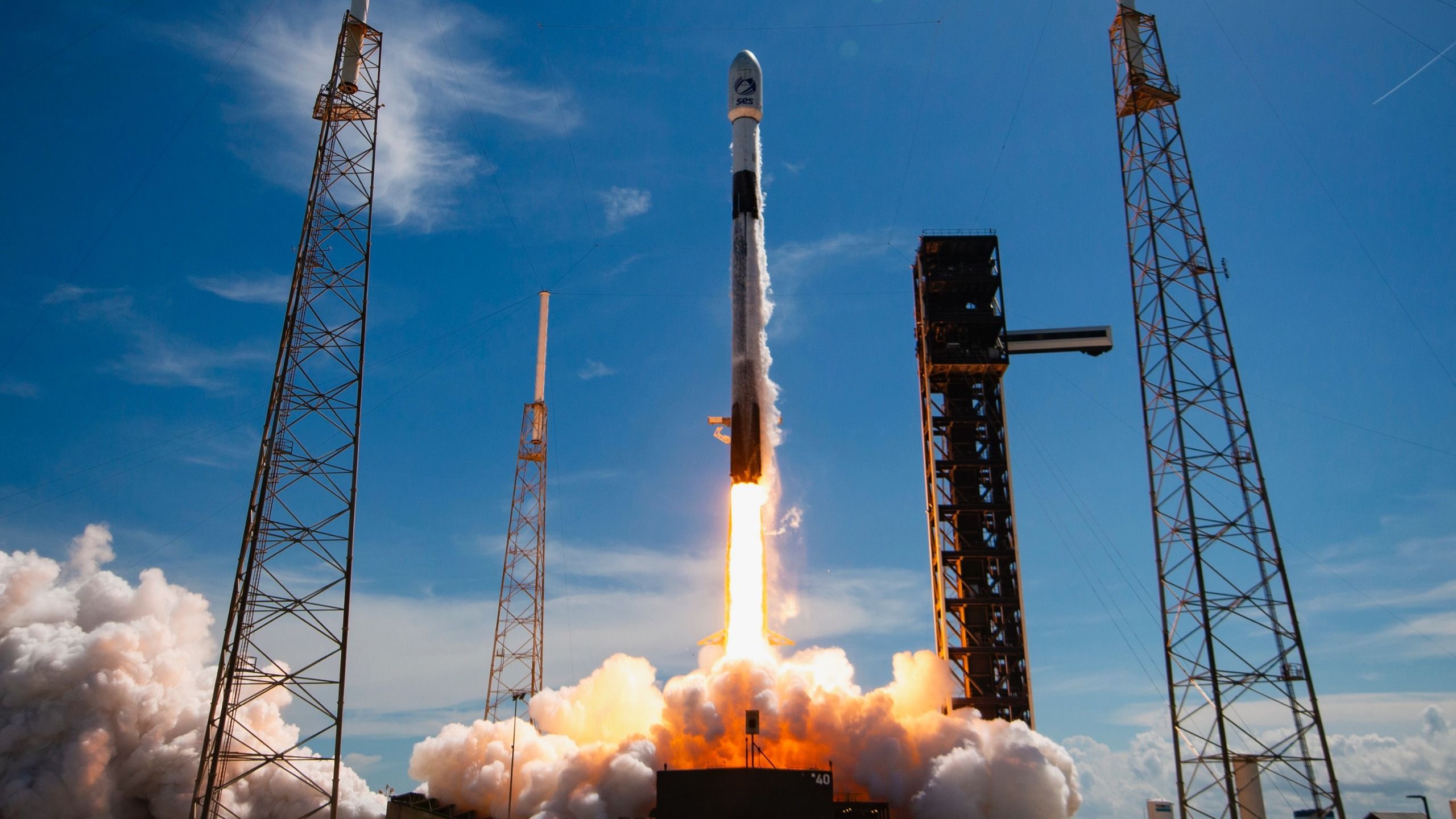
While the first stage successfully returned to sea, the rocket’s upper stage continued its journey, hauling the SES satellite trio toward their targeted altitude. Over a carefully orchestrated 14-minute window starting approximately 33.5 minutes after liftoff, the upper stage deployed all three satellites at an altitude of roughly 5,000 miles (8,000 kilometers) above Earth.
Completing the O3b mPOWER Constellation
With today’s successful deployment, SES has officially completed its ambitious O3b mPOWER satellite constellation. Built by aerospace giant Boeing, each satellite weighs approximately 3,750 pounds (1,700 kilograms) and represents the pinnacle of modern software-defined space technology.
SES has relied exclusively on SpaceX to build out the constellation, executing six separate Falcon 9 launches beginning in December 2022 to place all 13 spacecraft into medium Earth orbit. Operating at MEO altitudes rather than low Earth orbit (LEO) or geostationary Earth orbit (GEO), the O3b mPOWER system is engineered to strike a powerful balance: providing low latency, massive throughput, and immense operational flexibility.
According to SES executives, the constellation is specifically tailored for industries and geographic regions where reliable, high-capacity connectivity is non-negotiable. "It transforms how networks operate by pairing advanced software-defined satellites with an intelligent ground and software ecosystem—ensuring guaranteed performance, even as global bandwidth demands surge," SES representatives noted in technical briefings ahead of the launch.
The system provides carrier-grade connectivity to cruise ships, remote energy operations, telecommunications providers, and government entities that require high-speed data pipelines far away from traditional terrestrial fiber-optic infrastructure.
Operational Tempo and Future Horizons
Today’s mission stands as the 107th orbital flight for SpaceX in the current calendar year alone, emphasizing an unrelenting operational tempo. Of those 107 flights, the Falcon 9 has flown 105 times, while the Falcon Heavy has undertaken two missions.
Beyond the Falcon fleet, SpaceX is also pushing forward with the development and testing of Starship, its fully reusable next-generation megarocket. Having completed two suborbital test flights earlier this year, company engineers are actively preparing for Starship’s third major flight test, which is widely anticipated to attempt the vehicle’s first orbital trajectory.
The convergence of a mature, reliable Falcon fleet and the impending arrival of Starship signals a transformative era in space exploration and commercial utilization. As SES begins integrating its fully operational O3b mPOWER network into global telecommunications infrastructure, SpaceX looks ahead toward even more ambitious milestones, cementing its status as the undisputed leader in modern orbital launch services.
Related posts: