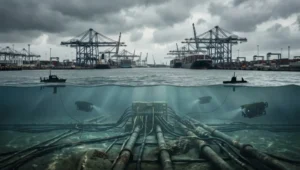
The Growing Cybersecurity Threat to Water Infrastructure Demands a Paradigm Shift in Defense Strategies


Cybersecurity risks within water infrastructure extend far beyond the digital realm, impacting physical systems and the communities they serve. As water treatment and distribution networks become increasingly interconnected, they present new and complex vulnerabilities that demand urgent attention and a fundamental reevaluation of security protocols. These systems, often designed with operational efficiency rather than robust cybersecurity in mind, are now facing an escalating wave of sophisticated threats. The consequences of a successful cyberattack on water infrastructure can be catastrophic, ranging from the disruption of essential services to the contamination of public water supplies, posing a direct threat to public health and safety.
The integration of previously isolated components like pumps, sensors, and control systems into wider networks, while aimed at enhancing efficiency and facilitating modernization, has inadvertently created expansive attack surfaces. These surfaces are notoriously difficult to monitor and control, leaving them susceptible to exploitation by malicious actors. The inherent design of many of these legacy systems did not anticipate the persistent and evolving nature of modern cyber threats. This fundamental disconnect between the operational requirements of water systems and the evolving threat landscape is a critical challenge.
Compounding this issue is the increasing convergence of Information Technology (IT) and Operational Technology (OT) environments. This blurring of lines is often a result of incremental upgrades and practical limitations on system refreshes, leading to complex, interconnected systems that have grown organically rather than being engineered with security as a foundational principle. Consequently, access pathways have expanded, stretching across networks and systems in ways that compromise their inherent security. Once an attacker gains a foothold in one part of the network, the interconnectedness facilitates lateral movement, bringing them closer to critical infrastructure with alarming ease.
The frequency and sophistication of cyber threats targeting the water sector are on a clear upward trajectory. The potential impact of these attacks cannot be overstated. Disruptions to drinking water treatment processes or control systems can rapidly escalate, leading to interruptions in supply, compromised water quality, and severe consequences for the millions of individuals and communities who rely on these essential services. The ramifications of such events can extend to public health crises, economic disruption, and a loss of public trust in the ability of authorities to safeguard vital resources.
Structural Challenges in Securing Water Systems
The operational realities faced by many water providers present significant hurdles in fortifying their digital defenses. Over time, technology environments have expanded considerably, often outpacing the growth of dedicated cybersecurity resources. This imbalance makes it increasingly challenging to maintain consistent oversight across systems that are often aging, disparate, and not uniformly secured. The vastness and complexity of these networks mean that even minor vulnerabilities can be amplified, creating entry points for attackers.
Many organizations are grappling with the dual demands of embracing modern, hyper-connected digital management expectations while simultaneously maintaining the operation of long-established, originally isolated systems. This delicate balancing act places immense pressure on teams responsible for ensuring both the resilience of the infrastructure and the continuity of daily operations. The need to integrate new technologies with legacy systems without compromising security or operational flow is a constant challenge.
A persistent and significant challenge lies in the traditional divide between IT and OT teams. These environments have historically evolved separately, with distinct design philosophies, responsibilities, priorities, and expertise. This divergence means that IT and OT teams are not always closely aligned, which can impede swift decision-making and create critical gaps in visibility during an incident. In smaller water utilities, cybersecurity responsibilities may fall upon operational staff whose primary expertise lies in facility management rather than cyber risk mitigation. While larger organizations may possess more specialized cybersecurity teams, the continued separation of functions can still lead to coordination challenges and the risk of operational blind spots.
The Peril of Unconstrained Connectivity
The widespread adoption of cloud computing platforms and remote access tools has undeniably brought operational advantages to critical infrastructure sectors like water systems. However, this widespread connectivity has also entrenched a default posture of keeping systems online continuously, often without a genuine, persistent operational imperative. This "always-connected" approach, while seemingly efficient, unnecessarily magnifies exposure, especially as more assets become accessible across broader networks. Without stringent controls over the time windows during which systems require access, organizations may be inadvertently creating more risk than is necessary or operationally justified.
A more robust and resilient approach to cybersecurity begins with the fundamental understanding that security is actively built by making connectivity intentional. Not all systems require constant online availability. Limiting unnecessary access significantly enhances security outcomes and reduces the attack surface. This can be effectively achieved by establishing stronger segmentation between critical systems and the wider network. Implementing controls that enable connections only when and where they are strictly required for essential operations is paramount. In such a model, connectivity is not a default state but an actively managed resource, defining resilience on demand.
Containment: The First Line of Defense
In the unfortunate event of a system vulnerability or a confirmed compromise, the speed of response is critically important, particularly in environments where interconnected systems can allow threats to propagate rapidly across the network. Without effective connection controls, attackers can exploit this unconstrained accessibility to extend their reach and inflict maximum damage before a comprehensive response can even be initiated.
The ability to isolate systems in real-time is a game-changer in this scenario. Segmenting critical parts of the network effectively limits lateral movement of threats. By applying deep segmentation down to the most critical digital elements, organizations can contain threats far more substantially. This allows security teams to focus their efforts on swiftly and effectively responding to the incident, minimizing its impact. This granular level of control not only limits the spread of disruption but also facilitates a more structured and organized incident response. Furthermore, it provides clear, demonstrable evidence of risk management practices, which is becoming increasingly vital as regulatory scrutiny intensifies and cyber insurance requirements become more stringent.
Transitioning to Controlled Access: A New Security Paradigm
The most resilient security model for critical infrastructure involves treating access to vital systems as entirely conditional. Instead of maintaining permanent online connections, access can be deliberately limited to specific locations, times, and purposes dictated by legitimate business needs. This model allows for flexibility, with the ability to refine or tighten security protocols as risk levels fluctuate. This approach effectively lowers both the overall risk and the potential impact of any security incident, minimizing losses while preserving the necessary flexibility for day-to-day operations.
For water providers, the deliberate management of connectivity and the segmentation of networks at the infrastructure level should be a paramount priority for ensuring resilience. Establishing clearer boundaries and reducing unnecessary access points makes it significantly easier to protect the infrastructure that plays such a vital role in public safety and well-being. This proactive strategy is essential for safeguarding a resource that is fundamental to human life and societal functioning.
The increasing interconnectedness of water infrastructure, while offering potential benefits in efficiency and remote management, has also introduced significant cybersecurity vulnerabilities. The systems responsible for treating and distributing water, which are foundational to public health and safety, are becoming increasingly exposed to sophisticated cyber threats. These systems, often built on legacy architectures not designed for the current threat landscape, are being integrated into wider networks, creating complex and difficult-to-manage attack surfaces. The convergence of IT and OT, driven by incremental needs and practical constraints, has led to systems that are not inherently secure, allowing for easier lateral movement of attackers once a breach occurs.
The implications of these vulnerabilities are profound. A successful cyberattack on water infrastructure could lead to the disruption of essential services, posing immediate risks to public health through compromised water quality or prolonged supply interruptions. Such events could have cascading effects on communities, impacting everything from sanitation to public health services and economic stability. The growing frequency and sophistication of these threats underscore the urgent need for a paradigm shift in how water utilities approach cybersecurity.
The Evolving Threat Landscape and Historical Context
Historically, water systems operated with a high degree of physical isolation. Control systems were often proprietary, air-gapped from external networks, and managed by dedicated personnel with deep operational knowledge. This isolation provided a significant, albeit unintentional, layer of security. However, the drive for modernization, efficiency, and the integration of smart technologies has fundamentally altered this landscape. The adoption of Supervisory Control and Data Acquisition (SCADA) systems, Programmable Logic Controllers (PLCs), and other industrial control systems (ICS) has brought significant operational benefits, enabling remote monitoring, automated processes, and data-driven decision-making.
Yet, these advancements have come at a cost. The interconnectedness facilitated by the Internet of Things (IoT) and cloud technologies has opened up new avenues for attackers. Malicious actors, ranging from state-sponsored groups to cybercriminal organizations and hacktivists, are increasingly targeting critical infrastructure, recognizing the significant impact a successful attack can have. Notable historical incidents, though not all directly impacting water infrastructure, have demonstrated the devastating potential of cyberattacks on critical systems. For instance, the Stuxnet worm, discovered in 2010, targeted Iran’s nuclear program, showcasing the ability of sophisticated malware to physically damage industrial equipment. While the water sector may not have been the primary target of such high-profile attacks, the underlying vulnerabilities and the increasing sophistication of attack methodologies mean that the threat is ever-present.
Data and Statistics: Quantifying the Risk
The growing prevalence of cyber threats targeting critical infrastructure is supported by various reports and statistics. A 2021 report by the U.S. Environmental Protection Agency (EPA) highlighted that over 70% of water and wastewater systems in the United States have experienced at least one cyberattack. These attacks range from ransomware incidents that disrupt operations and demand payment to more sophisticated intrusions aimed at gaining persistent access or causing physical damage.
Further data from industry surveys indicates a significant underinvestment in cybersecurity within the water sector. Many utilities operate with limited budgets and a shortage of skilled cybersecurity professionals. A survey by the American Water Works Association (AWWA) revealed that a substantial percentage of water utilities have not conducted a comprehensive cybersecurity risk assessment or developed a formal incident response plan. This lack of preparedness leaves them particularly vulnerable.
The financial implications of such attacks can be substantial. Ransomware attacks alone can cost organizations millions of dollars in ransom payments, operational downtime, recovery efforts, and reputational damage. The U.S. Department of Homeland Security’s Cybersecurity and Infrastructure Security Agency (CISA) has repeatedly warned of the escalating threat to the water sector, citing its critical role in national security and public safety.
Broader Impact and Implications: Beyond the Digital
The consequences of a successful cyberattack on water infrastructure reverberate far beyond the immediate disruption of services. A compromised water supply can lead to:
- Public Health Crises: Contamination of water sources with harmful bacteria, chemicals, or toxins can lead to widespread illness, including gastrointestinal diseases, and in severe cases, fatalities.
- Economic Disruption: Businesses, industries, and agriculture rely heavily on a consistent and safe water supply. Disruptions can halt production, leading to significant economic losses.
- Social Unrest: Prolonged water shortages or the inability to provide safe drinking water can lead to public panic, social unrest, and a breakdown of community order.
- Environmental Damage: Tampering with water treatment processes could lead to the release of untreated wastewater into the environment, causing ecological damage and polluting natural water bodies.
- Loss of Public Trust: Incidents of cyberattacks on essential services can erode public confidence in government and utility providers, leading to long-term trust deficits.
The interconnected nature of modern infrastructure means that an attack on water systems could also have ripple effects on other critical sectors, such as energy, healthcare, and transportation, which depend on a reliable water supply.
Recommendations and Future Outlook
Addressing the cybersecurity challenges in water infrastructure requires a multi-faceted approach. Key recommendations include:
- Investing in Cybersecurity Expertise and Resources: Water utilities must prioritize investment in cybersecurity, allocating adequate budgets for advanced security technologies, personnel, and training.
- Developing Robust Incident Response Plans: Comprehensive and regularly tested incident response plans are crucial for enabling a swift and effective reaction to cyber threats.
- Implementing Network Segmentation and Access Controls: Strict segmentation of networks and granular access controls can limit the lateral movement of attackers and contain the impact of breaches.
- Adopting a Zero Trust Security Model: This model assumes no user or device can be trusted by default, requiring verification for every access attempt.
- Enhancing Public-Private Partnerships: Collaboration between government agencies, water utilities, and cybersecurity firms is essential for sharing threat intelligence and developing best practices.
- Promoting Cybersecurity Awareness and Training: Regular training for all staff, from operational personnel to management, is vital to foster a security-conscious culture.
- Leveraging Managed Security Services: For utilities with limited in-house expertise, partnering with managed security service providers can offer access to specialized skills and advanced security solutions.
The future of water infrastructure security hinges on proactive, strategic, and continuous adaptation to the evolving threat landscape. By embracing controlled access, prioritizing containment, and fostering a culture of cybersecurity, water providers can build more resilient systems capable of withstanding the increasing cyber threats they face, ensuring the continued delivery of this vital resource to communities worldwide. The commitment to securing these critical systems is not merely a technical imperative but a fundamental responsibility to public health and safety.