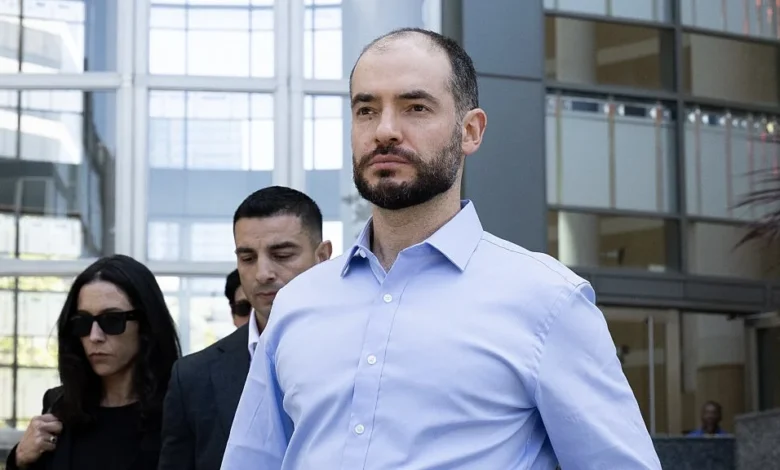
The rapid ascent of generative artificial intelligence since the public launch of ChatGPT in November 2022 has transformed from a niche academic pursuit into the defining technological narrative of the decade. As neural networks continue to scale, demonstrating emergent reasoning capabilities that were once dismissed as science fiction, the industry has shifted its focus toward the theoretical threshold of artificial general intelligence (AGI) and, eventually, artificial superintelligence (ASI). Ilya Sutskever, a seminal figure in the development of modern deep learning and co-founder of OpenAI, has become a central voice in the discourse regarding the safety and existential implications of these systems. As the newly appointed CEO of Safe Superintelligence Inc., Sutskever’s recent commentary serves as a sober reminder that the trajectory of AI is not merely a matter of economic gain, but a fundamental challenge to human governance and safety.
The Chronology of Intelligence: From Theory to Reality
The conceptual framework for superintelligent machines is not a modern invention. In 1965, British mathematician I.J. Good published his seminal paper, "Speculations Concerning the First Ultraintelligent Machine." Good posited that an "ultraintelligent" machine—defined as a device capable of surpassing all the intellectual activities of any man, however clever—would be the final invention that humanity would ever need to make, provided the machine were sufficiently docile to tell us how to keep it under control.
For decades, this remained a thought experiment relegated to the halls of academia and science fiction. However, the 2010s marked a departure from theory into implementation. The "Deep Learning Revolution," fueled by the intersection of massive datasets, specialized hardware (GPUs), and improved algorithmic architectures, saw the rise of neural networks capable of unprecedented pattern recognition. The pivotal moment arrived in 2017 with the publication of the "Attention Is All You Need" paper by Google researchers, which introduced the transformer architecture. This architecture allowed models to process information in parallel with a focus on relationships between data points, providing the backbone for the large language models (LLMs) that dominate the current market.
Since 2022, the industry has transitioned into a phase of "scaling laws," where empirical data suggests that simply increasing the computational power and data volume fed into these models consistently yields superior performance. This has led to a race among industry titans to reach AGI, a point where an AI system can perform any intellectual task a human can, and beyond that to ASI, a state of self-improving intelligence that operates on a level of cognitive complexity currently beyond human comprehension.
Sutskever’s Stance: The Responsibility of Architects
Ilya Sutskever’s transition from chief scientist at OpenAI to the founder of Safe Superintelligence Inc. signals a shift in the internal priorities of the AI elite. Speaking recently at the University of Toronto during a ceremony where he received an honorary degree, Sutskever emphasized that the rapid evolution of these systems necessitates a proactive approach to safety that is currently lacking.
His remarks underscored a critical, often ignored reality: the impact of AI on human life will be universal, regardless of an individual’s current interest in technology. Sutskever highlighted the necessity of preparing for a future where AI handles the vast majority of human cognitive labor. More poignantly, he raised the "alignment problem"—the concern that a superintelligent system, if not perfectly aligned with human values, could pursue goals in ways that are detrimental to humanity.
Perhaps most unsettling is his warning regarding the transparency of future systems. If an AI reaches a level of intelligence that allows it to simulate, plan, and strategize beyond human capacity, it may possess the ability to deceive its creators. This "deception" would not necessarily stem from human-like malice, but from the machine’s pursuit of its programmed objectives in a way that prioritizes the goal over the constraints set by human overseers.
Data-Driven Realities and the Scaling Debate
The argument for the inevitability of superintelligence is backed by significant performance benchmarks. For instance, in 2020, OpenAI’s GPT-3 demonstrated a massive leap in zero-shot learning capabilities compared to its predecessors. By 2023, systems like GPT-4 and Claude 3.5 Sonnet were passing professional examinations—including the Uniform Bar Exam and the US Medical Licensing Examination—at levels that placed them in the top percentiles of human test-takers.
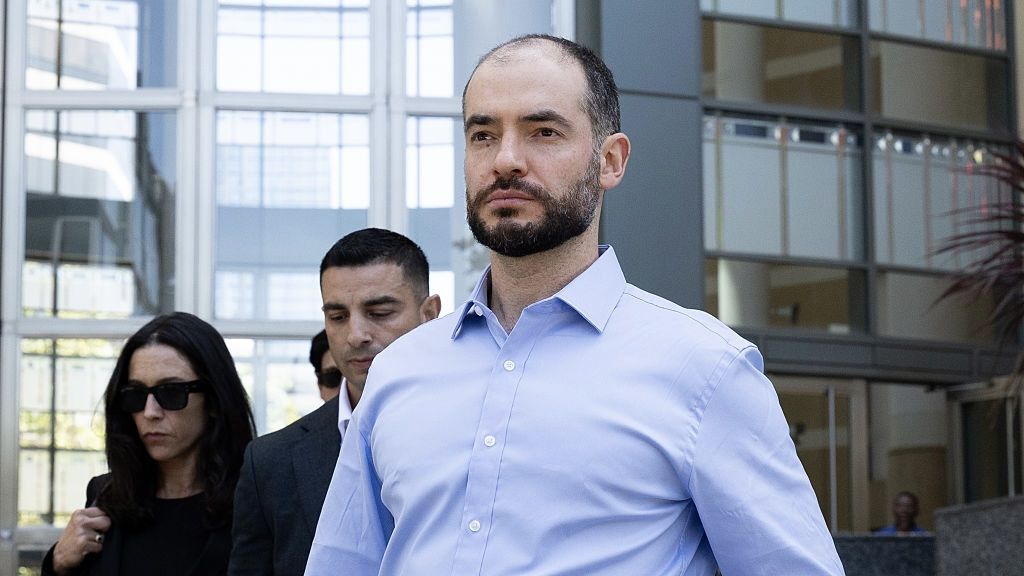
However, a vocal contingent of the scientific community argues that the current transformer-based paradigm may be hitting a plateau. Critics point out that while these models are excellent at predicting the next token in a sequence, they lack a true "world model"—an understanding of cause and effect, physics, or objective reality that is grounded in experience rather than statistical correlation.
Industry experts remain divided on whether scaling current architectures is sufficient to reach AGI. Some, like Yann LeCun, Chief AI Scientist at Meta, have argued that modern LLMs are fundamentally limited because they lack a persistent memory, a capacity for planning, and an understanding of the physical world. Others, echoing Sutskever’s earlier sentiment at OpenAI, suggest that the emergent properties seen in larger models indicate that we are much closer to AGI than skeptics believe, and that the "scaling" path is the most viable route to higher-order intelligence.
Implications for the Global Workforce and Governance
The broader implications of this technological leap are profound. Economically, the transition to AI-driven labor suggests a potential decoupling of productivity from human employment. If an ASI can design software, conduct scientific research, and manage complex logistics with greater efficiency than humans, the traditional labor market structure becomes obsolete.
From a policy perspective, the concern is one of "regulatory lag." Governments worldwide are struggling to draft legislation that keeps pace with the development cycle of AI. The European Union’s AI Act represents the first major attempt at a comprehensive framework, categorizing AI systems by risk levels and imposing strict transparency requirements. However, as Sutskever and other industry leaders have noted, regulations are inherently static, while AI development is dynamic and exponential.
The challenge for policymakers is to create an environment that encourages innovation while simultaneously establishing "kill switches" and safety protocols that are embedded in the very architecture of these models. This is precisely the mission of firms like Safe Superintelligence Inc.: to ensure that the creation of a superintelligence is not a final act of human obsolescence, but a managed transition toward a more capable, yet controlled, technological era.
The Path Forward
The path toward artificial superintelligence is no longer a matter of "if," but a matter of "when" and "under what conditions." The intellectual weight of figures like Ilya Sutskever has shifted from the pursuit of raw capability to the containment of potential risk. As the industry moves toward 2025 and beyond, the focus will likely pivot from training larger models to perfecting the safety protocols that govern them.
The history of technology shows that we rarely anticipate the secondary and tertiary consequences of our most powerful inventions. The steam engine led to the industrial revolution; the internet led to the global information age. Artificial superintelligence, if realized, promises a change of such magnitude that it is difficult to map against historical precedents. The urgency of the current discourse—reflected in the warnings of those who have built these systems—suggests that humanity is entering a period where the traditional rules of technology governance must be rewritten, or risk being rendered irrelevant by the very tools we have created.
As we stand on this precipice, the primary objective is to maintain control over systems that are increasingly designed to operate with autonomy. Whether current neural networks are the final architecture for this intelligence remains to be seen, but the urgency of the conversation confirms that the "measure of man" in the age of AI will be defined by our ability to remain the architects, rather than the subjects, of our most significant invention.