Uber Eats Rebuilds Search Infrastructure to Achieve a 50 Percent Reduction in End-to-End Search Latency

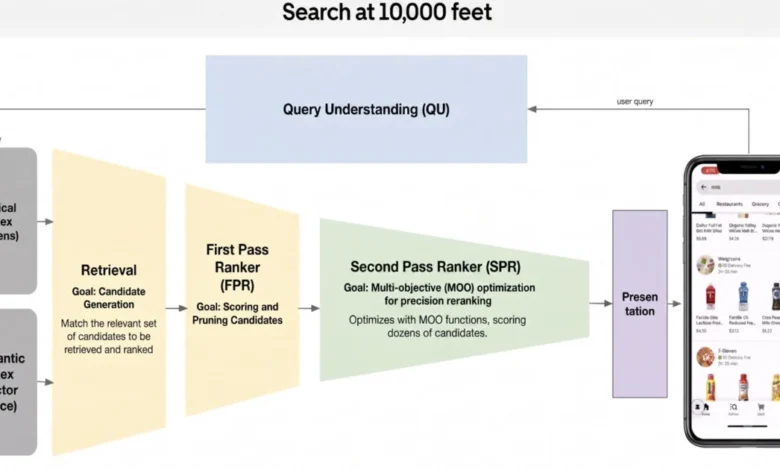
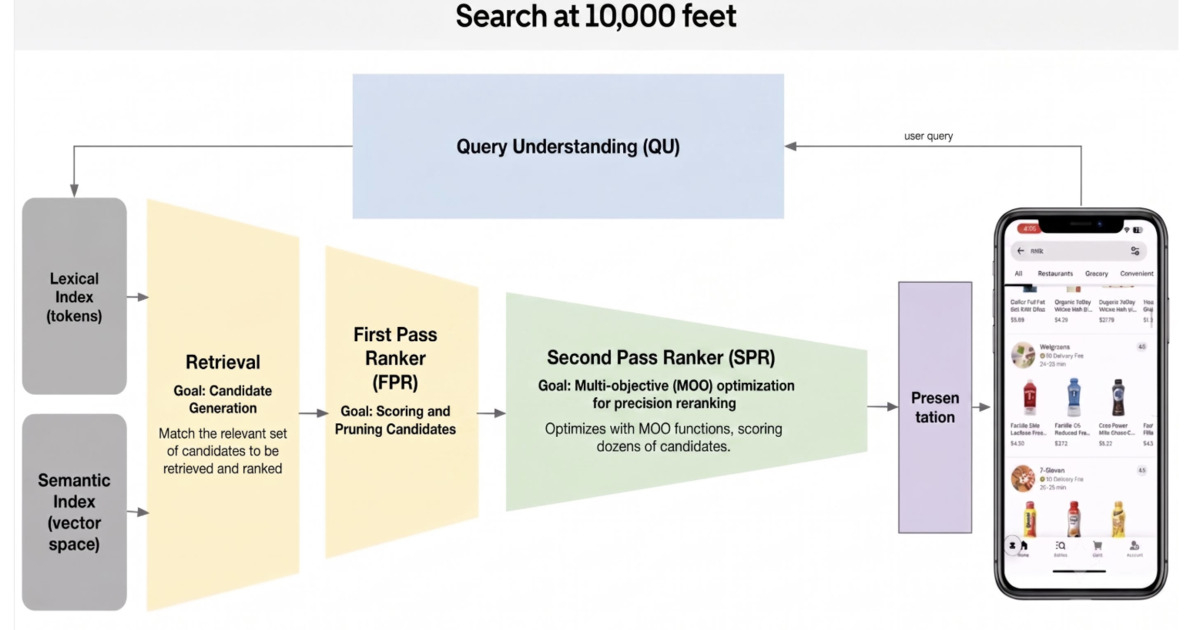
The engineering division at Uber has successfully overhauled the core components of the Uber Eats search pipeline, resulting in a significant 50 percent reduction in end-to-end search latency. This multi-layered technical initiative, which spanned across retrieval, feature hydration, ranking, advertising, presentation, and underlying infrastructure, represents one of the most substantial performance upgrades to the platform in recent years. By moving away from traditional backend-focused metrics toward a user-centric "Above-the-Fold" performance model, the company has fundamentally altered how it delivers search results to millions of users globally.
The Shift Toward User-Centric Metrics
Historically, search performance was evaluated primarily through backend API response times—the duration required for a server to process a request and return a data payload. However, Uber’s engineering team identified that this metric failed to account for the actual user experience, specifically the delay between a search query and the moment a customer sees visual content on their screen.
To address this, the team shifted their primary performance indicator to "Above-the-Fold" (ATF) completion. This metric tracks the elapsed time from the user’s request until the first screen of results is fully rendered, including images. By reorienting their optimization strategy around the visual delivery of content, the team was able to implement targeted improvements, such as pagination combined with server-side caching. This adjustment allowed the system to serve initial results significantly faster, while asynchronous rendering enabled the concurrent processing of individual result items. These specific architectural shifts alone yielded a reduction in ATF latency exceeding 200 milliseconds, setting a new baseline for the company’s performance standards.
Deconstructing the Optimization Strategy
The overhaul was not a singular "silver bullet" solution but rather the result of a granular audit of every stage in the search lifecycle. Uber engineers found that the existing pipeline was burdened by redundant processes, particularly in the hydration phase—where data is gathered to enrich search results before they are ranked.
Tens of thousands of candidates were being hydrated before the ranking phase, only for the vast majority to be discarded once ranking began. By pruning these low-value retrieval strategies, the team successfully shaved 120 milliseconds off the request cycle. Furthermore, the transition to product-level embeddings allowed the system to reduce data lookups by a factor of 100, contributing an additional 50 milliseconds of latency savings.
The advertising path, a notoriously resource-heavy component of search, also underwent a radical redesign. By moving to a column-oriented format for bid data and utilizing in-memory access, the team minimized the need for costly serialization processes. This redesign alone accounted for a 130-millisecond reduction in latency. Other critical adjustments included:
- Separation of Concerns: Decoupling ranking hydration from presentation data saved 100 milliseconds.
- Request Hedging: Implementing techniques to mitigate tail latency saved approximately 40 milliseconds.
- Infrastructure Tuning: Parallel encoding, the use of smaller embeddings, and optimized Go data structures significantly lowered garbage collection overhead, providing a smoother execution environment.
The Role of Agentic Workflows and Automation
An integral part of this project was the integration of agentic coding workflows. These automated systems assisted the engineering team in identifying bottlenecks, benchmarking potential fixes, and validating performance gains across complex codebases. This represents a broader industry trend where human-led architectural decisions are increasingly augmented by AI-driven analysis.
By automating the "Measure, Identify, Fix, Validate" loop, Uber created a repeatable framework for continuous performance optimization. This methodology allowed the team to tackle technical debt systematically rather than reactively. As noted by industry observers, this cycle serves as a model for large-scale systems engineering, where the complexity of the stack often masks inefficiencies that are invisible to manual review.
Industry Perspective and Engineering Philosophy
The success of this initiative has sparked significant discourse within the software engineering community. Experts have noted that the project underscores a shift in philosophy: modern performance optimization is less about increasing raw compute speed and more about reducing redundant work.
Anubhooti Nagar, a prominent voice in the engineering community, highlighted that the project was a masterclass in "avoiding unnecessary waiting." Pratik Dhanave echoed this sentiment, emphasizing that the 50 percent latency reduction was the cumulative result of a "long list of careful decisions across the full stack." The project serves as a stark reminder that in distributed systems, marginal gains—when applied consistently across hundreds of microservices—yield transformative results.
Vidya Pandey, another industry expert, distilled the Uber approach into three fundamental principles:
- Minimize Work: Do only what is strictly necessary to satisfy the user request.
- Temporal Efficiency: Start critical processes as early as possible in the request lifecycle.
- Decoupling: Remove unnecessary dependencies to prevent blocking operations.
These principles align with the architectural evolution of the Uber Eats search platform, which has historically relied on a sophisticated stack comprising Apache Lucene, Spark-based indexing, and Kafka-based streaming updates.
Future Implications and The Road Ahead
While the current results are impressive, Uber is not resting on these gains. The company has already begun exploring advanced techniques that could further revolutionize the search experience. One of the most anticipated developments is the transition to "Zero Pass Ranking," a technique that aims to eliminate the need for traditional multi-pass ranking by using highly efficient, pre-calculated embeddings.
Furthermore, the company is experimenting with end-to-end microbatching and HTTP multipart streaming. These techniques are designed to allow processing stages to overlap, effectively turning a sequential pipeline into a parallelized flow where data is streamed to the client as it becomes available, rather than waiting for entire stages of the backend to complete. Early testing of product-based search under these new parameters has already demonstrated a 50 percent reduction in p99 latency—a critical metric for maintaining a high-quality experience during peak usage periods.
Contextualizing the Technical Evolution
To understand the significance of these changes, one must look at the historical progression of the Uber Eats search infrastructure. In earlier iterations, the system was designed primarily for consistency and breadth of data. However, as the ecosystem grew to include millions of menu items and thousands of variables (such as delivery time, surge pricing, and user preferences), the complexity of the query execution path grew exponentially.
Previous InfoQ reports on Uber’s architecture have documented how the company migrated from monolithic database queries to a distributed serving layer. The current round of optimizations represents the natural maturation of this architecture. By leveraging product-based retrieval and streaming data pipelines, Uber is moving closer to a "real-time" search experience that treats data freshness and latency as equal partners.
Conclusion
The 50 percent reduction in search latency achieved by Uber Eats is a testament to the power of incremental, data-driven engineering. By moving the goalposts from backend performance to user-perceived speed, the team has successfully aligned technical output with business value. As the company prepares to implement microbatching and Zero Pass Ranking, the lessons learned from this initiative—namely the importance of minimizing work and maximizing parallelization—will likely influence the next generation of large-scale search architectures.
For the end user, this means faster access to food options and a more responsive application interface. For the engineering community, the project provides a comprehensive blueprint for how to audit, refactor, and modernize complex, high-traffic systems without compromising stability. As digital platforms continue to compete on the speed of information delivery, Uber’s strategy of continuous, systematic optimization appears to be the gold standard for maintaining a competitive edge.