Lucid Motors Third-Quarter Production Plummets 54 Percent Amid Aggressive Corporate Restructuring and Strategic Shift

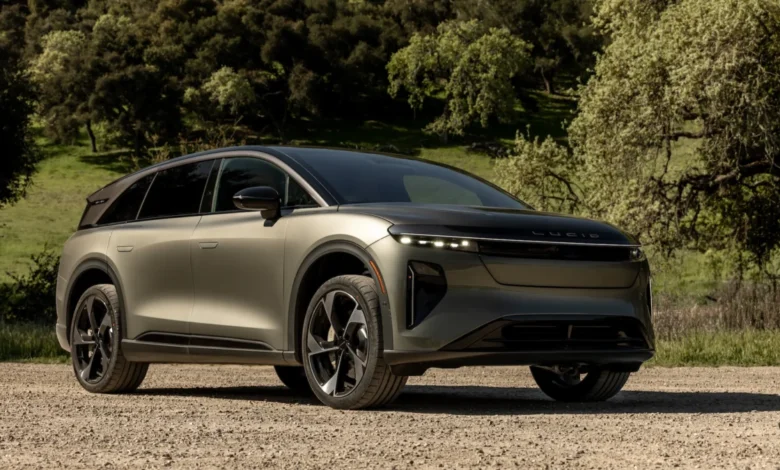
Lucid Motors reported a steep 54 percent decline in electric vehicle production during the third quarter, manufacturing 2,954 vehicles compared to the same period in the previous year. The downturn marks the third consecutive quarter of reduced output for the luxury EV maker, registering its lowest quarterly production volume since early 2025. This production contraction is a deliberate maneuver by executive leadership to align manufacturing output with softer-than-anticipated consumer demand, breaking away from historical overproduction patterns that plagued the company’s early years on the public market.
While production scaled back dramatically, delivery figures remained relatively stagnant. Lucid delivered 3,806 electric vehicles in the third quarter, mirroring its second-quarter performance and dropping by approximately 200 units year-over-year. The persistence of production outpacing deliveries in five of the last six quarters highlights ongoing challenges in capturing meaningful market share within the premium luxury EV sector. The figures underscore a critical transition phase for the company as it attempts to stabilize its operations under new leadership and execute a sweeping turnaround strategy.
The Chronology of a Turnaround: Restructuring Under CEO Silvio Napoli
The latest operational metrics reflect the profound reorganization spearheaded by Silvio Napoli, who assumed the role of CEO earlier this year. Napoli’s mandate has centered on simplifying the enterprise to achieve an ambitious target of $1.4 billion in cost savings. Over the past several months, the executive team executed a series of aggressive structural changes, including laying off approximately 1,500 employees—amounting to an 18 percent reduction in total workforce—streamlining upper management, and decommissioning the second manufacturing shift at the company’s primary production facility in Casa Grande, Arizona.
In tandem with workforce reductions and capacity adjustments, Lucid elected to delay the rollout of its much-anticipated third vehicle, the Cosmos. Conceived as a high-volume, affordable option with a projected starting price below $50,000, the Cosmos is central to the company’s long-term viability. However, management has chosen to exercise caution, prioritizing rigorous testing and quality assurance over speed to market. This cautious stance directly addresses historical missteps where premature product launches damaged consumer trust and operational efficiency.
A Stark Contrast With Original Projections and Industry Realities
The current struggles of Lucid Motors stand in stark relief against the high-flying optimism of its public debut in July 2021. Through a merger with a special purpose acquisition company (SPAC), Lucid entered the public markets with a massive war chest, raising $4 billion in capital. At the time, executive projections anticipated phenomenal growth, famously estimating that the company would manufacture and ship as many as 90,000 electric vehicles by the end of 2024 alone.
Instead, execution hurdles, supply chain disruptions, and shifting macroeconomic conditions severely hampered those ambitions. The reality of building a luxury automotive brand became painfully clear as the company struggled to scale production while competing against established legacy automakers and dominant market leaders like Tesla. The introduction of its second vehicle, the Gravity SUV, in late 2024 provided a temporary operational milestone, but failed to ignite the explosive consumer demand needed to absorb the planned factory capacity.
Internal Accountability and Strategic Pivot
During the second-quarter earnings call in August, CEO Silvio Napoli offered a candid and unvarnished assessment of Lucid’s historical miscalculations. Addressing shareholders and analysts, Napoli acknowledged that while the company successfully introduced pioneering engineering and innovative automotive technology to the marketplace, its overall execution fell short for an extended duration.
While there is no question that Lucid brought leading innovations and outstanding products to the market, we have disappointed on several fronts, and for far too long, Napoli stated during the call. We have not executed consistently. We missed commitments, launched products before they were ready, underinvested in service, responded too slowly to quality issues, and allowed complexity to slow decisions down.
This transparency signals a cultural shift within the organization. Rather than chasing inflated volume targets that necessitate expensive inventory write-downs and discounting, management is focusing on operational discipline. Addressing the timeline of the upcoming Cosmos model, Napoli reinforced this philosophy, assuring investors that the company will not repeat past errors by rushing a vehicle to showroom floors before it meets stringent quality and reliability benchmarks.
Industry Context: Diverging Fortunes Among EV Upstarts
The release of Lucid’s third-quarter data arrives amid a shifting landscape for electric vehicle startups, highlighted by the contrasting trajectory of its industry peer, Rivian. Just days prior to Lucid’s announcement, Rivian reported a record-breaking operational quarter propelled by the market introduction of the R2, its newly launched, competitively priced SUV.
While Rivian withheld granular delivery metrics for the specific vehicle line, the company shipped nearly 20,000 total vehicles during the third quarter. This performance represents a substantial acceleration from the 12,194 vehicles delivered in the second quarter and marks the first full production period for the R2. The divergence between Rivian’s volume expansion and Lucid’s controlled contraction underscores the diverging fortunes of EV manufacturers that successfully capture the mid-tier consumer market versus those struggling to sustain momentum in high-end luxury segments.
Financial Implications and Long-Term Market Viability
The broader financial implications of Lucid’s production slowdown are closely tied to its cash preservation strategy. Transitioning from a high-burn, high-growth model to a leaner, demand-driven operational framework is critical for the company’s survival. The $1.4 billion cost-reduction initiative led by Napoli is designed to extend Lucid’s financial runway, providing the necessary capital stability to complete development on the Cosmos platform without requiring immediate, dilutive capital raises.
Market analysts note that while reducing output lowers near-term revenue potential, it ultimately protects gross margins by curbing the need for aggressive price cuts and expensive vehicle storage. However, the strategy carries inherent risks. Prolonged underutilization of the Arizona manufacturing facility increases per-unit overhead costs, and a multi-quarter contraction in output risks diminishing brand visibility within a fiercely competitive automotive ecosystem.
Looking Ahead: The Path to Sustainable Growth
As Lucid Motors navigates the remainder of the fiscal year, executive focus remains fixed on executing the turnaround plan without destabilizing core operations. The company must prove to skeptical investors and prospective buyers that its refined approach to manufacturing and customer service can yield sustainable profitability.
The ultimate test for Lucid will arrive with the eventual launch of the Cosmos SUV. By targeting the sub-$50,000 market segment, the company aims to unlock a vastly larger consumer base than it has historically reached with its flagship Air sedan and Gravity SUV. If management can successfully balance manufacturing discipline with timely, flawless product execution, Lucid may yet salvage its founding vision. Conversely, failure to revitalize demand or further delays in its affordable vehicle pipeline could permanently relegate the company to a niche player in the global electric vehicle market.