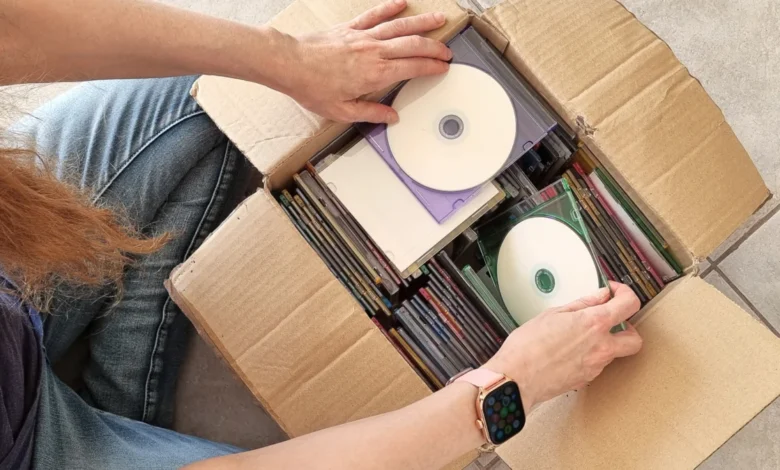
The seemingly straightforward question of how many songs a compact disc (CD) can hold belies a complex interplay of technological standards, audio file formats, compression techniques, and user choices. While many might recall a standard album having around 10-15 tracks, the actual number is far from a fixed figure, varying significantly depending on whether the disc is an uncompressed audio CD or a data CD storing digitally compressed music files. This variability is rooted in the fundamental differences between these CD types and the evolution of digital audio technology.
The Genesis of the Compact Disc: A Revolution in Audio
To understand CD capacity, it is crucial to delve into its origins and the standards that defined it. The compact disc, introduced commercially in 1982 by Philips and Sony, represented a monumental leap in audio technology, transitioning from analog vinyl records and cassette tapes to digital sound. This innovation offered superior sound quality, durability, and convenience. The initial standard for audio CDs was meticulously defined in the "Red Book," a specification developed by Philips and Sony, which laid the groundwork for how digital audio would be stored and reproduced.
The Red Book standard dictates that an audio CD must store pulse-code modulated (PCM) digital audio at a sample rate of 44.1 kilohertz (kHz) and a bit depth of 16 bits, in stereo. This specific encoding results in a data rate of approximately 1,411.2 kilobits per second (kbps). Critically, the Red Book also established a maximum playing time for a standard audio CD, which was set at approximately 74 minutes, later extended to 80 minutes with minor adjustments to manufacturing tolerances. This 80-minute duration became the de facto standard for commercial music albums released on CD.
Audio CD Capacity: The 80-Minute Constraint
For a standard audio CD adhering to the Red Book specification, the capacity is not measured in megabytes but in minutes and seconds of playback time. The 80-minute limit is absolute for this format, meaning the number of songs it can hold is entirely dependent on the average duration of those tracks.
Drawing upon contemporary data analysis, such as that conducted by analysts at UCLA on Spotify trends, the average length of popular songs typically ranges between three-and-a-half and five minutes. Using a midpoint of approximately four minutes and fifteen seconds (4:15) per song, one can derive a reasonable estimate:
- Total minutes available: 80 minutes
- Average song length: 4.25 minutes
- Calculated songs: 80 / 4.25 ≈ 18.82 songs
Therefore, a standard audio CD can typically accommodate around 18 to 19 songs if they adhere to this average length. However, this is merely an average. If an album consists of shorter tracks, say averaging three minutes each, the disc could hold up to 26 songs (80 / 3 ≈ 26.67). Conversely, an album featuring longer, progressive rock or classical pieces, averaging six minutes each, would only fit about 13 songs (80 / 6 ≈ 13.33). This demonstrates the direct correlation between track length and the total number of songs on an audio CD. The audio quality remains constant regardless of the number of tracks, as it is encoded at a fixed bitrate.
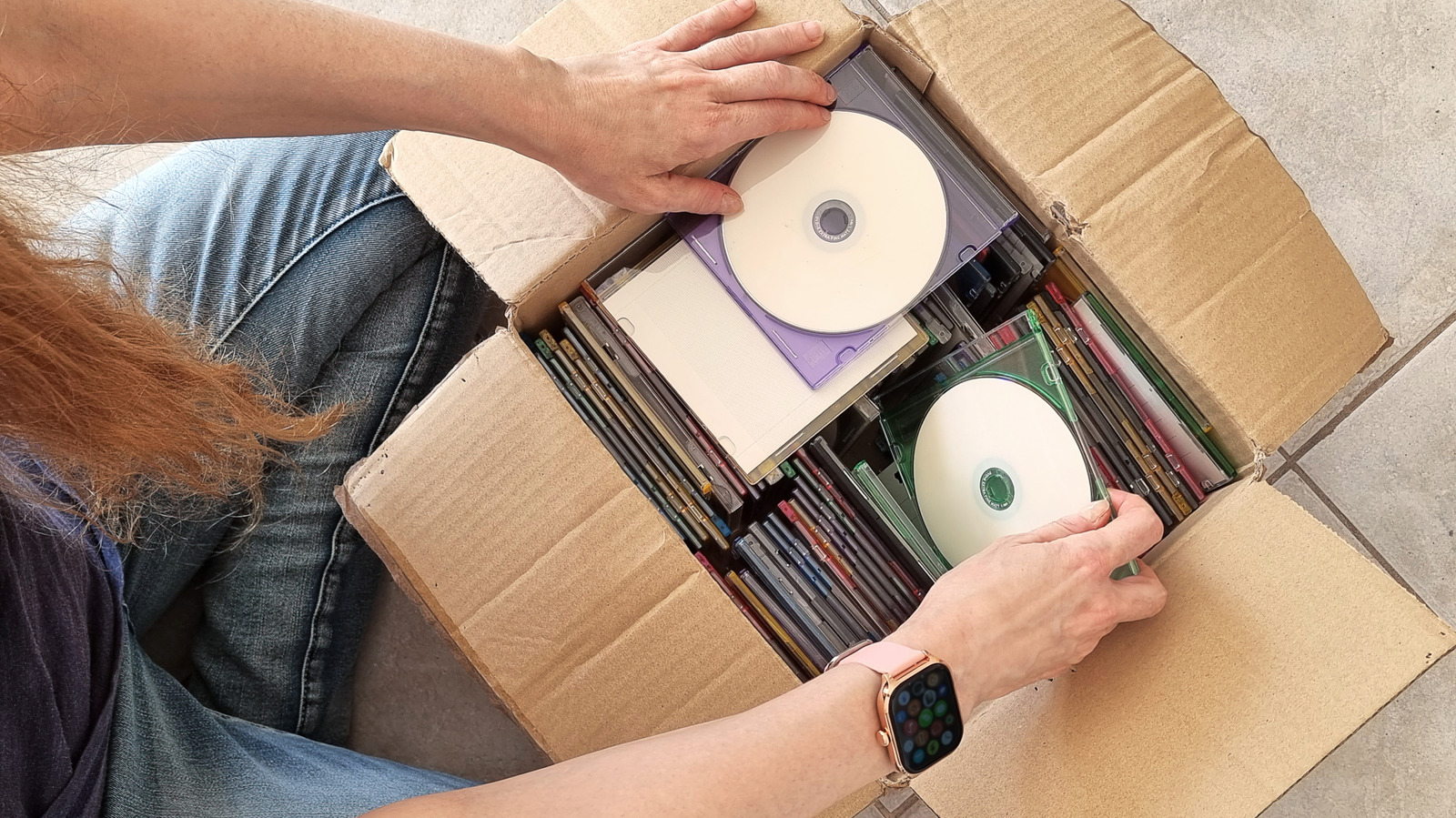
The Emergence of Data CDs and Digital Compression
While the Red Book standard defined audio CDs, the broader CD technology evolved to include data storage. The "Yellow Book" specified the CD-ROM (Compact Disc Read-Only Memory) standard for general data, and later, the "Orange Book" introduced recordable formats like CD-R (CD-Recordable) and CD-RW (CD-ReWritable). These data CDs, often referred to as MP3 CDs when used for music, operate on a different principle: they store digital files, not a continuous audio stream dictated by a time limit.
The standard capacity for a CD-R or CD-RW disc used for data storage is 700 megabytes (MB). This capacity allows for a significantly greater number of songs than an audio CD, provided the music files are digitally compressed. The advent of digital compression formats, most notably MP3 (MPEG-1 Audio Layer III), revolutionized personal music storage in the late 1990s and early 2000s. MP3 technology leverages "lossy" compression, which intelligently removes parts of the audio spectrum that are less perceptible to the human ear, drastically reducing file size while largely preserving perceived audio quality.
MP3 CD Capacity: The 700 MB Frontier and File Size Variability
The 700 MB limit for data CDs means that the number of songs is directly contingent on the size of each music file. This, in turn, is determined by several technical factors:
- Codec (Compression Algorithm): MP3 is the most common, but other formats like AAC (Advanced Audio Coding), WMA (Windows Media Audio), and Ogg Vorbis also exist, each with varying compression efficiencies.
- Bit Rate: This is perhaps the most critical factor for MP3s. Bit rate measures the amount of data processed per second, typically in kilobits per second (kbps). Higher bit rates generally mean higher audio quality and larger file sizes, while lower bit rates result in smaller files and reduced quality.
- 128 kbps MP3: Often considered "near CD quality" for casual listening, a four-minute song at 128 kbps will typically be around 3.8 MB. At this rate, a 700 MB CD could hold approximately 184 songs (700 MB / 3.8 MB/song ≈ 184).
- 192 kbps MP3: Offers improved quality over 128 kbps. A four-minute song at 192 kbps is about 5.7 MB. A 700 MB CD would hold roughly 122 songs (700 MB / 5.7 MB/song ≈ 122).
- 320 kbps MP3: Considered "CD quality" by many, this is the highest standard for MP3s. A four-minute song at 320 kbps is around 9.5 MB. A 700 MB CD would hold about 73 songs (700 MB / 9.5 MB/song ≈ 73). This figure aligns closely with the original article’s example of 10 MB per song yielding 70 songs.
- Bit Depth and Sample Rate (for uncompressed or lossless formats): While MP3s rely heavily on bit rate for quality, uncompressed (e.g., WAV) or lossless compressed (e.g., FLAC) formats are defined by their bit depth (e.g., 16-bit, 24-bit) and sample rate (e.g., 44.1 kHz, 48 kHz).
- WAV (Uncompressed): A four-minute stereo song at CD quality (16-bit, 44.1 kHz) is approximately 40 MB. A 700 MB CD would only fit about 17 songs (700 MB / 40 MB/song ≈ 17.5). This is comparable to the number of songs on an audio CD, but with the flexibility of data files.
- FLAC (Lossless Compressed): FLAC files typically reduce WAV file sizes by 30-60% without any loss of audio information. A four-minute FLAC file might be around 20-25 MB. A 700 MB CD could hold approximately 28-35 songs.
Evidently, the choice of audio format and its compression level dramatically influences the number of songs a data CD can store. Users burning MP3 CDs often prioritized quantity over the absolute highest fidelity, making 128 kbps or 192 kbps MP3s popular choices for car stereos or portable players that could read data discs.
Advanced Techniques: Overburning and its Implications
While 80 minutes for audio CDs and 700 MB for data CDs are the widely accepted standards, some niche applications and user practices have attempted to push these limits. "Overburning" is a technique that allows a CD burner to write slightly beyond the nominal capacity of a CD-R disc. This can sometimes extend an 80-minute audio CD to approximately 82 or 83 minutes, or a 700 MB data CD to around 703-705 MB.
Overburning is achieved by manipulating the CD-burning software (e.g., Nero Burning ROM, ImgBurn) to ignore the standard capacity markers and continue writing data until the physical limits of the disc’s recording layer are reached. While it can offer a marginal increase in capacity, it comes with significant caveats:
- Disc Compatibility: Not all CD-R discs are manufactured with sufficient quality or recording surface uniformity to handle overburning reliably.
- Player Compatibility: Many older or less robust CD players, particularly standalone audio CD players, may struggle or fail entirely to read overburned discs. This is because their lasers or error correction mechanisms might not be able to accurately track the data written beyond the standard specifications. Even some high-end players can exhibit issues.
- Data Integrity: Overburning increases the risk of errors during the burning process or data corruption over time, leading to unreadable sections or skipping.
- Limited Gains: The capacity increase is relatively minor, typically adding only a few extra minutes of audio or a handful of MP3s, making the risks often outweigh the benefits for most users.
Due to these limitations and reliability concerns, disc manufacturers and drive manufacturers generally do not officially support or endorse overburning. It remains a practice largely confined to hobbyists or those seeking to maximize every last byte or second on a disc, often for specific, non-critical applications.
The Broader Impact and Legacy in the Digital Age
The question of how many songs a CD can hold, while technically intricate, also serves as a historical marker. The fixed capacity of CDs significantly influenced album design and track sequencing throughout the 1980s, 1990s, and early 2000s. Artists and producers had to work within the 74-80 minute window for their artistic statements, a constraint that largely disappeared with the advent of digital downloads and streaming.
Today, in an era dominated by streaming services like Spotify and Apple Music, where access to millions of songs is instantaneous and digital storage is virtually limitless for the end-user, the practical concern of CD capacity has diminished for the mainstream consumer. However, CDs continue to hold a significant place for several reasons:
- Audiophile Appeal: Many audiophiles still prefer physical CDs, particularly standard audio CDs, for their uncompressed, high-fidelity sound. They argue that the Red Book standard offers a superior listening experience compared to most lossy streaming formats, even at high bit rates.
- Collectibility and Tangible Ownership: For music enthusiasts and collectors, CDs offer a tangible connection to the music, complete with artwork, liner notes, and the satisfaction of physical ownership.
- Archival Purposes: For personal music collections, burning music onto data CDs (MP3 CDs) once offered a cost-effective and relatively durable way to archive large numbers of songs before external hard drives and cloud storage became ubiquitous and affordable.
- Niche Markets: Certain niche markets, such as independent artists, still utilize CD-R discs for distributing their music at live shows or to a dedicated fanbase.
The evolution from the fixed 80-minute audio CD to the flexible 700 MB data CD storing compressed files represents a microcosm of the broader digital revolution in music. It illustrates the continuous push for greater storage efficiency and accessibility, even as the core technology of the compact disc, once a symbol of cutting-edge innovation, now stands as a testament to a foundational era of digital audio. Ultimately, the number of songs a CD can hold is not a single, immutable figure, but rather a dynamic outcome of technological standards, format choices, and the ongoing quest to balance quantity with quality in digital sound reproduction.