LTTStore TrueSpec Cables Finally Solve the Universal Serial Bus Confusion That Has Plagued Tech Enthusiasts for a Decade

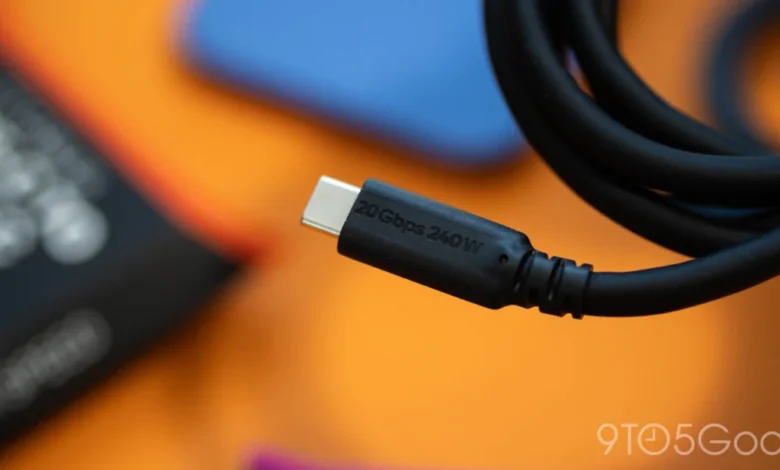
The proliferation of USB-C as a universal connectivity standard has been one of the most significant technological shifts in consumer electronics over the last ten years. Initially envisioned as a single connector to replace a fragmented landscape of proprietary charging ports and data standards, the USB-C ecosystem has largely succeeded in its primary goal. Consumers can now theoretically use a single cable to power smartphones, tablets, high-performance laptops, gaming handhelds, and peripherals. However, this convenience has been undermined by a persistent and frustrating reality: the physical uniformity of USB-C connectors masks a vast disparity in underlying technical specifications.
A cable that appears identical to another may be restricted to slow, legacy-era charging speeds, while its counterpart might support high-wattage power delivery, 40Gbps data transfer, and 8K video output. This ambiguity has created a "cable roulette" scenario for consumers, who often find themselves with a tangle of cords in their travel bags, unable to distinguish which one is capable of charging a laptop at 100W and which is merely a basic data-sync lead.
Addressing the Industry-Wide Standardization Gap
Recognizing this pervasive issue, the LTTStore—the merchandising arm of the Linus Tech Tips (LTT) YouTube channel—introduced its "TrueSpec" line of USB-C cables earlier this year. The product line distinguishes itself not by revolutionary new technology, but by a pragmatic approach to labeling. Each cable features technical specifications clearly etched into the connectors, providing an immediate, at-a-glance reference for power and data capabilities.
![It took way too long for someone to make USB-C cables that say what they can actually do [Gallery]](https://9to5google.com/wp-content/uploads/sites/4/2026/09/ltt-truespec-cables-1.jpg?quality=82&strip=all&w=1600)
While the USB Implementers Forum (USB-IF) has long provided guidelines for packaging and certification, the retail market has historically been flooded with uncertified, low-quality, or confusingly marketed cables. TrueSpec marks a significant move toward transparency in a market segment that has often favored low manufacturing costs over user experience.
A Chronology of USB-C Complexity
The evolution of the USB-C connector has been marked by rapid iteration and frequent rebranding, which has contributed to the current state of consumer confusion.
- 2014: The USB-IF announces the finalization of the USB Type-C connector specification, promising a reversible, high-power, and multi-protocol future.
- 2017–2019: As USB-C adoption reaches critical mass in laptops and smartphones, reports of "fried" devices due to improper cabling begin to surface, highlighting the dangers of non-compliant cables.
- 2021: The USB-IF introduces new logo guidelines intended to help consumers identify cable performance, yet adoption by third-party manufacturers remains inconsistent.
- 2024: The industry sees a surge in "smart" cables, but the market remains saturated with "dumb" cables that lack identifiable branding regarding their specific data and power limits.
- 2025–2026: The emergence of specialized enthusiast-focused brands, such as the LTTStore TrueSpec initiative, highlights a growing demand for hardware-level transparency.
Data-Driven Reality: The Performance Disparity
The technical requirements for USB-C are dictated by the underlying protocols, such as USB Power Delivery (PD) and USB4. A standard, entry-level USB 2.0 cable might support only 60W of power (3A) and data speeds of 480Mbps. Conversely, a premium USB4 cable can support up to 240W of power (using the Extended Power Range, or EPR, standard) and data transfer speeds of up to 80Gbps.
Because these cables are often sold in plain packaging or without clear markings, the onus of tracking performance has historically fallen on the consumer. The TrueSpec initiative attempts to mitigate this by moving the certification information from the packaging—which is usually discarded immediately—to the cable itself. While the build quality of these cables is notably robust, featuring thick rubberized sheathing, this durability results in a heavier, more rigid product. Critics of such designs often note that while increased shielding is beneficial for data integrity and power safety, it reduces the portability and flexibility that users traditionally associate with thinner, consumer-grade cables.
![It took way too long for someone to make USB-C cables that say what they can actually do [Gallery]](https://9to5google.com/wp-content/uploads/sites/4/2026/09/ltt-truespec-cables-2.jpg?quality=82&strip=all&w=800)
Industry Implications and Market Response
The introduction of clearly labeled cables has sparked a broader conversation regarding the responsibility of manufacturers. While the USB-IF has provided a framework for certification, there is no universal mandate forcing manufacturers to print specs directly on the hardware.
"The fundamental problem is that the physical interface was designed to be universal, but the electrical capabilities were designed to be modular," notes an industry analyst familiar with hardware standards. "By allowing such a wide range of capabilities under a single physical form factor, the USB-IF inadvertently created a consumer trust issue. When a user plugs a cable into a laptop and it fails to charge, they blame the laptop or the charger, not the cable, because they have no way of knowing the cable’s limitations."
The LTTStore’s approach is a direct response to this lack of transparency. By standardizing the information presented on the connector, they are applying a "pro-consumer" design philosophy that prioritizes utility over aesthetic minimalism. While this approach is not entirely unique—several niche industrial cable manufacturers have utilized similar labeling for years—it is the first time such an effort has been popularized for the mainstream consumer market.
Broader Impact on Consumer Tech Maintenance
The utility of such high-specification, clearly labeled cables extends beyond simple charging. As consumers increasingly engage in the "right to repair" movement, the need for reliable, verified data cables is rising. Precision tools, such as the LTT Screwdriver and the associated Precision Multi-Bit Kit, are becoming staples in the kits of enthusiasts performing battery replacements and hardware maintenance.
![It took way too long for someone to make USB-C cables that say what they can actually do [Gallery]](https://9to5google.com/wp-content/uploads/sites/4/2026/09/ltt-screwdrivers.jpg?quality=82&strip=all)
The integration of high-quality, verified cables into this ecosystem suggests a shift toward a more professionalized DIY experience. When users are disassembling hardware to manage aging components—such as the removal of swollen or "spicy" lithium-ion batteries—the reliability of the peripherals used to communicate with that hardware becomes paramount.
Analysis: Can Transparency Become the Standard?
The success of the TrueSpec line indicates that there is a tangible market for transparency in hardware. However, the higher price point of these cables—starting at approximately $17 for USB-A to C and $22 for C to C configurations—raises questions about mass-market adoption. In a retail environment where consumers are conditioned to purchase the cheapest cable available at a checkout counter, the premium for "verified specs" may remain a barrier for the average user.
Furthermore, the bulky design of these cables may not appeal to every demographic. While the build quality is objectively higher than budget options, the trade-off in weight and flexibility is a genuine consideration for mobile professionals.
Ultimately, the TrueSpec initiative serves as a litmus test for the electronics industry. It demonstrates that consumers are willing to pay for clarity and reliability in a market defined by confusion. Whether major manufacturers will follow suit and implement standardized, legible labeling on all consumer-grade USB-C cables remains to be seen. If they do not, the burden will continue to fall on specialty retailers to fill the gap, transforming a basic commodity into a specialized, verified component of the modern digital toolkit. As the industry moves toward the widespread adoption of USB4 and beyond, the need for this level of transparency will only become more critical, potentially forcing the hand of regulatory bodies to eventually mandate what some manufacturers are now choosing to do by design.