
The modern media landscape is increasingly dominated by expansive television universes, multi-season narrative arcs, and endless franchise extensions that demand a substantial, long-term commitment from viewers. However, as shifting seasonal routines, professional responsibilities, and upcoming holiday preparations occupy an increasing share of the public’s schedule, finding the time to invest in a multi-season television epic has become increasingly challenging. For audiences seeking a compelling, high-caliber narrative experience that can be consumed entirely within a single weekend without requiring a multi-year investment or concluding on an unresolved cliffhanger, limited series present an ideal solution.
Max, the premier streaming platform operated by Warner Bros. Discovery, boasts a robust catalog of critically acclaimed miniseries that blend cinematic production values with tight, self-contained storytelling. Three standout productions—the historical disaster drama Chernobyl, the subversive superhero sequel Watchmen, and the searing, intensely personal drama I May Destroy You—offer viewers rich narrative depth, stellar ensemble performances, and definitive conclusions. Each of these projects has earned widespread critical acclaim, cementing their status as essential viewing within the contemporary streaming ecosystem.
Chernobyl: Reconstructing a Nuclear Catastrophe
Topping many critics’ lists of the finest television achievements of the past decade, Chernobyl stands as a monumental historical drama that meticulously reconstructs the catastrophic 1986 accident at the Chernobyl Nuclear Power Plant near the city of Pripyat in the Ukrainian Soviet Socialist Republic. Written and created by Craig Mazin—who would later helm HBO’s television adaptation of The Last of Us—and directed by Johan Renck, the five-part miniseries originally debuted in May and June of 2019 to near-universal critical acclaim and unprecedented audience engagement.

Historical Context and Chronology
The narrative begins in the immediate aftermath of the reactor explosion on April 26, 1986, capturing the catastrophic failure of Reactor No. 4 during a late-night safety test. Rather than immediately acknowledging the severity of the radioactive release, local and national Soviet authorities attempted to minimize the incident, prioritizing institutional secrecy and political self-preservation over public safety.
The miniseries traces the frantic timeline of the disaster’s containment across its five episodes:
- The Initial Hours: Emergency responders, including local firefighters and plant operators, rush to the scene entirely unaware of the lethal radiation levels, suffering horrific injuries within hours.
- The Investigation: Nuclear physicist Valery Legasov, brilliantly portrayed by Jared Harris, is appointed to the government commission alongside Soviet bureaucrat Boris Shcherbina, played by Stellan Skarsgård. Together, they uncover the staggering engineering flaws and systemic negligence that caused the core breach.
- The Mobilization: Hundreds of thousands of workers, known as "liquidators," are drafted from across the Soviet Union to clean up the radioactive debris, construct the massive concrete sarcophagus, and prevent secondary thermal explosions at immense human cost.
- The Trial and Aftermath: The final episodes dramatize the legal proceedings held to assign blame, culminating in Legasov’s damning testimony that exposes the systemic failures of the Soviet nuclear regulatory apparatus before his tragic, politically motivated downfall.
Critical Reception and Broader Implications
Chernobyl holds an extraordinary 95% approval rating on the review aggregator Rotten Tomatoes and dominated the 71st Primetime Emmy Awards, securing ten accolades, including Outstanding Limited Series, Outstanding Directing, and Outstanding Writing. Beyond its technical achievements—notable for Hildur Guðnadóttir’s haunting, industrial soundscape and Karsten Gopinath’s bleak, atmospheric cinematography—the series serves as a timeless cautionary tale regarding institutional accountability, scientific integrity, and the dangerous consequences of suppressing truth in the face of existential threats.
Watchmen: A Subversive and Timely Superhero Sequel
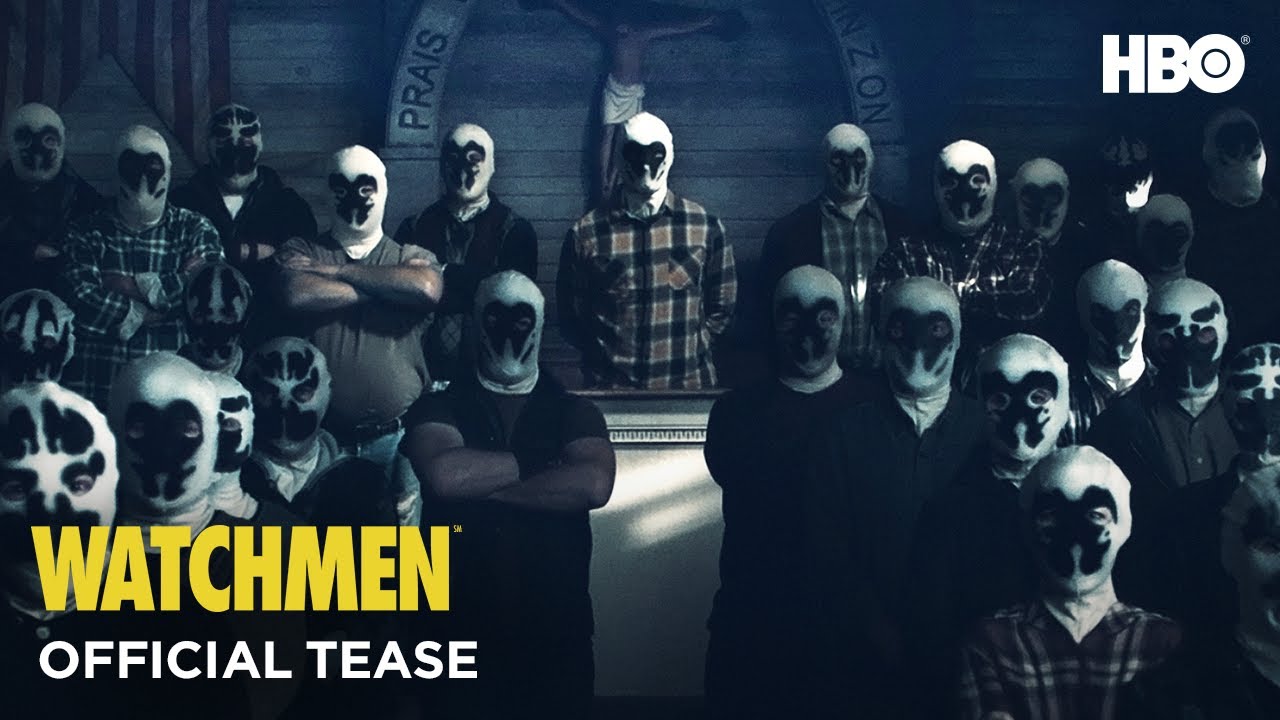
Damon Lindelof’s 2019 adaptation of Watchmen achieved a feat many industry analysts deemed virtually impossible: creating a direct narrative continuation of Alan Moore and Dave Gibbons’ legendary 1986 comic book miniseries that respected the source material while subverting its themes for a modern socio-political landscape. Rather than serving as a direct page-to-page translation or a simple reboot, the nine-episode HBO limited series acts as a remix, set thirty-four years after the events of the original graphic novel in an alternate-history Tulsa, Oklahoma.

The Premise and Chronological Setting
In this divergent 2019, the United States is governed by a long-standing presidential administration following Robert Redford’s decades-long tenure. The world still reels from the psychological trauma of the 1985 "squid rain" attack engineered by Adrian Veidt, and societal paranoia runs rampant.
The narrative centers on Angela Abar, portrayed with fierce intensity by Regina King, a detective who operates under the masked vigilante alias Sister Night. When a violent white supremacist domestic terrorist organization known as the Seventh Kavalry—which has weaponized the journals of the late vigilante Rorschach—executes a coordinated, lethal assault on local law enforcement officers and their families, Tulsa police are forced to adopt masks to protect their identities.
As Abar investigates the assassination of her police chief, Crawford Blount (Don Johnson), she uncovers a vast conspiracy involving historical racial violence, the legacy of the 1921 Tulsa Race Massacre (which serves as the visceral, harrowing opening sequence of the series), and the clandestine maneuvers of powerful figures attempting to seize the god-like power of Doctor Manhattan. Meanwhile, Jeremy Irons delivers a delightfully eccentric performance as an aging, isolated Adrian Veidt, ruminating on his past deeds in a surreal, theatrical exile.
Accolades and Definitive Narrative Structure
Watchmen secured a staggering 26 Primetime Emmy Award nominations, winning eleven, including Outstanding Limited Series and acting nods for Regina King and Yahya Abdul-Mateen II. Holding a 96% critical score on Rotten Tomatoes, the series was widely lauded for integrating complex discussions on systemic racism, police militarization, and generational trauma into superhero fiction. By deliberately structuring the project as a single, self-contained narrative arc with a definitive conclusion, Lindelof ensured that the story resonates with profound thematic closure, eliminating the need for subsequent seasons.

I May Destroy You: An Uncompromising Exploration of Trauma and Healing
Completing this trio of exceptional Max miniseries is I May Destroy You, created, co-directed, and executive-produced by Michaela Coel. Following her breakout success with the semi-autobiographical sitcom Chewing Gum, Coel channeled her own experiences with sexual assault into this twelve-part drama, which premiered in 2020 through a co-production between BBC One and HBO.
Narrative Arc and Character Dynamics
The series follows Arabella Essiedu, played by Coel, a celebrated young London-based writer struggling to meet the crushing publisher deadlines for her second book after the unexpected viral success of her debut. During a brief break from her writing routine, Arabella joins friends at a local establishment, where an unknown assailant spikes her drink.
The subsequent narrative does not rely on a traditional whodunnit mystery; instead, it explores the agonizing, nonlinear psychological fallout of sexual assault. With the support of her close friends Terry (Weruche Opia), an aspiring actress struggling with professional compromise, and Kwame (Paapa Essiedu), a gay instructor navigating the perils of modern dating apps, Arabella attempts to reconstruct her memories, regain her agency, and process the profound disruption of her life.
Critical Acclaim and Cultural Impact
I May Destroy You achieved near-universal critical acclaim, holding a remarkable 98% rating on Rotten Tomatoes. Reviewers praised the series for its unflinching honesty, dark comedic timing, structural ingenuity, and empathetic exploration of consent, digital-age ethics, and modern interpersonal relationships. Coel made television history at the 73rd Primetime Emmy Awards by becoming the first Black woman to win the Emmy for Outstanding Writing for a Limited or Anthology Series or Movie.
Streaming Availability and Viewer Recommendations
All three miniseries—Chernobyl, Watchmen, and I May Destroy You—are currently available to stream in their entirety on Max. With episode counts ranging from five to twelve tightly paced chapters, these productions provide audiences with world-class performances, visionary direction, and complete narrative resolutions, making them ideal candidates for a rewarding weekend viewing experience.