Meta Faces Federal Lawsuit Over Allegations of Using Biased AI Algorithms to Execute Mass Layoffs of Employees on Protected Leave

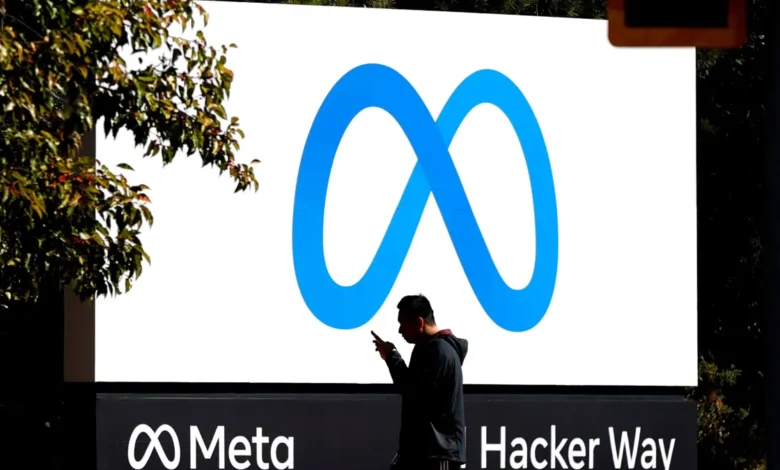
The technology landscape was shaken this week as a group of 26 current and former employees filed a high-stakes lawsuit against Meta Platforms Inc., alleging the social media giant utilized a "constellation" of biased artificial intelligence systems to select individuals for its most recent mass layoff. The complaint, filed in the U.S. District Court for the Northern District of California, asserts that Meta’s automated decision-making tools disproportionately targeted workers who had taken or requested protected leave, including those on pregnancy, medical, or family-related absences. This legal challenge marks a significant escalation in the ongoing debate regarding the use of algorithmic management in the corporate world and the potential for "black box" systems to violate established labor laws.
According to the filing, the plaintiffs represent a diverse cross-section of the company’s workforce, ranging from high-level research scientists to software engineers and middle management. All 26 individuals were part of a 10% reduction in force (RIF) executed in May 2026. The lawsuit claims that instead of relying on the qualitative judgment of human supervisors who were familiar with the employees’ contributions, Meta outsourced the selection process to internal AI systems. These systems were allegedly designed to rank and score employees based on metrics that inherently penalized those who were not physically present or active in the company’s digital ecosystem due to legally protected leaves of absence.
The Mechanics of Algorithmic Selection
The core of the plaintiffs’ argument rests on the specific inputs used by Meta’s AI systems to determine an employee’s value and subsequent retention. The lawsuit identifies several key metrics, including performance ratings, calibration scores, productivity outputs, and newer "AI-native" ratings. Most notably, the complaint highlights a metric referred to as "AI-token consumption"—a data point used to track how frequently and effectively engineers and developers interact with the company’s internal generative AI coding tools and large language models.
The lawsuit argues that these metrics are fundamentally flawed when applied to employees on protected leave. By design, an employee who is recovering from a major surgery, bonding with a newborn, or managing a chronic disability cannot accumulate productivity points or consume AI tokens. The plaintiffs allege that Meta’s algorithms did not "neutralize" these periods of absence. Consequently, the AI viewed a period of zero activity not as a legally protected break, but as a lack of productivity or a decline in performance. This resulted in what the lawsuit describes as "broken time" scores, where the absence of data was interpreted as a failure of the employee to meet the company’s rigorous output standards.
Case Studies in Automated Displacement
To illustrate the human impact of these algorithmic decisions, the lawsuit provides several harrowing accounts of the individuals selected for termination. One plaintiff, a senior research scientist, was reportedly selected for the reduction in force while she was on pre-birth pregnancy leave, a period protected under both state and federal law. Despite a history of high performance, her "productivity score" allegedly plummeted during her absence, triggering the AI’s selection mechanism.
In another instance, a manager who had recently returned from a medical leave was demoted, only to be selected for layoff just weeks into a second necessary medical leave. The complaint suggests that the AI-driven system failed to account for the medical necessity of the leaves, instead flagging the manager as a low-utility asset due to the intermittent nature of his work over the previous two years.
Furthermore, a software engineer involved in the suit claims his performance rating was intentionally lowered by the system due to "broken time" following a serious injury. The engineer alleges that while his human supervisors expressed satisfaction with his work during his active periods, the "constellation" of AI tools used for the May 2026 layoffs prioritized the raw, unadjusted data of his annual output, leading to his inclusion on the termination list.

A Timeline of Meta’s Workforce Restructuring
The May 2026 layoffs are the latest in a series of aggressive workforce reductions that began in late 2022. To understand the context of the current lawsuit, one must look at the trajectory of Meta’s "Year of Efficiency," a term coined by CEO Mark Zuckerberg in early 2023.
- November 2022: Meta announced its first major layoff in company history, cutting 11,000 jobs (approximately 13% of its workforce) following a post-pandemic slump in ad revenue and massive spending on metaverse development.
- March 2023: Zuckerberg announced an additional 10,000 cuts and the closing of 5,000 open roles, officially ushering in the "Year of Efficiency."
- 2024-2025: The company shifted its focus toward "flatter" management structures and a heavy reliance on generative AI to automate internal processes, including HR and performance management.
- May 2026: Meta executed a 10% reduction in force, which the company framed as a necessary step to reallocate resources toward advanced AI research. It is this specific round of layoffs that is the subject of the current litigation.
The plaintiffs argue that as Meta became more "AI-native," it replaced human empathy and legal compliance with automated efficiency, leading to the systematic exclusion of vulnerable workers.
Legal Framework and Alleged Violations
The lawsuit alleges that Meta’s use of unadjusted AI metrics violates a broad spectrum of federal labor protections. These include:
- The Family and Medical Leave Act (FMLA): Which prohibits employers from using the taking of FMLA leave as a negative factor in employment actions, such as hiring, promotions, or disciplinary actions.
- The Americans with Disabilities Act (ADA): Which requires employers to provide reasonable accommodations and prohibits discrimination against qualified individuals with disabilities.
- The Pregnancy Discrimination Act (PDA) and the Pregnant Workers Fairness Act (PWFA): Which protect employees from adverse actions based on pregnancy, childbirth, or related medical conditions.
- Title VII of the Civil Rights Act of 1964: Specifically regarding disparate impact, where a seemingly neutral policy (like an AI productivity score) disproportionately affects a protected group (such as women or those with medical conditions).
Legal experts suggest that the Meta case could become a landmark "disparate impact" suit. In such cases, plaintiffs do not necessarily need to prove that Meta intended to discriminate, but rather that its chosen method of selection—the AI algorithm—had a discriminatory effect that was not justified by business necessity.

Meta’s Official Response and Defense
In response to the filing, a spokesperson for Meta issued a firm denial of the allegations. "These claims lack merit and are not based on facts," the spokesperson stated. "Workforce management and organizational decisions at Meta were and are made by people, not AI. We maintain rigorous standards to ensure that our reduction-in-force processes are fair, consistent, and in full compliance with all legal obligations."
The company’s defense is expected to center on the "human-in-the-loop" argument. Meta will likely argue that while AI tools provided data and recommendations, the final decisions were signed off on by human managers and HR professionals. However, the plaintiffs contend that this human oversight was a mere "rubber stamp" for the AI’s findings, as managers were allegedly pressured to adhere to the rankings generated by the automated systems to meet aggressive headcount reduction targets.
Data and Industry Implications: The Rise of Algorithmic Management
The lawsuit against Meta arrives at a time when the use of AI in Human Resources is skyrocketing. According to industry data from 2025, approximately 75% of Fortune 500 companies utilize some form of AI to assist in recruitment, performance tracking, or workforce optimization. While these tools promise to remove human bias, sociologists and data scientists have long warned that they often codify and accelerate existing biases present in the data they are trained on.
The specific mention of "AI-token consumption" in the lawsuit highlights a new frontier in workplace surveillance. As companies integrate generative AI into their workflows, they are increasingly measuring "digital presence" and "tool utilization" as proxies for productivity. For workers on leave, these metrics create an insurmountable disadvantage. If a company’s baseline for "good performance" is constant interaction with an AI interface, any period of absence—no matter how legally protected—becomes a "data void" that the algorithm interprets as a lack of value.
Potential Outcomes and Broader Impact
The 26 plaintiffs are currently seeking a preliminary injunction to prevent Meta from finalizing their separations. If granted, this could force the company to reinstate the workers or halt the layoff process for these individuals while the case proceeds.
Beyond the immediate fate of the plaintiffs, this lawsuit has the potential to reshape how tech companies handle large-scale restructuring. If the court finds that Meta’s "constellation of AI systems" was indeed discriminatory, it may lead to new regulations requiring "algorithmic transparency" in HR. This would involve companies having to prove that their AI models have been audited for bias against protected groups and that "neutralization" protocols are in place to protect those on leave.
The case also serves as a warning to other Silicon Valley firms that have embraced the "efficiency" narrative. As AI continues to take over administrative and managerial functions, the legal responsibility for the outcomes of those systems remains firmly with the corporation. The Meta lawsuit suggests that in the rush to automate the "Year of Efficiency," the human element—and the legal protections that come with it—may have been dangerously sidelined.
As the legal proceedings move forward in the Northern District of California, the tech industry, labor advocates, and AI ethics researchers will be watching closely. The outcome could determine whether the "black box" of AI will be allowed to decide the future of the American workforce, or if the law will demand a return to human-centric accountability.
Related posts: