Meta Expands Test Limiting Non-Paying Facebook Pages to Two Link Posts Per Month

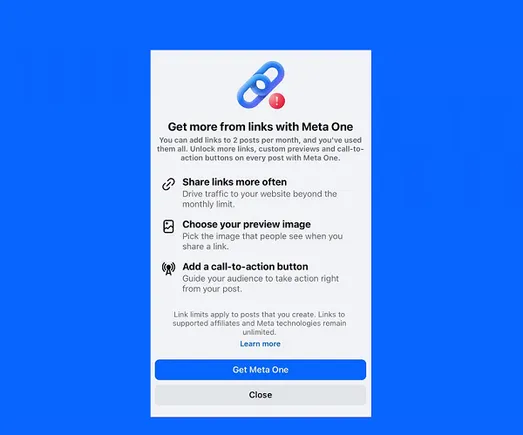
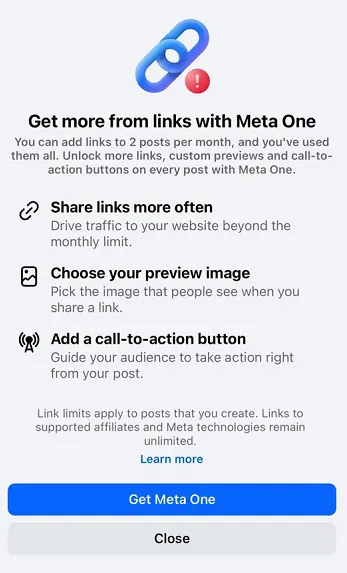
The evolving digital landscape of social media monetization has taken another significant step as Meta broadens its ongoing tests regarding outbound link restrictions for professional accounts on Facebook. Following the recent rollout of the Meta One for Business subscription packages, platform managers worldwide have reported encountering automated pop-up notifications limiting unverified and non-paying accounts to a maximum of two link-containing posts per month. This expansion signals a deeper integration of pay-to-play mechanics across Meta’s ecosystem, directly impacting how brands, enterprises, and content creators distribute external web traffic through the world’s largest social network.
The introduction of these restrictions closely follows the initial launch of Meta One for Business, a tiered subscription model designed to offer enhanced professional tools, analytics, and platform privileges. While initial rollouts of the subscription explicitly highlighted perks such as augmented link quotas for Instagram posts and Reels, Facebook-specific link limits were conspicuously absent from early promotional materials. However, recent user reports and system notifications indicate that the social media giant is systematically aligning its Facebook infrastructure with the new subscription framework, effectively creating financial barriers for organic external link distribution.
Background and Chronology of Meta Link Restrictions
To understand the current policy shift, one must examine the chronological progression of Meta’s experiments regarding external links. The groundwork for this strategy began in earnest in December 2025, when Meta initiated a localized pilot program restricting a select cohort of business pages to just two link posts per month. At the time, the company characterized the initiative as an experimental test aimed at measuring user behavior and determining whether higher volumes of outbound link posts provided measurable value to audiences.
Throughout 2025 and early 2026, speculation mounted across digital marketing communities regarding the ultimate fate of organic link-sharing on Facebook. Historically, Facebook operated as a primary referral engine for publishers, e-commerce brands, and digital marketers seeking to drive traffic to external websites. However, the launch of Meta One for Business serves as a pivotal turning point, transforming what was once an isolated platform test into a standardized, monetized feature set. Under the current iteration of the subscription model, accounts seeking to exceed the strict two-link monthly threshold must enroll in a paid tier, cementing a monetization strategy that charges businesses for core distribution capabilities.
Crucially, Meta has implemented specific exemptions to protect platform health and user retention. Publisher pages—such as recognized news organizations and media outlets—have been explicitly excluded from the link restriction test. Industry analysts note that this exemption is a calculated measure designed to prevent the sudden evaporation of news and informational content within the application feed, ensuring that users continue to find timely articles and media updates directly on the platform without encountering immediate content bottlenecks.
Data Analysis: The Declining Reach of Link Posts on Facebook
While the restriction on link posts may alarm marketing professionals accustomed to traditional social media strategies, empirical data published by Meta suggests that the actual impact on organic reach may be less severe than anticipated. According to Meta’s Widely Viewed Content Report for the first quarter of 2026, outbound links already account for a remarkably small fraction of total user exposure on the platform.
The data reveals that an overwhelming 98.7% of all post views in the United States during Q1 2026 did not include a link directing users to a source outside of the Facebook ecosystem. This metric highlights a long-term, downward trajectory in the algorithmic visibility of link-based content. When Meta first began publishing transparency metrics regarding widely viewed content in 2022, approximately 9.8% of viewed content included an external link. Over the subsequent four years, that figure has plummeted steadily, reaching a historic low of 1.3% by early 2026.
Platform algorithms have progressively favored native content—such as native video uploads, photographs, and text-only posts—over content designed to pull users away from the application. Because Meta’s primary business model relies on keeping users engaged within its proprietary environments to maximize advertising inventory, the suppression of outbound links is a deliberate architectural choice rather than a technical glitch. Consequently, digital strategists argue that businesses restricted to two link posts per month may find their overall traffic acquisition numbers largely unaffected, simply because organic link posts have yielded negligible visibility for years.
The Three-Stage Monetization Strategy

The decision to gatekeeper link-sharing capabilities behind a paid subscription is entirely consistent with Meta’s long-term corporate roadmap. In 2016, during an annual stockholder meeting, Meta CEO Mark Zuckerberg outlined a definitive three-stage monetization strategy for the company’s family of applications.
The foundational stage of this strategy focuses on building massive consumer adoption and utility, ensuring that billions of individuals integrate the platform into their daily communication habits. The second stage involves cultivating robust commercial ecosystems by encouraging businesses, brands, and creators to establish a permanent operational presence on the network, thereby building direct connections with consumers. The final and most mature stage entails the systematic introduction of specialized monetization tools, value-add subscription packages, and targeted advertising frameworks designed to capture economic value from the commercial entities operating within the ecosystem.
By transitioning certain advanced or high-utility publishing features into paid subscription tiers like Meta One for Business, the company is effectively executing the final phase of Zuckerberg’s decade-old blueprint. Although critics frequently characterize these adjustments as aggressive monetization maneuvers—or a bait-and-switch tactic that lures businesses in with free access only to demand payment later—they reflect a mature corporate strategy aimed at diversifying revenue beyond traditional digital advertising.
Implications for Businesses and Digital Marketers
The expansion of the link restriction test forces digital marketers and enterprise communication teams to reevaluate their organic social media strategies. Relying on organic Facebook posts as a primary conduit for driving website traffic has become increasingly unviable, prompting a shift toward alternative methodologies.
First, brands are expected to place greater emphasis on paid advertising campaigns, utilizing Meta’s sophisticated ad manager to promote external landing pages with guaranteed visibility. Paid advertising bypasses the organic algorithmic suppression of outbound links, allowing businesses to achieve targeted reach that organic posts can no longer secure.
Second, marketing professionals are increasingly turning to native engagement tactics within the Facebook app. By prioritizing native video content, Facebook Reels, interactive polls, and community-building discussions, brands can maintain high levels of audience engagement without relying on external links. When links are necessary, strategies now frequently involve placing URLs within the comments section, utilizing Messenger automation, or directing users to the brand’s primary profile bio where link-in-bio tools remain accessible.
Finally, the decision to subscribe to Meta One for Business will require a careful return-on-investment (ROI) calculation for small and medium-sized enterprises. Companies that rely heavily on frequent link distribution to generate leads or sales must weigh the monthly subscription fee against the anticipated traffic gains, determining whether the paid tiers offer sufficient value to justify the additional operational expense.
Conclusion
As Meta continues to refine and expand its subscription offerings, the testing of Facebook link limitations marks another milestone in the commercialization of social media platforms. While the restrictions present immediate operational hurdles for non-paying professional accounts, the broader context of platform algorithms and transparency data suggests that the era of free, high-reach organic link distribution on Facebook has effectively closed. Moving forward, businesses must adapt their digital communication strategies to align with Meta’s native-first architecture or embrace the financial commitments required by the new generation of business subscription packages.
Related posts: