Meta Platforms and the Strategic Calculus of Mark Zuckerberg’s Artificial Intelligence Pivot

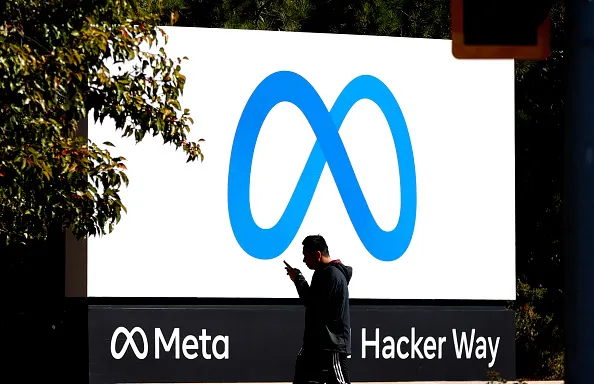
The global technology landscape is currently witnessing one of the most expensive and high-stakes transitions in corporate history as Meta Platforms, the parent company of Facebook, Instagram, and WhatsApp, pivots its entire infrastructure toward artificial intelligence (AI). This shift, led by CEO Mark Zuckerberg, raises a fundamental question regarding the nature of tech leadership: Is Meta’s aggressive pursuit of AI dominance a visionary masterstroke, or is it another manifestation of a corporate strategy that prioritizes the elimination of competition over genuine internal innovation? While Zuckerberg has successfully parlayed a social networking idea into a trillion-dollar empire, his track record suggests a reliance on serendipity, strategic acquisitions, and the replication of competitors’ features—a pattern that may face its greatest test yet in the capital-intensive AI sector.
The Innovation Paradox: A History of Acquisitions and Replications
To understand Meta’s current AI trajectory, one must examine the historical context of its growth. For over two decades, the company’s expansion has been defined more by its ability to identify and absorb external successes than by its ability to invent new product categories from scratch. The acquisitions of Instagram in 2012 for $1 billion and WhatsApp in 2014 for $19 billion remain the bedrock of Meta’s current market power. These platforms provide the massive datasets and user engagement levels that now fuel the company’s AI training models.
However, when Meta has been unable to acquire a competitor, its strategy has historically shifted toward replication, often with mixed results. A primary example is the 2013 attempt to acquire Snapchat. After CEO Evan Spiegel rejected a $3 billion takeover offer, Zuckerberg directed significant resources toward cloning Snapchat’s core features. This led to the launch of Slingshot in 2014, a standalone app that failed to gain traction and was eventually shuttered. While Meta eventually succeeded in integrating the "Stories" format into Instagram and Facebook—effectively neutralizing Snapchat’s growth—the effort required years of development and billions in diverted resources.
This pattern of "copy-and-conquer" has been repeated across various formats. When TikTok began to dominate short-form video, Meta introduced Reels, which now drives the majority of engagement growth on its core platforms. Similarly, Meta attempted to clone the group live-streaming app Houseparty with "Bonfire" and the audio-chat sensation Clubhouse with "Hotline." Both projects failed to capture the public’s imagination and were quietly retired. This history suggests that while Meta is an expert at scaling existing ideas through its massive distribution network, it frequently struggles to find "the next big thing" through internal research and development alone.
The Metaverse Detour and the Sudden AI Pivot
The most prominent example of Zuckerberg’s "visionary" risk-taking was the 2021 rebranding of Facebook to Meta. This move signaled a total commitment to the "metaverse"—a 3D virtual environment that Zuckerberg claimed would be the successor to the mobile internet. Over the following two years, Meta’s Reality Labs division incurred staggering losses, with reports suggesting a total expenditure exceeding $80 billion. Despite the heavy investment in VR headsets and the Horizon Worlds platform, consumer adoption remained tepid, and the project faced widespread criticism for its lack of a clear use case.
The emergence of generative AI, catalyzed by the release of OpenAI’s ChatGPT in late 2022, triggered an abrupt shift in Meta’s priorities. Almost overnight, the "metaverse first" mantra was replaced by an "AI first" agenda. Zuckerberg, sensing a shift in the technological zeitgeist, pivoted the company’s massive engineering resources toward developing Large Language Models (LLMs), such as Llama.
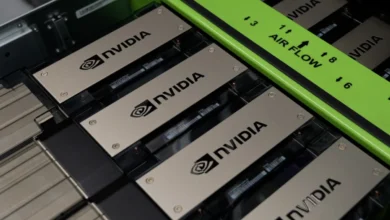
This transition has not been without its costs. Meta has committed hundreds of billions of dollars to AI infrastructure, including the procurement of hundreds of thousands of Nvidia H100 GPUs, which are essential for training sophisticated AI models. In early 2024, Zuckerberg confirmed that Meta’s "compute infrastructure" would include 350,000 H100s by the end of the year, representing a capital expenditure that dwarfs previous investments in the metaverse.
The Financial Reality: High Costs and Uncertain Returns
The economic stakes of Meta’s AI gamble are unprecedented. In 2025, Meta reported a total annual revenue of $200.97 billion, an impressive figure largely driven by its core advertising business. However, only $4.8 billion of that revenue came from non-advertising sources. This discrepancy highlights a significant challenge: Meta must transform AI from a backend optimization tool into a standalone revenue generator that can justify its massive capital expenditure.
Industry analysts have noted that the "break-even" point for these AI investments remains distant. Based on current spending on data centers, specialized hardware, and high-level talent acquisition, Meta would likely need to generate upwards of $100 billion per year in AI-specific revenue—such as through subscriptions or enterprise services—just to recover its initial costs over the next decade. Given that the company’s current non-ad revenue is less than 3% of its total intake, the path to profitability for AI is fraught with financial risk.
Furthermore, the "AI race" is being contested by some of the wealthiest entities in human history, including Microsoft, Google, and Amazon. Unlike the social media era, where Meta could use its scale to crush smaller startups, it is now competing against peers with equal or greater financial reserves and more established enterprise footprints.
Industry Skepticism and the Productivity Gap
While the tech sector remains enthralled by the potential of AI, broader economic data suggests a "productivity gap" that could impact Meta’s long-term success. A study published by the National Bureau of Economic Research (NBER) earlier this year surveyed nearly 6,000 C-suite executives and found that the vast majority reported seeing little to no operations-level impact from AI integration.
Many businesses have found that while AI agents can assist with basic tasks, they have not yet reached a level of reliability that allows for significant reductions in human staff or radical shifts in business models. If the predicted productivity gains from AI fail to materialize on a global scale, the corporate demand for Meta’s AI tools may stagnate, leaving the company with expensive, underutilized data centers.
This skepticism is echoed in the consumer market. While Meta’s AI-powered glasses, developed in partnership with EssilorLuxottica, have seen some positive reception, they rely heavily on the design expertise of the eyewear giant rather than Meta’s internal innovation. This reinforces the critique that Meta’s most successful "innovations" are often those where it leverages the expertise of outside partners or existing market leaders.
Chronology of Meta’s Experimental Failures
To contextualize the risk of the AI pivot, it is helpful to look at the timeline of Meta’s previous "side quests" that failed to achieve their stated goals:
- 2014: Slingshot. A Snapchat clone that failed to gain users and was shuttered within two years.
- 2015: Aquila. An ambitious project to provide internet access to remote regions via solar-powered drones. The project was grounded in 2018 after technical hurdles and regulatory challenges.
- 2018: Portal. A smart-camera video communication device. Despite a heavy marketing push, it failed to compete with Amazon’s Echo or Google’s Nest and was eventually discontinued for consumer use.
- 2019: Libra/Diem. A high-profile attempt to create a global cryptocurrency. It faced immediate and intense scrutiny from global regulators and central banks, eventually leading to the sale of its assets in 2022.
- 2021: Instant Articles. A feature designed to host news content directly on Facebook. It was retired in 2023 as Meta shifted its focus away from news and toward short-form video.
Each of these projects was introduced as a "visionary" step forward for the company, yet each ended as an expensive footnote. The AI pivot is significantly larger in scale than any of these previous attempts, making the potential for a "failed side quest" a catastrophic risk for shareholder value.
The Broader Impact and Future Implications
Despite the criticisms, Meta’s sheer scale gives it a unique advantage. With billions of users across its family of apps, Meta can integrate AI features—such as AI assistants in WhatsApp or generative image tools in Instagram—instantly. This "distribution advantage" is what Zuckerberg is banking on to win the AI race. By making its Llama models "open weights," Meta is also attempting to position itself as the industry standard, contrasting with the closed models of OpenAI and Google.
However, the societal impacts of Meta’s AI push remain a point of concern for regulators. The company’s history with data privacy (Cambridge Analytica) and the spread of misinformation has led to calls for strict oversight of its AI deployment. If Meta’s AI models are found to perpetuate bias or facilitate large-scale disinformation, the regulatory backlash could be swifter and more severe than in the social media era.
Ultimately, the question of whether Meta can "win" the AI race depends on one’s definition of winning. If winning means maintaining its dominance in digital advertising through better targeting and engagement, the AI investment may pay off. But if winning means becoming a primary innovator that defines the next era of computing, the company’s history of replication and failed internal experiments suggests a much more difficult road ahead. Zuckerberg’s belief in his own genius has carried the company far, but in the world of high-level AI, luck and scale may not be enough to overcome the structural challenges of genuine innovation.
Related posts: