Kawasaki Redefines Personal Watercraft Performance for 2027 with High-Output Engine Integration

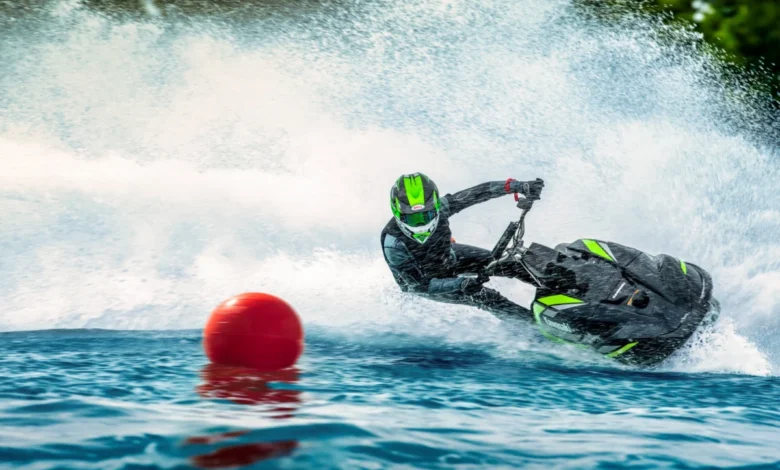
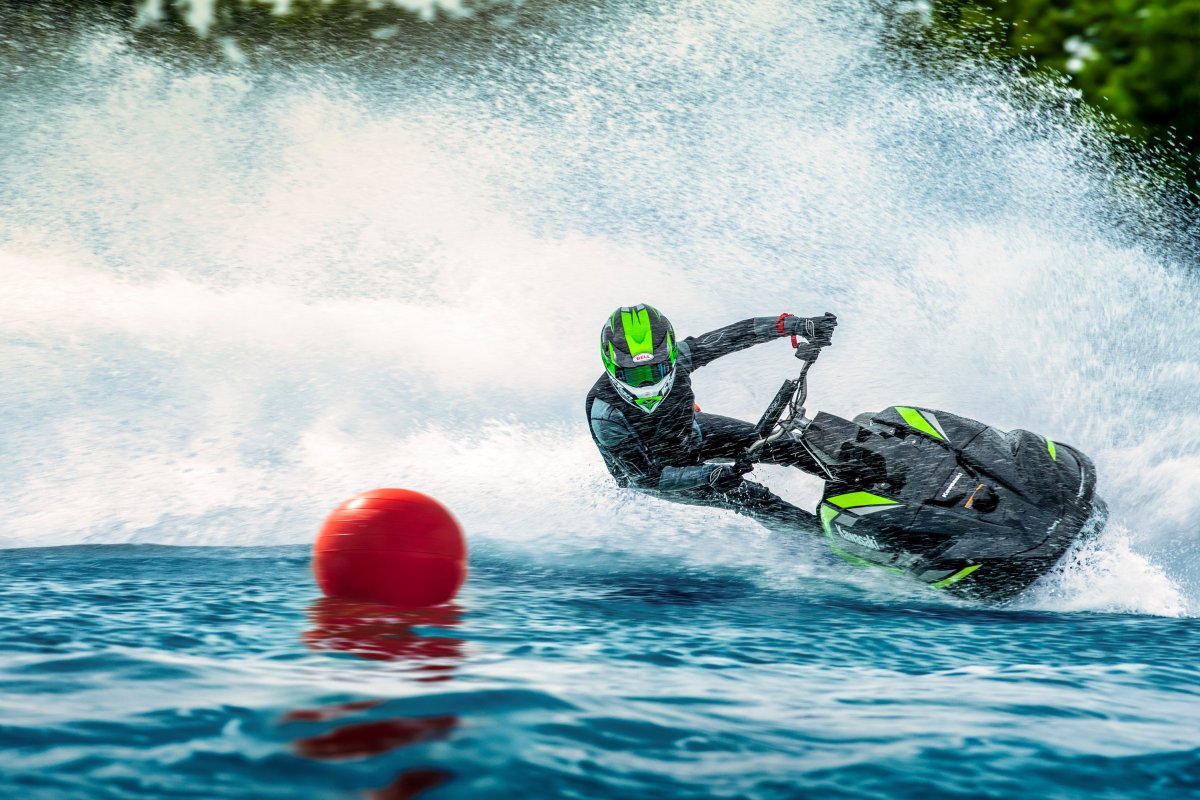
In 1964, John Z. DeLorean, then-president of the Pontiac division, fundamentally altered the automotive landscape by placing a high-displacement V8 engine into a lightweight intermediate chassis, effectively birthing the American muscle car category. For the 2027 model year, Kawasaki Heavy Industries is applying a similar philosophy to the personal watercraft (PWC) sector. By shoehorning its formidable 310-horsepower supercharged 1.5-liter engine—previously reserved for the company’s heavy-duty Ultra touring models—into the nimble and lightweight STX hull, Kawasaki has created its most potent and responsive Jet Ski to date. This strategic move marks a decisive pivot for a company that once defined the industry but has faced increasing competitive pressure over the last two decades.
A Chronology of Innovation and Market Evolution
The history of the Jet Ski is inextricably linked to Kawasaki’s engineering milestones. The industry was inaugurated in 1973 with the release of the JS400, a machine powered by a modest 27-horsepower, 400cc two-stroke engine. These early iterations were exclusively stand-up models, requiring significant physical coordination and athleticism to pilot. While they offered unparalleled maneuverability, the steep learning curve inherent in stand-up riding limited their mass-market appeal.
Throughout the 1980s and early 1990s, the market underwent a seismic shift toward sit-down models. These craft provided the stability that beginners craved, trading the raw, visceral experience of the stand-up for a more accessible, recreational-friendly platform. As sit-down popularity surged, Kawasaki eventually phased out the stand-up category entirely, focusing its research and development on the more stable, family-oriented segments.
The late 1990s introduced environmental pressures that catalyzed the move toward four-stroke engine technology. In 1999, Kawasaki transitioned to a 1.5-liter, four-stroke powerplant derived from its high-performance sport motorcycle division, initially producing 150 horsepower. This platform proved highly adaptable; by 2007, engineers successfully integrated a supercharger, pushing output to 250 horsepower. The 2027 iteration represents the zenith of this evolution, utilizing the Eaton Twin Vortices System (TVS) supercharger technology—a design famously featured in the 2009 Chevrolet Corvette ZR1—to push the engine’s ceiling to 310 horsepower.
Engineering the STX 310: Power Meets Agility
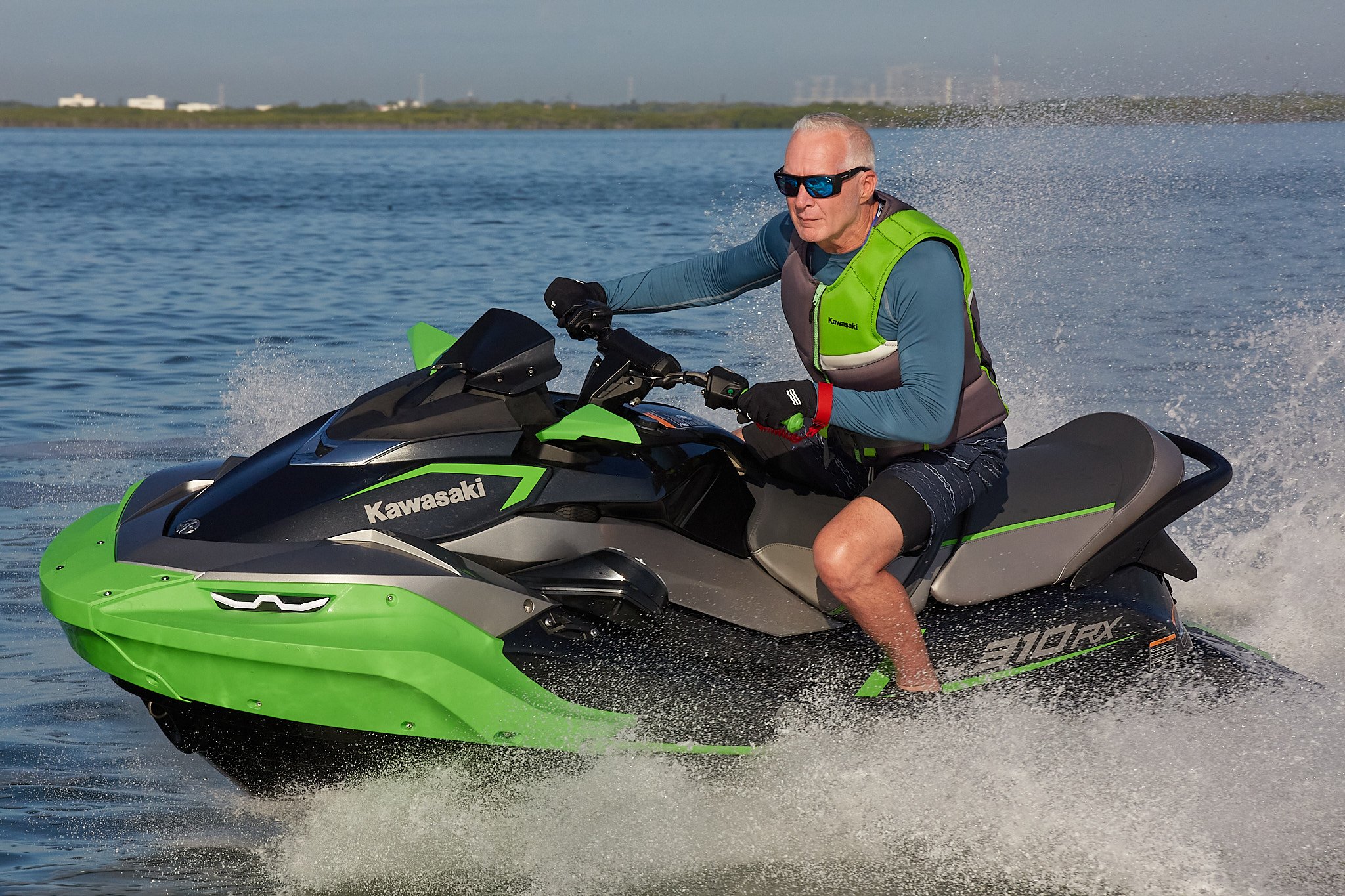
The integration of the 310-horsepower engine into the STX chassis is a feat of engineering balance. The STX hull is renowned for its corner-carving capabilities, and the addition of the high-output motor allows for speeds reaching 65 mph. To handle this power, the drivetrain features a sophisticated 4-into-2-into-1 exhaust system equipped with dual water mufflers, designed to minimize backpressure and optimize thermal efficiency.
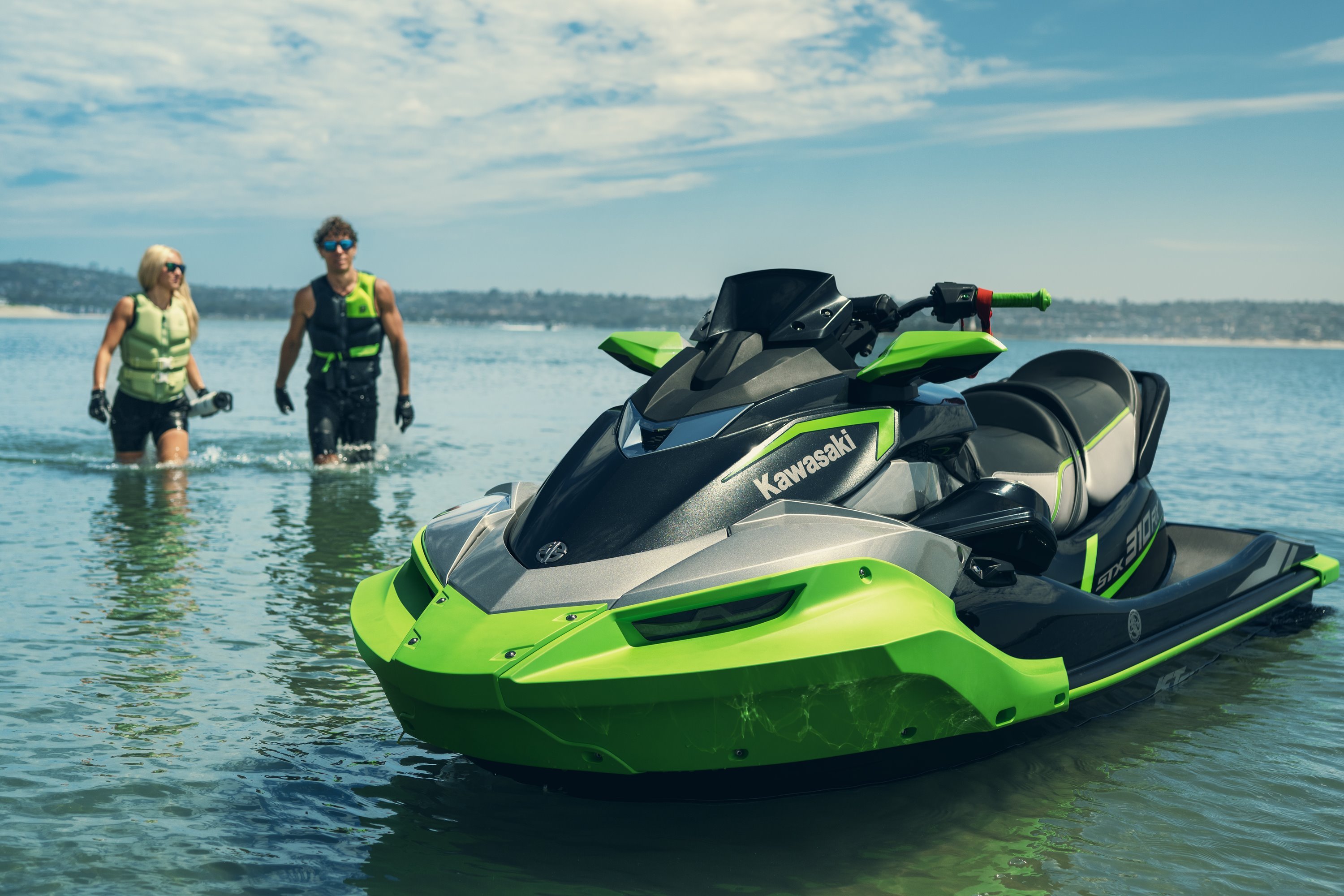
Propulsion is managed by a 160-mm jet pump fitted with a three-blade impeller. The pitch and angle of these blades have been meticulously tuned to translate the engine’s torque into immediate thrust, facilitating rapid acceleration. For the rider, this translates into a machine that feels significantly lighter and more reactive than the larger, luxury-touring vessels that typically house such an engine.
Advanced Electronics and Rider Interfaces
The 2027 STX 310 lineup, which includes the STX 310RX and the STX 310R, represents a modernization of the rider interface. The flagship STX 310RX is equipped with a comprehensive 7-inch digital display. This panel acts as the nerve center for the machine, providing real-time telemetry, including engine RPM, supercharger boost pressure, fuel management, and trim settings. A rear-facing camera system has also been integrated, addressing safety concerns for riders who engage in tow sports like wakeboarding or water skiing.
Kawasaki has also embraced software-defined performance through its proprietary electronic power modes:
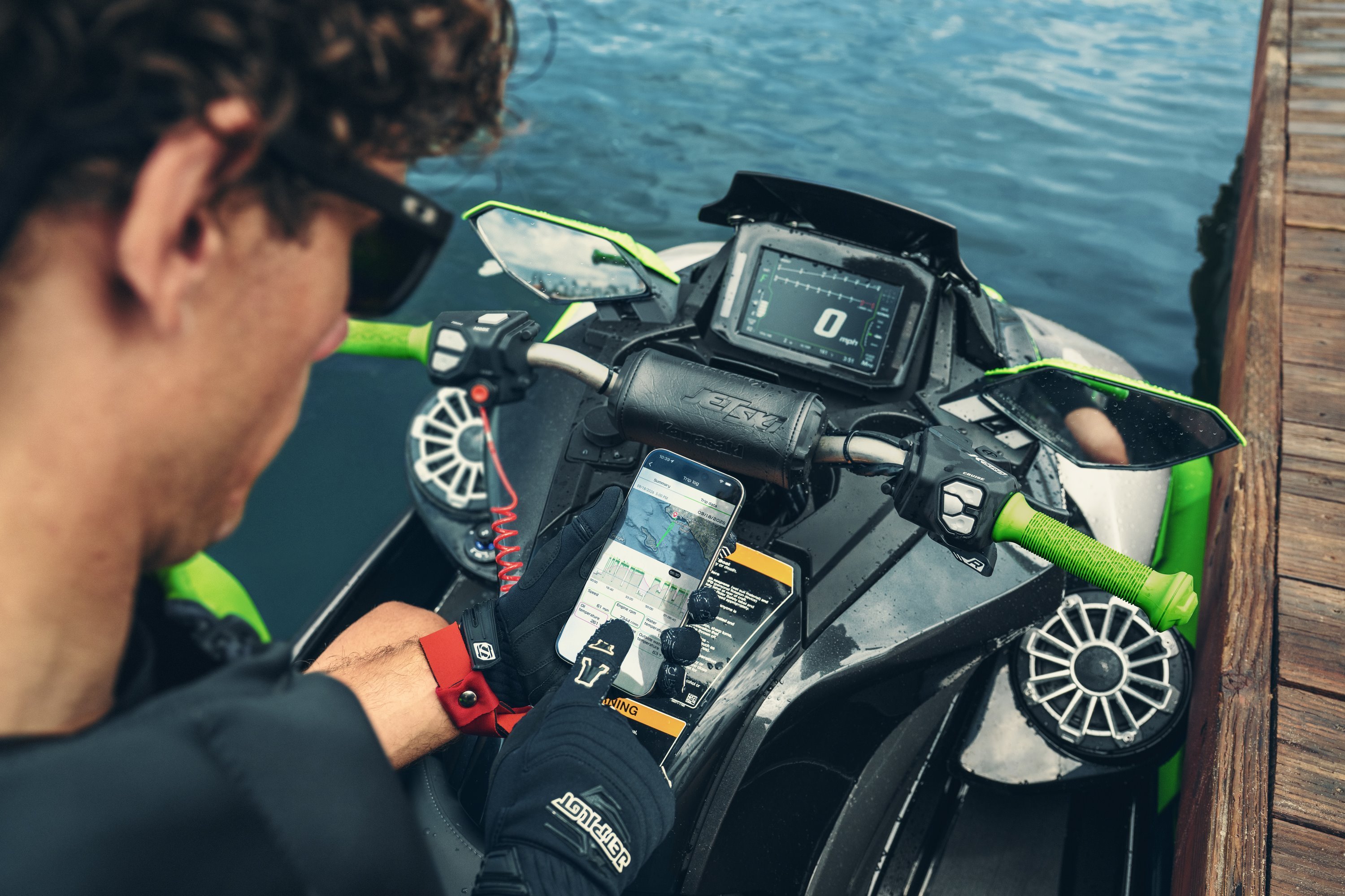
- Full Power Operation (FPO): Unlocks the engine’s full 310-horsepower potential.
- Middle Power Operation (MPO): Caps peak power at 80 percent for more controlled, fuel-efficient riding.
- Lower Power Operation (LPO): Limits output to 60 percent, softening throttle response significantly.
- Smart Learning Operation (SLO): A restricted mode requiring a dedicated key, specifically designed to limit speed and acceleration for novices.
Furthermore, the inclusion of Launch Control—which automatically adjusts the jet pump’s trim during high-acceleration events—ensures the nose of the craft stays planted, maximizing forward thrust and minimizing wasted energy. The addition of a one-touch 5-mph cruise control also provides a practical solution for navigating no-wake zones, a common requirement in congested waterways.
Maneuverability and the Return of the Stand-Up
One of the primary challenges in PWC design is steering; because watercraft lack rudders, they traditionally rely on engine thrust for directional control. Cutting the throttle, therefore, results in a loss of steering input. To mitigate this, Kawasaki has implemented a thrust-reverser system. This mechanism allows the craft to maintain a degree of steering capability even when in neutral, and facilitates a true reverse gear, which significantly simplifies docking and low-speed maneuvers.
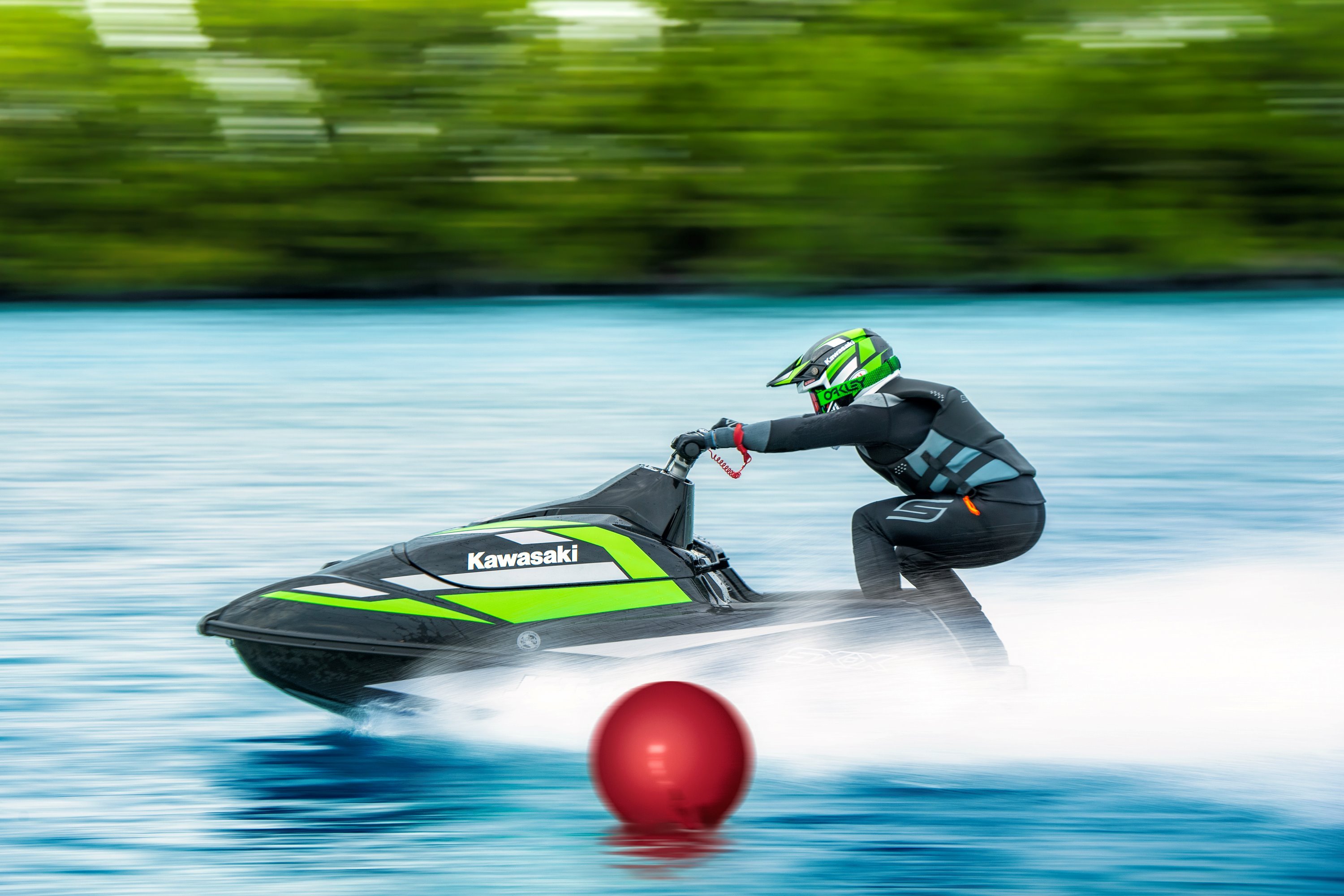
Interestingly, the 2027 model year also marks a deliberate return to Kawasaki’s roots with the reintroduction of the stand-up category, specifically the SX-R 160 and SX-X 160. Following a brief, unsuccessful attempt to revive the format in 2017, the company asserts that the current stand-up models are designed for long-term market presence.
The SX-R 160 features a traditional hinged handlebar that rises as the rider accelerates, while the SX-X 160 utilizes a fixed, motocross-style handlebar. These machines are powered by naturally aspirated 160-horsepower versions of the 1.5-liter engine. The choice of the fixed bar on the SX-X is intended to provide better leverage for riders as they transition from a floating position to a standing start. However, the reliance on a wrist-tethered ignition interlock remains a critical safety feature; if a rider falls, the engine cuts immediately. The ergonomics of these new stand-up models are tailored for a broad range of physical builds, though they demand a higher level of fitness and balance than the sit-down variants.
Market Implications and Strategic Outlook
Kawasaki’s 2027 lineup, which includes five new models across its range, signals a broader corporate strategy to reclaim its status as a leader in the marine recreation industry. By focusing on high-performance metrics and re-establishing its heritage in the stand-up segment, the company is attempting to capture a two-pronged market: enthusiasts seeking the adrenaline of a 310-horsepower "muscle" machine and purists looking for the agility of the classic stand-up format.
The financial barrier to entry for these machines is notable, with the STX 310RX priced at $20,199 and the STX 310R at $18,799. The stand-up models are positioned at a more accessible $11,999. Analysts suggest that by offering a tiered performance lineup, Kawasaki is positioning itself to compete directly with rivals like Sea-Doo and Yamaha, both of which have seen their market shares grow as Kawasaki’s focus on the PWC sector wavered in recent years.
The success of the 2027 initiative will likely hinge on the consumer’s willingness to embrace high-output, supercharged engines in smaller, more aggressive hulls. If the "muscle machine" strategy mirrors the success of the 1960s automotive trend, Kawasaki may well succeed in re-energizing its brand identity. By blending the raw power of its flagship engines with the legendary agility of the STX platform, the manufacturer is betting that performance remains the ultimate currency in the personal watercraft market. For the 2027 model year, at least, Kawasaki appears to have successfully looked back to its own history to move forward with renewed vigor.
Related posts: