NASA Workforce Reductions Impact Major Missions as GAO Warns of Long-Term Programmatic Risks

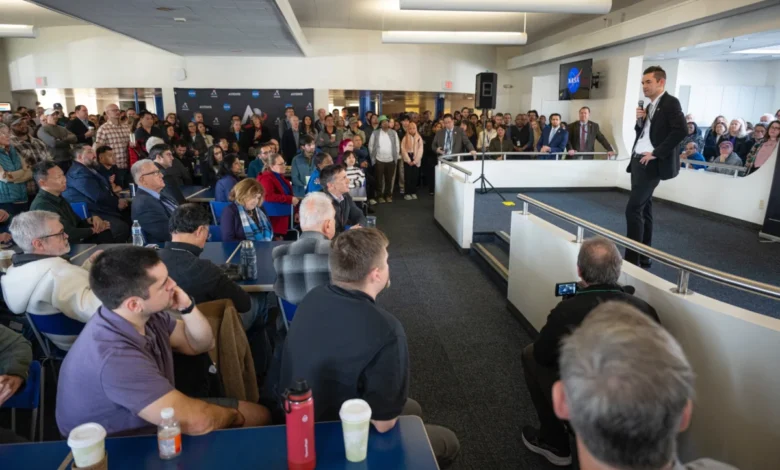
The Government Accountability Office (GAO) has released a comprehensive assessment revealing that more than two dozen of NASA’s most significant space flight projects are currently grappling with the repercussions of a massive exodus of personnel. According to the report, issued on July 23, 2026, the agency lost approximately 22% of its civil servant workforce over the past year, primarily due to a series of voluntary buyout programs and deferred retirement initiatives. This reduction, representing more than a fifth of the agency’s internal expertise, has raised alarms regarding potential schedule delays, cost overruns, and the long-term sustainability of the United States’ most ambitious space exploration and scientific endeavors.
The GAO study, which scrutinized 36 major projects in development, found that 25 of them reported direct negative effects stemming from the workforce imbalance. The report notes that these departures have left NASA’s human capital out of alignment with its programmatic requirements, creating a vacuum in mission-critical roles that are difficult to fill in a competitive labor market. While NASA has historically relied on a mix of civil servants and contractors, the sudden loss of high-level civil servant experience—often referred to as the agency’s "institutional memory"—presents a unique challenge to the management of complex, multi-year missions.
Mission-Critical Impacts: Orion, SLS, and the Artemis Architecture
Among the most high-profile projects affected are those central to the Artemis program, NASA’s flagship effort to return humans to the lunar surface. The Orion spacecraft program, tasked with carrying astronauts to deep space, reported a 10% loss of its civil servant workforce. Project officials informed the GAO that they have faced significant hurdles in filling key leadership and technical positions. While some mitigation strategies have been implemented, the loss of specialized knowledge in spacecraft integration and life-support systems remains a point of concern.
The Space Launch System (SLS), the heavy-lift rocket intended to power the Artemis missions, has fared even worse. The SLS program saw a nearly 20% reduction in its civil servant workforce. The loss of personnel has become so acute that program management is currently evaluating whether to list "workforce availability" as a formal, high-level risk to the program’s success. This is particularly concerning given the ongoing development of the SLS Block 1B, a more powerful variant of the rocket. The GAO identified $478.2 million in net cost overruns across the SLS and Orion programs in the last year alone, suggesting that the thinning of the workforce may already be contributing to fiscal inefficiencies.
Science Missions Under Pressure: The Case of DAVINCI and Venus Exploration
The impact of the workforce crisis extends far beyond human spaceflight into the realm of planetary science. The DAVINCI mission (Deep Atmosphere Venus Investigation of Noble gases, Chemistry, and Imaging), managed by the Goddard Space Flight Center, serves as a poignant example of the current instability. DAVINCI is designed to be the first U.S.-led mission to enter the Venusian atmosphere since 1978, aiming to understand the planet’s formation and evolution.

The mission has faced a "double whammy" of personnel losses and budgetary uncertainty. In addition to losing key technical staff, DAVINCI was threatened with cancellation in the administration’s fiscal year 2026 budget request. While the mission was ultimately funded in the final appropriations bill, allowing for some restaffing, it remains on the list of dozens of missions facing potential termination in the upcoming fiscal year 2027 budget. The GAO report highlights that the inability to immediately replace departing personnel forced DAVINCI leadership to revise and scale back planned risk-reduction activities, potentially increasing the likelihood of technical failures later in the mission’s life cycle.
Geographical Disparities: Goddard and the Center-by-Center Breakdown
The workforce reductions have not been distributed evenly across NASA’s nationwide network of research centers. The Goddard Space Flight Center in Greenbelt, Maryland, has emerged as the hardest-hit facility, losing a staggering 34% of its civil servant workforce. As NASA’s premier center for space science and Earth observation, Goddard manages a massive portfolio of missions; the loss of one-third of its staff represents a systemic threat to the agency’s scientific output.
Other centers have reported significant, though slightly lower, losses:
- Johnson Space Center (Texas): Heavily involved in human spaceflight operations, reporting losses between 16% and 28%.
- Kennedy Space Center (Florida): Facing similar reductions as it prepares for an increased cadence of Artemis launches.
- Ames Research Center (California) and Langley Research Center (Virginia): Both have seen substantial declines in their research-focused workforces.
- NASA Headquarters (Washington D.C.): Suffered the fewest losses, at 11%, highlighting a growing disconnect between the agency’s administrative core and its technical field centers.
The GAO warned that centers experiencing the largest losses may soon reach a breaking point where they can no longer adequately staff the work assigned to them by NASA’s various mission directorates.
Historical Context: Lessons from the Psyche Mission
The current workforce crisis is not occurring in a vacuum. The GAO report draws parallels to the recent challenges faced by the Psyche mission, an orbiter designed to study a unique metal-rich asteroid. In 2022, the Psyche mission missed its launch window due to a variety of factors, chief among them being staffing shortfalls at the Jet Propulsion Laboratory (JPL).
An independent review board later determined that the lack of experienced personnel led to inadequate oversight and technical errors. The resulting one-year delay cost taxpayers an additional $132 million and had a ripple effect across the agency, forcing the delay of the VERITAS mission to Venus. The GAO suggests that the current agency-wide 22% reduction in staff could lead to "Psyche-like" failures on a much larger scale if not addressed immediately.

Identifying the Skill Gaps
The Office of the Chief Human Capital Officer (OCHCO) has identified specific "skill gaps" that are particularly detrimental to NASA’s current mission profile. These gaps are concentrated in highly technical fields where the private sector—led by companies like SpaceX, Blue Origin, and various aerospace startups—is competing fiercely for talent. The critical areas include:
- Aerospace and Mechanical Engineering: Essential for vehicle design and structural integrity.
- Electrical and Computer Engineering: Necessary for the complex avionics and flight software required for modern missions.
- Information Technology and Cybersecurity: Increasingly vital as NASA moves toward more digital, interconnected mission architectures.
OCHCO officials admitted to the GAO that because the workforce reductions were phased through January 2026, the full magnitude of the impact has likely not yet been realized. There is a significant lag time between the departure of a senior engineer and the resulting failure or delay in a complex project.
Strategic Responses: "NASA Force" and Contractor Conversions
In response to the crisis, NASA Administrator Jared Isaacman has initiated several programs aimed at stabilizing the workforce. In February 2026, Isaacman announced that the agency would look to bolster its ranks not just through traditional hiring, but by converting existing contractors into civil servants. This strategy aims to retain talent that is already familiar with NASA’s processes and mission requirements.
Additionally, NASA has launched the "NASA Force" initiative in partnership with the Office of Personnel Management (OPM). This program is designed to bring "high-impact technical talent" into the agency on temporary or "term" assignments, allowing NASA to surge personnel into specific projects during critical development phases.
However, these measures have met with skepticism from some quarters. Critics argue that converting contractors to civil servants is essentially "moving chairs on the Titanic" if the overall budget does not support an increase in total headcount. Furthermore, Isaacman noted in a July 1 letter to the GAO that the total impact of the reductions is "still being assessed," suggesting that the agency is still in a reactive mode rather than a proactive one.
The Fiscal Year 2027 Budget Looming
The future of NASA’s workforce and its major projects remains tethered to the whims of congressional appropriations. The administration’s fiscal year 2027 budget request proposes significant cuts that could exacerbate the current personnel shortage. While a House bill has been introduced to override many of these cuts, Senate appropriators have yet to move forward with a matching spending plan.

The GAO report warns that if the agency is funded at the levels requested by the administration, it could lead to "further workforce reductions or possibly forestall planned hiring." This creates a precarious cycle: without enough staff, projects see cost increases and schedule slips; these failures then make the agency a target for further budget cuts, leading to more staff departures.
Conclusion: A Turning Point for the Agency
As NASA stands on the precipice of a new era of lunar exploration and deep-space science, the findings of the GAO report serve as a sobering reminder that hardware is only as capable as the people who design, build, and operate it. The loss of 22% of the civil servant workforce is more than a statistical anomaly; it is a fundamental shift in the agency’s operational capacity.
While NASA has shown resilience in the face of past challenges, the sheer scale of the current "skill gap" and the geographical concentration of losses at centers like Goddard suggest that the agency’s leadership must make difficult choices. Whether through the "NASA Force" initiative, contractor conversions, or renewed advocacy for budgetary stability, the agency must find a way to rebalance its human capital before the "institutional memory" of the Apollo and Shuttle eras fades entirely, leaving the ambitious goals of the 21st century out of reach.
Related posts: