Decoding the Surface Dynamics of Phobos to Prepare for the Martian Moons eXploration Mission

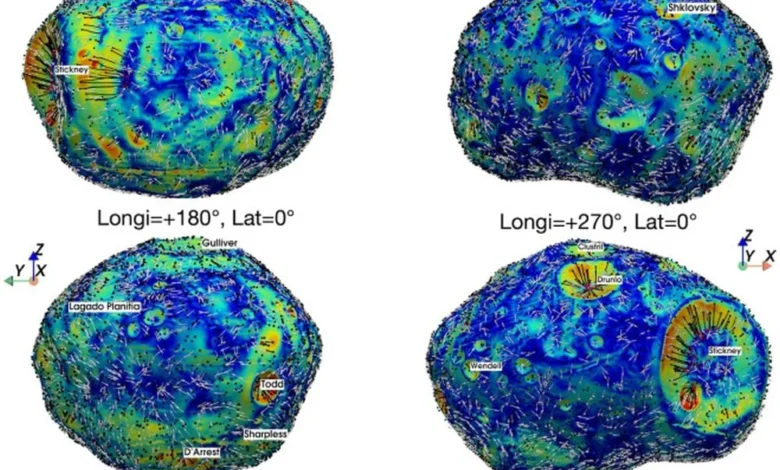
The Japan Aerospace Exploration Agency (JAXA) is currently finalizing preparations for the Martian Moons eXploration (MMX) mission, a groundbreaking initiative poised to redefine our understanding of the Martian system. While the primary objective of the mission is the retrieval of the first-ever physical samples from the Martian moon Phobos, the success of this endeavor relies as much on geological context as it does on engineering prowess. To bridge the gap between orbital observation and surface sampling, researchers have developed a sophisticated "morphodynamic atlas" that maps how material moves across the moon’s unique, low-gravity environment.
The MMX Mission: A Chronology of Discovery
The MMX mission represents a significant technological leap in planetary science. Following its scheduled launch in October, the spacecraft will embark on an interplanetary journey, with an expected arrival at the Martian system in 2027. Upon reaching the vicinity of Phobos, the probe will conduct extensive remote sensing to characterize the landing site before descending to the surface. The mission’s timeline culminates in 2031, when the sample return capsule is projected to land on Earth, delivering approximately 10 grams of lunar regolith for laboratory analysis.
The importance of this mission cannot be overstated. By analyzing these samples, planetary scientists hope to resolve a long-standing debate regarding the origin of Phobos. Currently, two primary hypotheses dominate the scientific discourse: Phobos may be a captured asteroid, essentially a rubble-pile object with a thin, porous crust, or it could be a "second-generation" moon formed from the ejecta of a massive impact event on Mars. The MMX samples will provide the elemental and isotopic signatures required to determine whether this moon is a visitor from the outer solar system or a relic of Mars itself.
The Physics of a Low-Gravity Environment
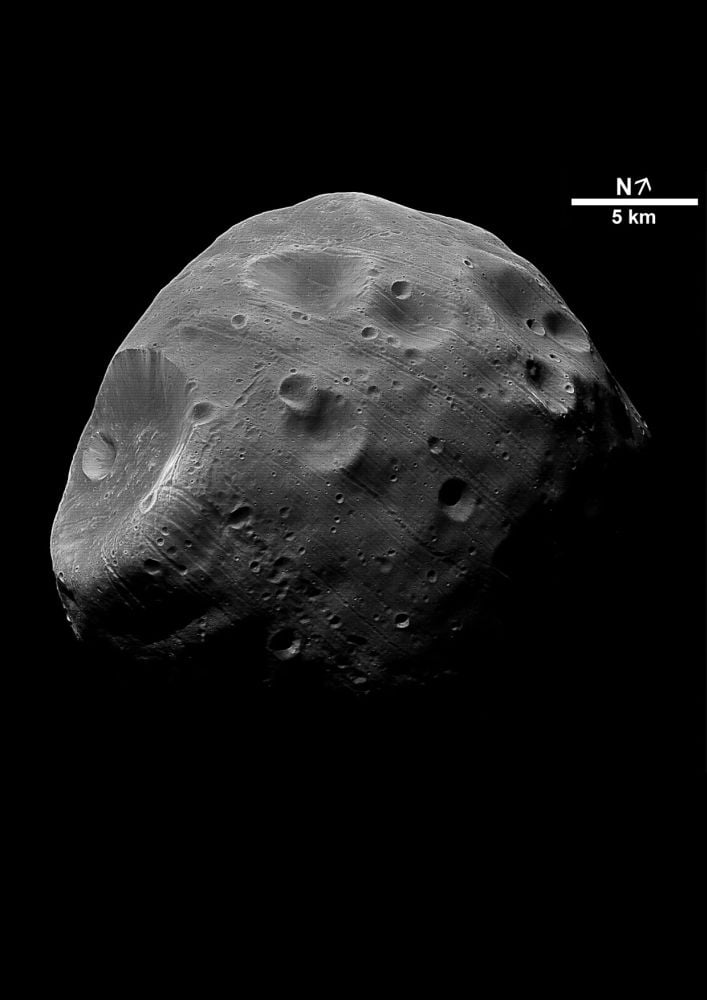
Understanding the geological history of the samples is impossible without a comprehensive model of surface dynamics. On Earth, gravity is the primary force governing the movement of sediment and rock, pulling loose material steadily toward the lowest point. On Phobos, however, the environment is defined by extreme complexity. With a diameter of only about 11 kilometers, the moon’s self-gravity is incredibly weak.
In this low-gravity regime, the movement of regolith is dictated by a chaotic interplay of forces. Scientists Isabel Herreros of the Spanish Astrobiology Center and Sébastien Charnoz of the Institut de Physique du Globe de Paris have recently published a landmark study in Earth and Planetary Science Letters, titled "The dynamical surface of Phobos: A morphodynamic atlas." Their research highlights that surface material is influenced not just by the moon’s topography, but by time-dependent Martian tides, centrifugal forces resulting from the moon’s rotation, and Coriolis effects.
The atlas provides a critical framework for mission planners. Because the MMX spacecraft will only be sampling a few grams of material, knowing exactly where that material originated—and how it arrived at its current resting place—is essential for interpreting the laboratory data that will follow in 2031.
Mapping the Regolith Migration Pathways
To construct the atlas, Herreros and Charnoz utilized a high-resolution digital terrain model (DTM) of Phobos. This model accounts for the moon’s most prominent surface features, including the massive Stickney Crater, various lineaments, and complex groove networks. By mapping the acceleration vectors across the surface, the researchers were able to identify what they have termed "Regolith Migration Pathways" (RMPs).
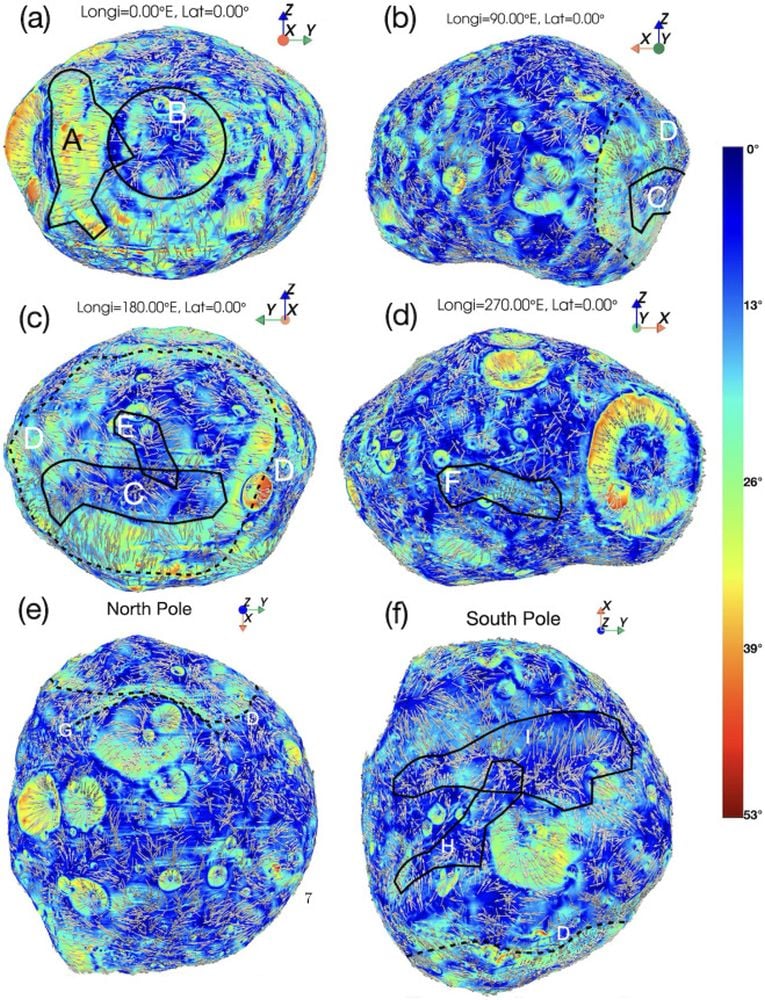
These pathways act as preferred conduits for material transport. The model demonstrates that surface material does not simply tumble down the nearest slope. Instead, it follows a structured, albeit complex, path governed by the combination of gravity, tides, and rotation. The significance of these RMPs is two-fold: they explain the current distribution of smooth, spectrally neutral regolith and provide a predictive tool for the MMX mission’s landing sites.
The findings indicate that different regions of Phobos have vastly different "regolith histories." For instance, areas near the sub-Mars point appear to accumulate material from the eastern outer slopes of the Stickney Crater. This regolith is likely well-mixed and aged, having been exposed to space weathering for eons. In contrast, the anti-Mars point exhibits more active, recent movement, suggesting that samples taken from this region may represent more pristine, subsurface material.
Implications for Sample Collection and Analysis
The selection of landing sites is arguably the most critical operational decision for the MMX team. The JAXA mission plan calls for two distinct sampling events: one at the sub-Mars point and one at the anti-Mars point. The research provided by Herreros and Charnoz offers a high-fidelity map that validates these choices by highlighting the contrasting geomorphological environments of each site.
From a scientific perspective, this research transforms the way we perceive Phobos. Rather than viewing the moon as a static, dead chunk of rock, the atlas characterizes it as a dynamic, evolving system. The presence of "blue spectral slopes," which denote areas that have recently lost loose regolith, compared to the older, redder terrain, suggests that Phobos is a world where surface morphology is constantly being reshaped on a geological timescale.
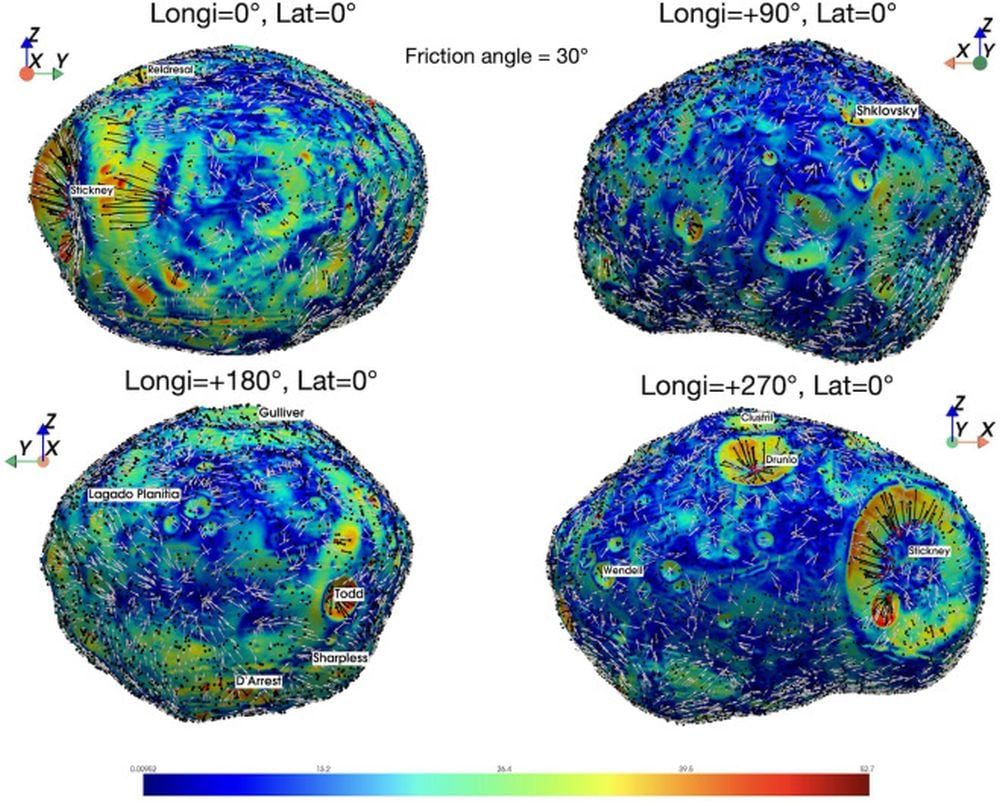
While the current model makes necessary simplifications—such as excluding the effects of libration and specific internal rheological properties—it establishes a robust methodological framework. It allows mission scientists to place the physical samples into a broader geological context. When the samples arrive on Earth in 2031, researchers will not just be analyzing "dust from a moon"; they will be analyzing material that has traveled along specific, mapped pathways, allowing them to trace the history of that material back to its geological source.
Broader Scientific Context and Future Perspectives
The collaboration between European researchers and JAXA highlights the international, interdisciplinary nature of modern space exploration. The development of this atlas is a testament to the fact that space missions are no longer limited to the spacecraft itself, but include a digital ecosystem of models, simulations, and observational data that begin years before launch and continue long after the samples have been secured.
As the launch date for MMX approaches, the global scientific community is watching with anticipation. The mission will provide the first direct, physical evidence to settle the debate regarding the origin of the Martian moons. If the samples confirm that Phobos is indeed a relic of a massive Martian impact, it will provide critical data points for understanding the early, violent history of the inner solar system. Conversely, if the samples reveal an asteroid-like composition, it will open new questions regarding the migration of bodies within our solar system and the mechanisms of orbital capture.
Ultimately, the work of Herreros and Charnoz serves as a reminder that before we can reach out and touch another world, we must first master the mathematics of its surface. By identifying the migration pathways of the regolith, they have effectively cleared the path for the MMX mission to make informed, data-driven decisions that will maximize the scientific return of this once-in-a-generation mission. As we look toward 2027 and the arrival at the Martian system, the clarity provided by this morphodynamic atlas ensures that when the MMX probe finally touches down, it will do so with a profound understanding of the landscape beneath its feet.
Related posts: