Exploring the Sweet Spot for Satellite Constellation Size with Space Inventor on Space Minds

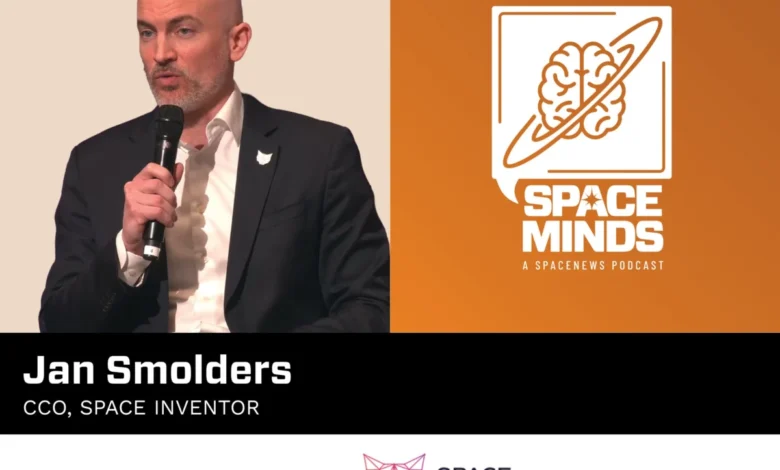
The evolution of modern space architecture has fundamentally shifted away from massive, multi-billion-dollar monolithic satellites toward agile, interconnected networks known as constellations. In this latest episode of Space Minds, SpaceNews Chief Content Officer Mike Gruss sits down with Jan Smolders, Chief Commercial Officer of Denmark-based Space Inventor, to dissect the economics, operational advantages, and strategic implications of mini-constellations. Recorded live at Space Tech Expo Europe, the wide-ranging conversation explores how European defense and commercial frameworks must adapt to rapidly evolving geopolitical realities, the rising demand for payload-centric fleets, and the crucial role that tactical capabilities like tipping and cueing are playing in high-stakes maritime environments such as the Baltic Sea.
The Strategic Pivot to Mini-Constellations
For decades, the space industry operated under the paradigm of traditional spacecraft engineering: heavy, highly complex satellites designed to last fifteen years in orbit, carrying multiple payloads, and requiring extensive development cycles. However, the commercialization of low Earth orbit (LEO) has rewritten the rules of engagement. During their discussion, Gruss and Smolders examine why mini-constellations have emerged as the optimal balance between resilience, cost-effectiveness, and operational redundancy.
A mini-constellation typically consists of a dozen to several dozen small satellites working in unison. Unlike a single large satellite that represents a singular point of failure, a distributed network ensures that the loss of one spacecraft does not degrade the mission. Furthermore, smaller satellites allow for rapid technology refreshment cycles. While a traditional satellite takes a decade from conception to launch—meaning its onboard technology is often outdated by the time it reaches orbit—mini-constellations can incorporate cutting-edge processors, sensors, and communications hardware every few years through sequential batch launches.
Space Inventor, positioned at the intersection of pioneering aerospace engineering and dependable industrial execution, has capitalized on this market shift. Based in Denmark, the company specializes in modular satellite buses and payload-centric architectures that allow commercial and governmental clients to tailor their space assets precisely to their operational requirements. Smolders emphasizes that the modern customer no longer wants a generalized platform; they require specialized, mission-optimized spacecraft that can be deployed swiftly and scaled dynamically.
Bridging the European Investment Gap
A recurring theme in contemporary European aerospace discourse is the continent’s fragmented funding landscape and its historical hesitation to match the rapid procurement speeds of agile commercial entities or global competitors like the United States and China. Smolders addresses this systemic challenge during the Space Minds interview, advocating for structural reforms in how European governments invest in space capabilities.
Historically, European space procurement has been bound by lengthy bureaucratic processes, geographically distributed industrial return requirements (just retour), and risk-averse institutional frameworks. While these mechanisms historically served programs like Ariane and Copernicus well, they are ill-suited for the dynamic needs of modern defense and commercial satellite markets. In an era defined by rapid technological iteration and asymmetric threats, waiting five to seven years for a constellation contract approval renders the resulting technology obsolete upon deployment.
Smolders calls for European institutions to embrace commercial-off-the-shelf (COTS) components, adopt dual-use funding models, and streamline procurement pathways. By fostering a closer relationship between innovative NewSpace primes and traditional defense ministries, European nations can accelerate their time-to-orbit metrics. This acceleration is not merely an economic imperative; it is a vital component of European strategic autonomy and security resilience.

Tactical Operations and the Baltic Sea Case Study
Beyond commercial viability, the conversation pivots to the tactical utility of distributed space assets in contested regional theaters. Smolders highlights the growing operational value of tipping and cueing—a collaborative data-sharing technique where one sensor detects an anomaly or area of interest (the tip) and directs a higher-resolution sensor or different asset to examine it in detail (the cue).
In recent years, the Baltic Sea has transformed into a focal point for geopolitical tension, maritime surveillance, and critical infrastructure protection. The region’s dense commercial shipping lanes, combined with heightened military activity and vulnerabilities surrounding undersea communications cables and pipelines, demand persistent, high-frequency monitoring.
Mini-constellations excel in this environment. By combining wide-swath optical or radar imaging satellites with radio frequency (RF) monitoring payloads, operators can execute real-time tipping and cueing workflows. For instance, an RF satellite can detect an unflagged vessel turning off its Automatic Identification System (AIS) transponder in the Baltic Sea, immediately cueing an optical or synthetic aperture radar (SAR) satellite in the constellation to capture high-resolution imagery of the vessel within minutes. This capability transforms space from a strategic reconnaissance domain into an immediate, tactical decision-making tool for border guards, naval forces, and maritime authorities.
Background Context on Space Minds and Space Inventor
Space Minds is the flagship weekly audio and video podcast produced by SpaceNews, designed to spotlight the industry’s most inspiring leaders, disruptive technologies, and emerging market opportunities. Hosted by Mike Gruss alongside the broader SpaceNews journalistic team, the podcast delivers deep-dive interviews with aerospace founders, scientists, and policymakers every Thursday across SpaceNews.com, YouTube, Spotify, and Apple Podcasts.
This particular episode is sponsored by Space Inventor, a Danish aerospace enterprise renowned for building satellites that embody the philosophy of combining pioneering innovation with absolute reliability. From individual modular components to fully integrated, payload-centric mini-constellations, Space Inventor continues to push the boundaries of what small satellites can achieve, operating under its core mission statement: Make Space for Progress.
Implications for the Future of Global Aerospace
The insights shared by Jan Smolders on Space Minds underscore a permanent transformation in how humanity utilizes low Earth orbit. The sweet spot for constellation size is no longer defined by maximum physical scale, but by optimal modularity, resilience, and responsiveness. As commercial operators and defense agencies alike grapple with increasingly complex orbital and terrestrial threat environments, the demand for agile, rapidly deployable, and interoperable satellite networks will only accelerate.
For Europe, bridging the gap between innovative engineering and rapid governmental procurement will determine whether the continent remains a leading space power or falls behind in the commercial NewSpace race. Through companies like Space Inventor and platforms like Space Minds fostering critical industry dialogue, the aerospace community continues to chart a pragmatic path forward—balancing bold technological ambition with the rigorous demands of modern security and commerce.