The Transportation Security Administration (TSA) has issued an open call for volunteers to participate in its Canine Decoy Program, a vital initiative designed to sharpen the olfactory detection capabilities of working dogs deployed across the nation’s aviation infrastructure. While the program offers members of the public an opportunity to engage directly with highly trained security animals, the mission is fundamentally a rigorous, professional training exercise. By acting as "covert role players," volunteers assist in simulating the complex, high-pressure environments that K9 units encounter daily, ensuring that both the handlers and their canine partners remain proficient in identifying potential threats within crowded airport terminals.
The Mechanics of the Canine Decoy Program
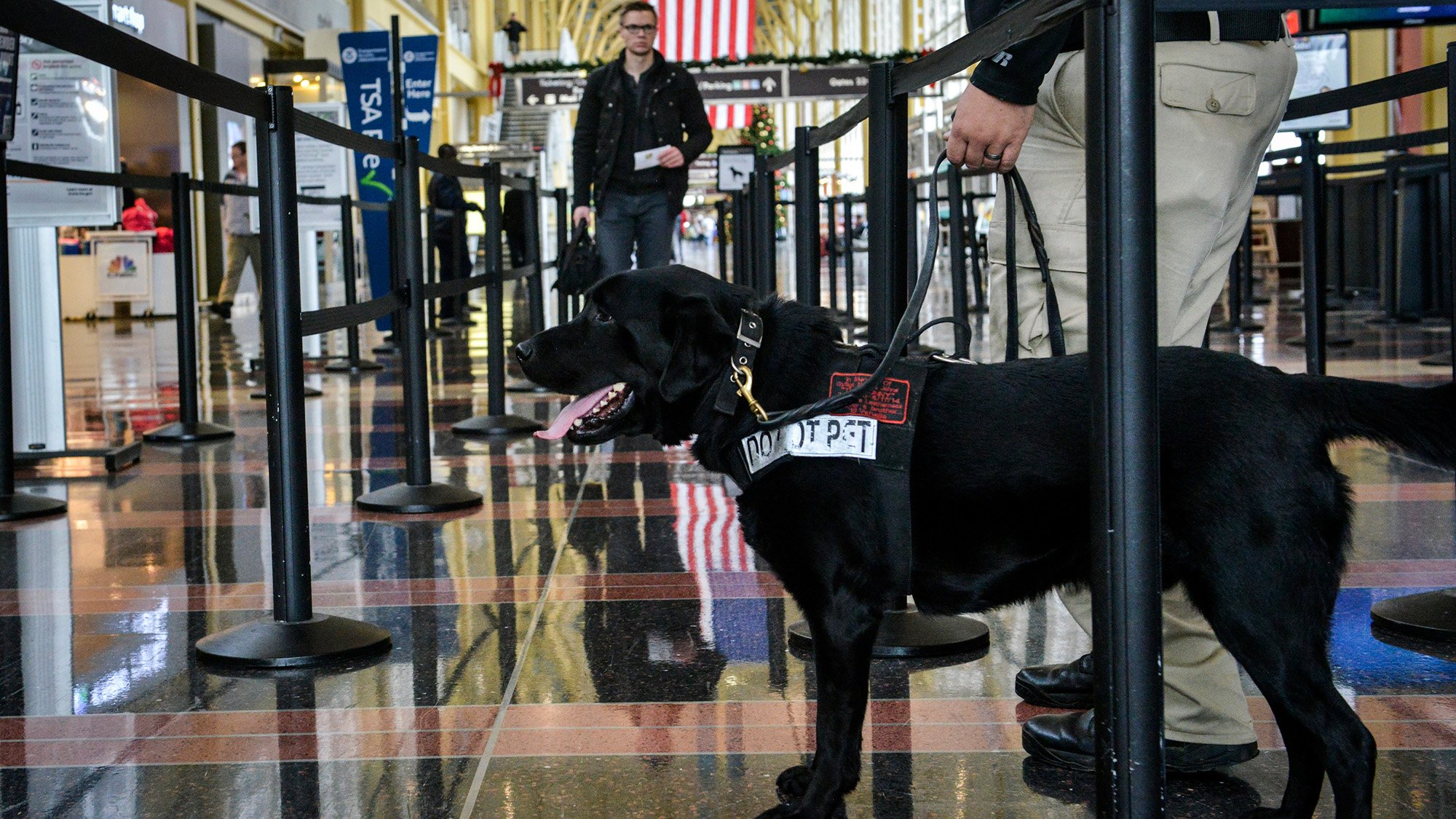
The TSA’s explosive detection canine teams are a critical layer of the agency’s "defense-in-depth" strategy. These dogs are trained to detect a wide array of explosive odors, even amidst the chaotic sensory environment of a busy airport, which includes competing scents from food, perfumes, and thousands of travelers.
To maintain this high level of accuracy, the agency requires a continuous stream of fresh, unpredictable variables during training. This is where the decoy program becomes essential. Volunteers are assigned to move through various zones of an airport—including ticketing lobbies, security checkpoints, and baggage claim areas—while carrying specialized training aids. The goal is to mimic the behavior of a standard passenger so that the K9 team can practice identifying a target without the dog becoming accustomed to the same familiar faces or patterns of the regular training staff.
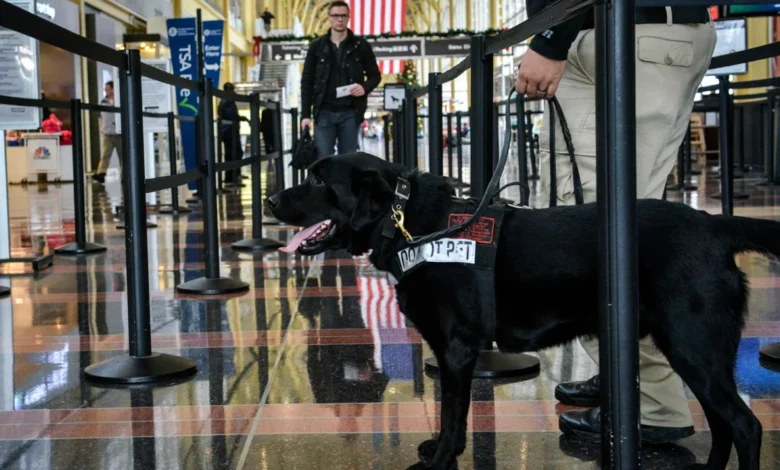
The process is designed to be as realistic as possible. A volunteer might be instructed to walk through a terminal, stand in a queue, or sit near a gate, effectively becoming a "blind" target. The canine team must then detect the presence of the training material on the volunteer’s person or in their immediate vicinity. This high-stakes game of "hide and seek" is essential for desensitizing the dogs to public movement while reinforcing their ability to isolate specific, hazardous chemical signatures.
Chronology and Development of TSA Canine Operations
The use of canines by the TSA has evolved significantly since the agency’s inception following the attacks of September 11, 2001. Initially, the reliance was heavily placed on technological solutions such as Advanced Imaging Technology (AIT) and millimeter-wave scanners. However, the agency quickly recognized that technology, while effective, lacks the mobility and rapid adaptability of a canine’s biological sensor.
By the mid-2000s, the TSA began formalizing its National Explosives Detection Canine Team Program (NEDCTP). Throughout the 2010s, the program expanded to include not only government-owned teams but also partnerships with local law enforcement agencies. The introduction of the decoy program was a logical evolution to address the "human factor" in aviation security. By 2015, the use of K9s had become a staple of major hubs like Ronald Reagan Washington National Airport, and the standardized testing procedures for these teams became increasingly complex. Today, the program operates as a sophisticated feedback loop: trainers observe the dog’s response to the decoy, adjust the difficulty of the scenario, and record performance metrics to ensure that each team meets federal certification standards.
Data and Performance Metrics
The efficacy of these canine teams is supported by significant performance data. According to industry studies, a trained explosive detection dog can outperform most man-made vapor-detection machines in terms of speed and the ability to detect trace amounts of explosive material in real-time, dynamic environments.
The TSA maintains a rigorous certification process for its teams. Each canine and handler pair must pass an annual evaluation that includes testing in multiple environments. The decoy program contributes directly to the "Detection Rate" and "False Alarm Rate" metrics. A low false alarm rate is just as important as a high detection rate, as excessive false alerts can cause significant operational delays in airports. Volunteers help the dogs learn to differentiate between legitimate threats and the "noise" of a busy terminal, thereby increasing the overall efficiency of airport security flow.
Requirements for Participation
The TSA has established specific criteria for individuals wishing to contribute to this national security effort. Participation is limited to individuals 18 years of age or older, though minors may accompany a guardian under restricted conditions. Because the training involves navigating airport terminals, volunteers must possess the physical capability to walk and move through standard airport environments. However, the agency has made significant efforts to ensure inclusivity; the program welcomes individuals who use wheelchairs or other mobility aids, recognizing that the diversity of the passenger population is a crucial element of realistic training.
The commitment required is relatively minimal compared to the impact on public safety. A typical training session lasts between two and three hours. During this time, participants are under the supervision of professional trainers who provide clear instructions on how to interact—or, more importantly, how not to interact—with the K9s. This ensures that the dogs remain focused on their tasks and are not distracted by social reinforcement from the decoys.
Official Perspective and Safety Protocols
TSA officials emphasize that the safety of both the dogs and the volunteers is the primary concern. "This training is a serious and important part of keeping our canine teams ready for duty," a TSA representative noted in the program’s official solicitation. All training aids used during these exercises are inert, meaning they pose no actual danger to the volunteers or the public.
The training is strictly controlled. Handlers and instructors oversee the entire process, and there is no point at which a volunteer is left unsupervised. This structured environment is intended to replicate the tension of real-world security without the associated risks. By integrating civilians into the training loop, the TSA not only improves its operational readiness but also fosters a deeper public understanding of the critical role these animals play in aviation security.
Broader Impact and Future Implications
The integration of civilian decoys into TSA operations is part of a larger trend in security science: the move toward "behavioral-based" and "dynamic-environment" testing. As the threat landscape changes—with adversaries constantly adapting their tactics to circumvent traditional security hardware—the need for agile, flexible detection methods has never been greater.
Canine teams are currently considered one of the most effective tools for screening passengers and cargo. They are inherently mobile, capable of being deployed to different parts of an airport in response to intelligence reports or emerging threats. Furthermore, the psychological impact of visible K9 patrols is a documented deterrent in security studies, as it complicates the planning process for potential bad actors.
Looking toward the future, the TSA continues to refine its breeding and training programs to produce dogs with higher drive and better focus. The annual "Cutest Canine" contest, which features dogs like the 2026 winner, Bolt, serves as a public-facing component of a broader effort to humanize and celebrate the work of these animals. While the contest provides a lighter, community-focused aspect to the program, it also draws public interest toward the necessity of the underlying mission.
Ultimately, the Canine Decoy Program serves as a bridge between the agency and the public. It transforms the average traveler from a passive recipient of security measures into an active participant in the safety of the national transportation system. As the agency looks to improve its detection rates and adapt to the challenges of the coming decade, these volunteer-led exercises will remain a cornerstone of its commitment to maintaining the integrity of the aviation network. For those who choose to volunteer, the experience offers a unique vantage point into the high-stakes world of explosive detection, providing a rare look at the invisible, scent-based defenses that keep modern travel secure.