Cosmic Vampire Unmasked: NASA Discovery Explains Star Faking 27 Supernova Explosions

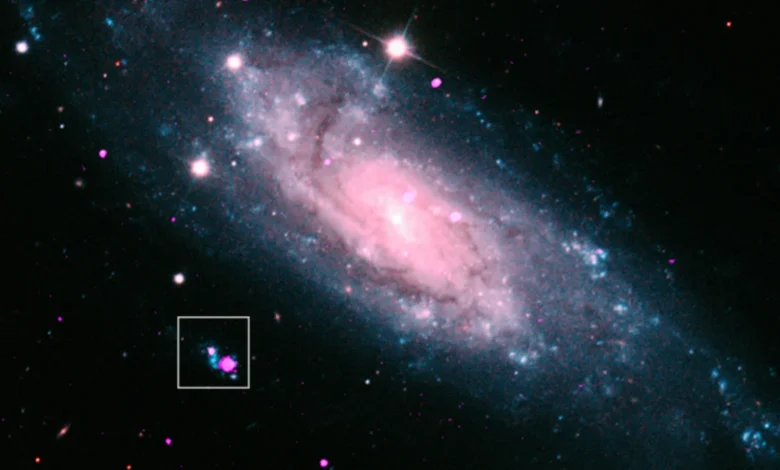
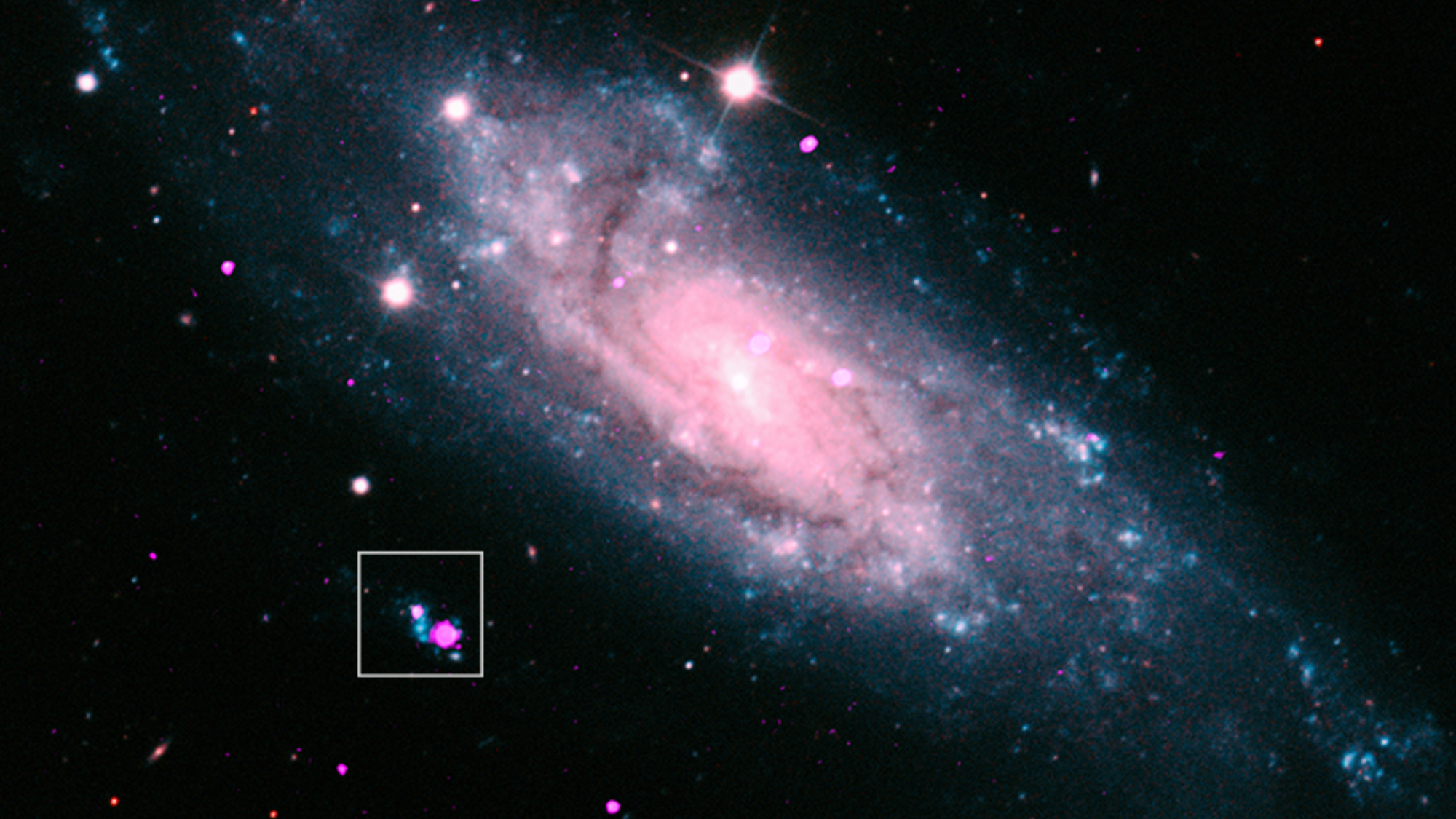
Astronomers using NASA’s Chandra X-ray Observatory have unmasked a cosmic imposter that has repeatedly simulated its own demise 27 times over the span of a decade and a half. Located in the outskirts of the spiral galaxy NGC 4559—situated approximately 25 million light-years away in the constellation Coma Berenices—the celestial body known as AT 2016blu was initially mistaken for a massive stellar explosion, or supernova. However, ongoing observations revealed a persistent pattern of cyclical outbursts every 113 days, proving that the star was surviving each catastrophic event. Recent X-ray data has finally illuminated the true engine behind these repeated brightenings: a volatile, ultra-massive luminous blue variable (LBV) star being systematically fed upon by an unseen compact companion, operating effectively as a stellar vampire.
The breakthrough findings, detailed in a study published in The Astrophysical Journal, resolve a long-standing mystery surrounding "supernova imposters." For years, scientists recognized that certain massive stars undergo erratic episodes of mass loss and dramatic brightening without undergoing true core-collapse death. Yet, the precise physical
mechanism driving these rhythmic, predictable outbursts remained unknown until coordinated X-ray and optical monitoring captured the system in the act.
A Timeline of Discovery and False Alarms
The saga of AT 2016blu began in earnest on January 11, 2012, when automated sky surveys detected a sudden, intense spike of optical light on the periphery of NGC 4559. At first glance, the event matched the observational profile of a traditional supernova—the terminal explosion of a massive star that has exhausted its nuclear fuel supply. However, unlike true supernovae, which leave behind expanding nebulae while their central illumination permanently fades, the light from AT 2016blu eventually subsided only to ignite again.
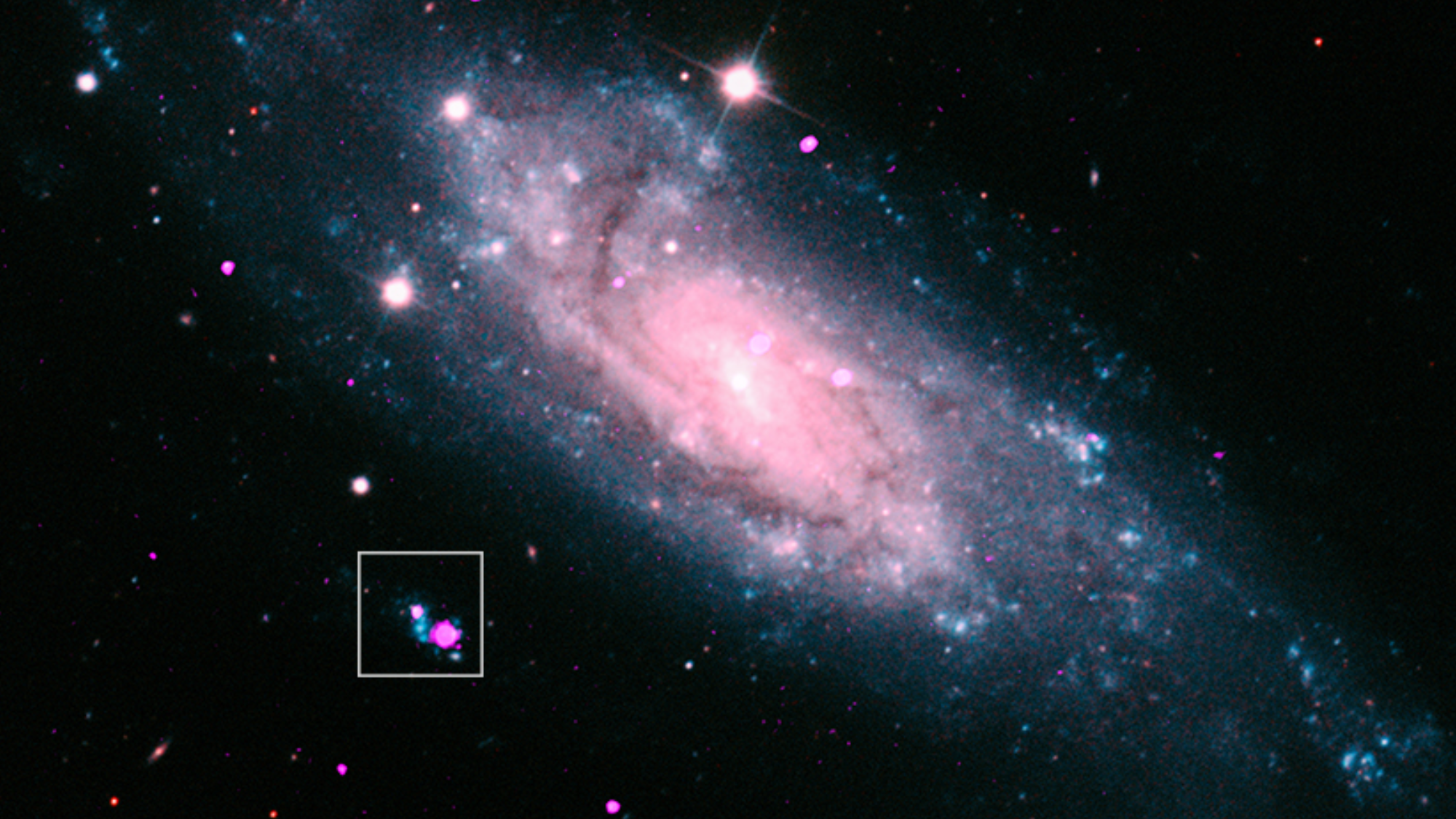
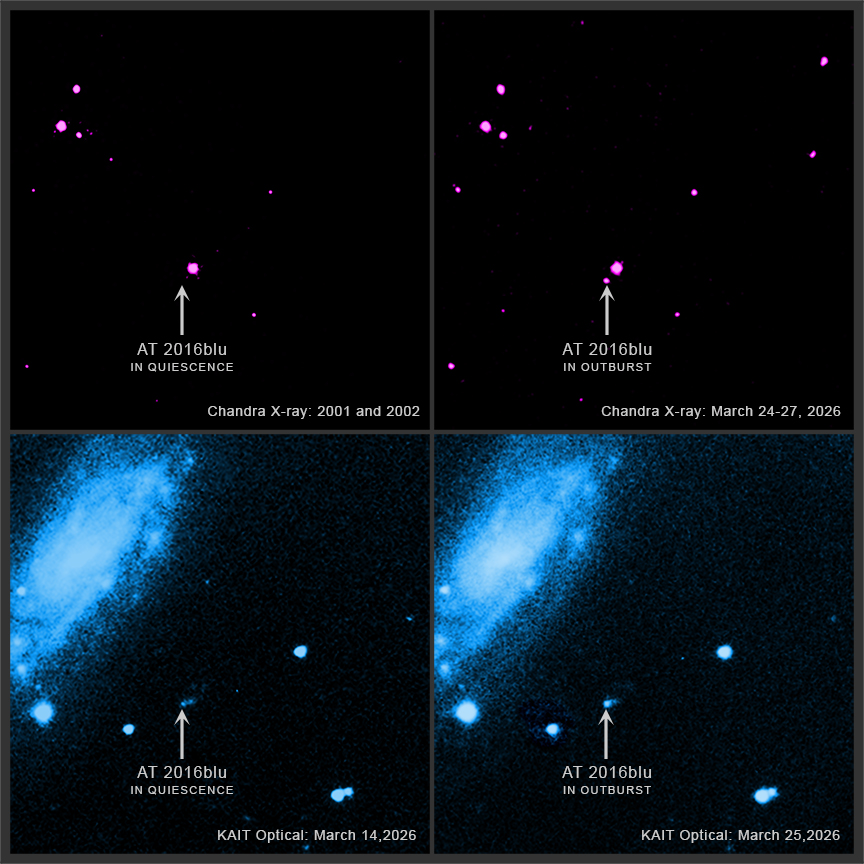
Subsequent historical analysis revealed that the object had been active long before its formal designation. Archival data showed that the star had been brightening and dimming on a strict 113-day cycle for roughly fifteen years. Additional archival records from NASA’s Chandra X-ray Observatory, which serendipitously imaged the region of NGC 4559 back in 2001 and 2002 without recording notable anomalies, provided a crucial baseline for comparison.
The turning point arrived in March 2026. Recognizing that capturing the phenomenon required precise timing, a team of researchers led by Mojgan Aghakhanloo of the University of Virginia successfully coordinated a targeted observation using Chandra just as AT 2016blu entered a predicted outburst phase. This timely intervention caught a powerful surge of high-energy X-rays coinciding precisely with the optical brightening, providing the missing observational link necessary to decipher the system’s architecture.
Anatomy of a Binary Predator
The data captured by Chandra exposed a complex binary star system locked in a gravitational dance. AT 2016blu itself is classified as a luminous blue variable, a rare and intensely bright category of star exceeding 33 times the mass of our sun. Because these stars push the boundaries of stellar stability, their outer envelopes constantly shed material into surrounding space.
However, the LBV is not acting alone. Orbiting the massive star on an elliptical 113-day path is a compact, high-gravity stellar remnant: either a neutron star or a stellar-mass black hole. These dense objects are the ultimate products of ancient supernovae, indicating that AT 2016blu originated as a binary system where one companion evolved and collapsed long before the other.
As the compact object swings along its elliptical trajectory, it reaches a periastron point where it makes its closest approach to the luminous blue variable. At this juncture, the intense gravitational field of the neutron star or black hole strips material directly from the unstable outer layers of the primary star.
The Mechanics of the Cosmic Illusion
The process of mass transfer is violent and energetically complex. The stolen stellar material does not fall immediately onto the compact object; instead, it forms a rapidly spinning accretion disk. As the matter spirals inward toward the neutron star or black hole, friction and gravitational compression heat the gas to extreme temperatures, releasing a massive blast of high-energy X-rays.
These X-rays act as a catalyst for a secondary, highly visible reaction. As the intense radiation surges outward, it collides with the dense clouds of gas and dust that the luminous blue variable had previously ejected into the surrounding space. The surrounding circumstellar material absorbs the X-ray energy, heats up, and subsequently glows brilliantly in optical wavelengths.
"We suspected that the bright repeating flashes at optical wavelengths might actually be powered by periodic blasts of high-energy X-rays," explained study co-author Nathan Smith of the University of Arizona in Tucson. "The dense gas surrounding the system is heated by the X-rays and then glows in the optical."
Calculations performed by the research team indicate that the compact object devours a staggering minimum of 440 billion trillion pounds of material annually—with the true figure potentially scaling up by two orders of magnitude. While this transfer rate represents a massive volume of matter, it accounts for a mere fraction (approximately 800 millionths) of a solar mass each year, allowing the massive primary star to sustain its losses over extended periods without immediate destruction.
Astrophysical Implications and Broader Context
The discovery surrounding AT 2016blu carries significant implications for several branches of modern astrophysics, particularly in understanding ultra-luminous X-ray sources (ULXs). ULXs are astronomical objects that emit more X-rays than standard binary systems can typically produce, and their exact underlying power sources have remained heavily debated. Because AT 2016blu is bright enough to qualify as a ULX, it offers a potential laboratory for examining how matter behaves when accreted at rates that push or exceed the Eddington limit—the theoretical maximum luminosity an object can achieve when balancing gravitational inward pull against radiation outward pressure.
Furthermore, the research bridges the gap between unstable luminous blue variables and interacting binary systems. Prior to this study, only one other supernova imposter—designated SN 2010da—had demonstrated clear evidence of X-ray emissions driven by mass transfer onto a companion. However, unlike AT 2016blu, SN 2010da features a red supergiant companion rather than a compact stellar remnant like a black hole or neutron star.
By capturing the exact moment of high-energy interaction, the research team has validated theoretical models that attribute recurrent optical outbursts not to internal stellar convulsions, but to external gravitational interactions. As astronomers continue to analyze the data from Chandra and complementary ground-based optical telescopes, AT 2016blu stands out as a unique cosmic laboratory, demonstrating how stellar cannibalism can successfully mimic the most violent explosions in the universe.