NASA Calls for the Next Generation of Space Explorers to Join the Artemis Era and Future Mars Missions

NASA has officially opened the application window for its next class of astronaut candidates, signaling a pivotal moment in the agency’s long-term strategy to establish a sustainable presence on the Moon and prepare for the inaugural human journeys to Mars. This recruitment drive comes at a time when the agency is balancing the complex demands of the Artemis program, the management of the International Space Station (ISS), and the development of deep-space habitats. Prospective applicants have until 11:59 p.m. EST on Thursday, Dec. 3, to submit their credentials through the agency’s official portal at https://go.nasa.gov/3WyvlQi.
The selection process, which is expected to conclude with final appointments in late 2027, aims to identify a diverse cohort of individuals capable of handling the high-stakes environment of long-duration spaceflight. As the agency pivots toward the lunar South Pole—a region of significant scientific interest due to its potential water-ice deposits—the requirements for the next generation of astronauts have evolved to emphasize technical proficiency in fields such as geology, resource utilization, and deep-space life support systems.
A Legacy of Exploration and the Path Forward
Since the inception of the astronaut corps in the early 1960s, NASA has selected only 370 individuals to undergo the rigorous training required for spaceflight. The current corps consists of 32 active astronauts, a relatively small number given the increasing frequency of commercial crew launches and the expanding scope of lunar exploration.
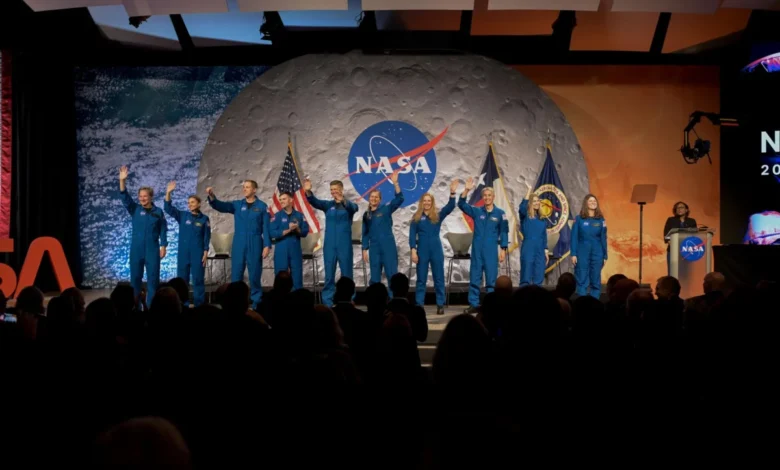
The timeline of recent recruitment highlights the competitive nature of the program. In 2024, NASA opened its doors to thousands of applicants, resulting in the selection of 10 candidates in 2025. These individuals are currently midway through a two-year training program at the Johnson Space Center in Houston, where they are learning the intricacies of spacewalking, robotics, and the operation of high-performance T-38 jets. The 2027 class will be expected to integrate seamlessly into this established training pipeline, preparing them for roles that extend far beyond low-Earth orbit.
The Criteria for Selection: Engineering and Experience
Becoming a NASA astronaut is a process designed to filter for exceptional resilience and multidisciplinary expertise. To be eligible, applicants must be U.S. citizens and hold a master’s degree in a STEM field—encompassing engineering, biological science, physical science, or computer science. The requirement for advanced academic standing is non-negotiable, reflecting the reality that modern space missions are effectively floating scientific laboratories requiring complex problem-solving in real-time.
Beyond academic pedigree, NASA mandates at least three years of progressively responsible professional experience. For those with a background in aviation, the agency accepts flight experience as a proxy for this professional requirement, provided the applicant has logged significant time in command of high-performance aircraft. Similarly, medical professionals may count residency training toward this experience, provided the training is slated for completion by July 2027.
However, technical capability is only one component of the profile. The Astronaut Selection Board, chaired by Chief Astronaut Scott Tingle, emphasizes that the ideal candidate must also demonstrate superior communication skills, emotional intelligence, and the ability to function within a high-pressure, multi-cultural team environment. In the confines of a lunar habitat or a transit vehicle headed for Mars, interpersonal dynamics become a matter of mission safety.
Official Perspectives on the New Recruitment Drive
The call for applications has been met with enthusiasm from NASA leadership, who view this recruitment as an investment in the next century of space operations. NASA Administrator Jared Isaacman emphasized the gravity of the upcoming missions. "The people we select could walk on the Moon, live and work at the Moon Base, and help pioneer the systems and operations that will ultimately carry crews to Mars," Isaacman stated. "These missions will demand technical excellence, sound judgment, teamwork, and courage. We are looking for those willing to take on extraordinary challenges in service to the nation."
Echoing this sentiment, Deputy Administrator Matt Anderson underscored the historical significance of the moment. "The window is open. The mission is waiting. And the only thing missing from the greatest adventure humanity has ever embarked upon is you," he remarked. This sense of urgency is not merely rhetorical; it reflects the tight scheduling required to align the Artemis lunar architecture with the ambitious goals set for the 2030s.
Broader Implications: The Artemis Era and Beyond
The expansion of the astronaut corps is directly linked to the broader objectives of the Artemis program. Unlike the Apollo era, which was characterized by short-duration "flags and footprints" missions, the Artemis era is predicated on establishing a permanent foothold on the Moon. This requires the development of the Gateway—a lunar-orbiting outpost—and a suite of surface infrastructure, including power grids, lunar terrain vehicles, and pressurized habitats.
From an analytical standpoint, the need for new astronauts is a byproduct of the "Golden Age of Innovation" that NASA is currently navigating. As private-sector partners like SpaceX, Blue Origin, and others take on a larger role in launch and landing logistics, the role of the NASA astronaut is shifting toward becoming a mission commander and scientific operator of unprecedented complexity. They are no longer just pilots; they are geologists, engineers, and biomedical researchers working to unlock the secrets of the lunar crust and test the technologies required to keep humans alive during the multi-month transit to Mars.
Furthermore, the economic implications of these missions are substantial. By fostering a lunar economy, NASA aims to stimulate technological breakthroughs in manufacturing, recycling, and resource extraction—technologies that have significant spin-off applications on Earth. The selection of the 2027 class will be a defining factor in whether the agency meets its objectives for international collaboration and scientific discovery.
Preparing for the Rigors of Space
The training regimen that awaits the successful applicants is among the most demanding in the world. Candidates will be subjected to the "long-duration astronaut flight physical," a comprehensive medical evaluation that ensures they can withstand the physiological stressors of space, including microgravity-induced bone density loss, radiation exposure, and the psychological isolation of deep-space travel.
Training modules include:
- Neutral Buoyancy Laboratory (NBL) Operations: Underwater training that simulates the weightlessness of space, essential for practicing complex assembly tasks.
- Geological Fieldwork: Hands-on training in planetary geology, often conducted in remote, rugged environments on Earth to prepare for lunar exploration.
- Systems Engineering: Deep-dive education into the mechanical and electrical systems of spacecraft, allowing for critical repairs in the event of hardware failure.
- Survival Training: Wilderness and sea survival courses designed to prepare crews for emergency landing scenarios.
A Call to Action for the Next Generation
For those who meet the stringent requirements, the application process is the first step in a career that defines the boundaries of human achievement. The agency is looking for a diverse range of candidates, including those who may not have traditionally seen themselves in the role of an astronaut. As the requirements for space missions broaden to include more specialized scientific research, the diversity of the candidate pool becomes an asset, ensuring that the corps possesses the varied perspectives necessary for mission success.
As the deadline of Dec. 3 approaches, the agency continues to host virtual information sessions and webinars to assist applicants with the process. The path to becoming an astronaut is long and fraught with competition, yet it remains one of the most prestigious career paths in the United States.
For the successful few who are selected in 2027, the future holds the promise of being among the first humans to touch the lunar South Pole, or perhaps the first to step onto the red sands of Mars. The agency’s message is clear: the technology is evolving, the missions are defined, and the infrastructure is being built. The only remaining variable in this grand equation is the human element—the next generation of explorers who will lead humanity into the stars.
Interested individuals are encouraged to review the full documentation and application criteria at the official website, go.nasa.gov/astro2026, where they can find detailed information on the specific STEM fields recognized by the agency and guidance on how to structure their applications for the highest chance of success. As NASA looks toward the horizon, the next class of astronauts will play a vital role in ensuring that the future of exploration remains bold, inclusive, and grounded in the spirit of scientific discovery.