Astronomers observe a massive exoplanet vanish from view due to intense gravitational interaction with a neighbor

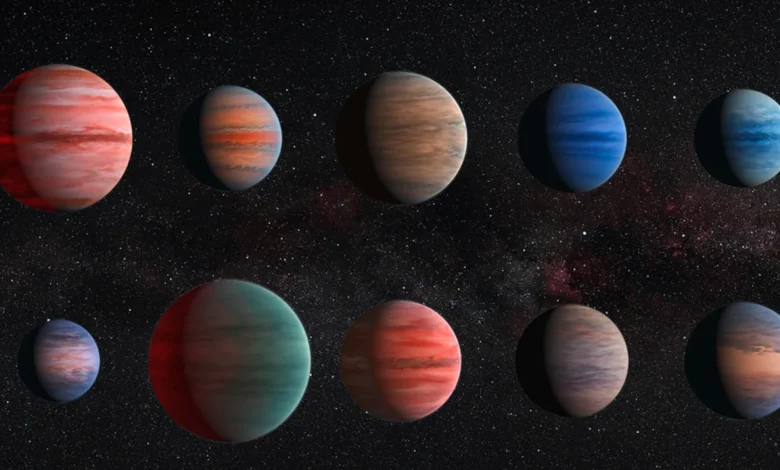
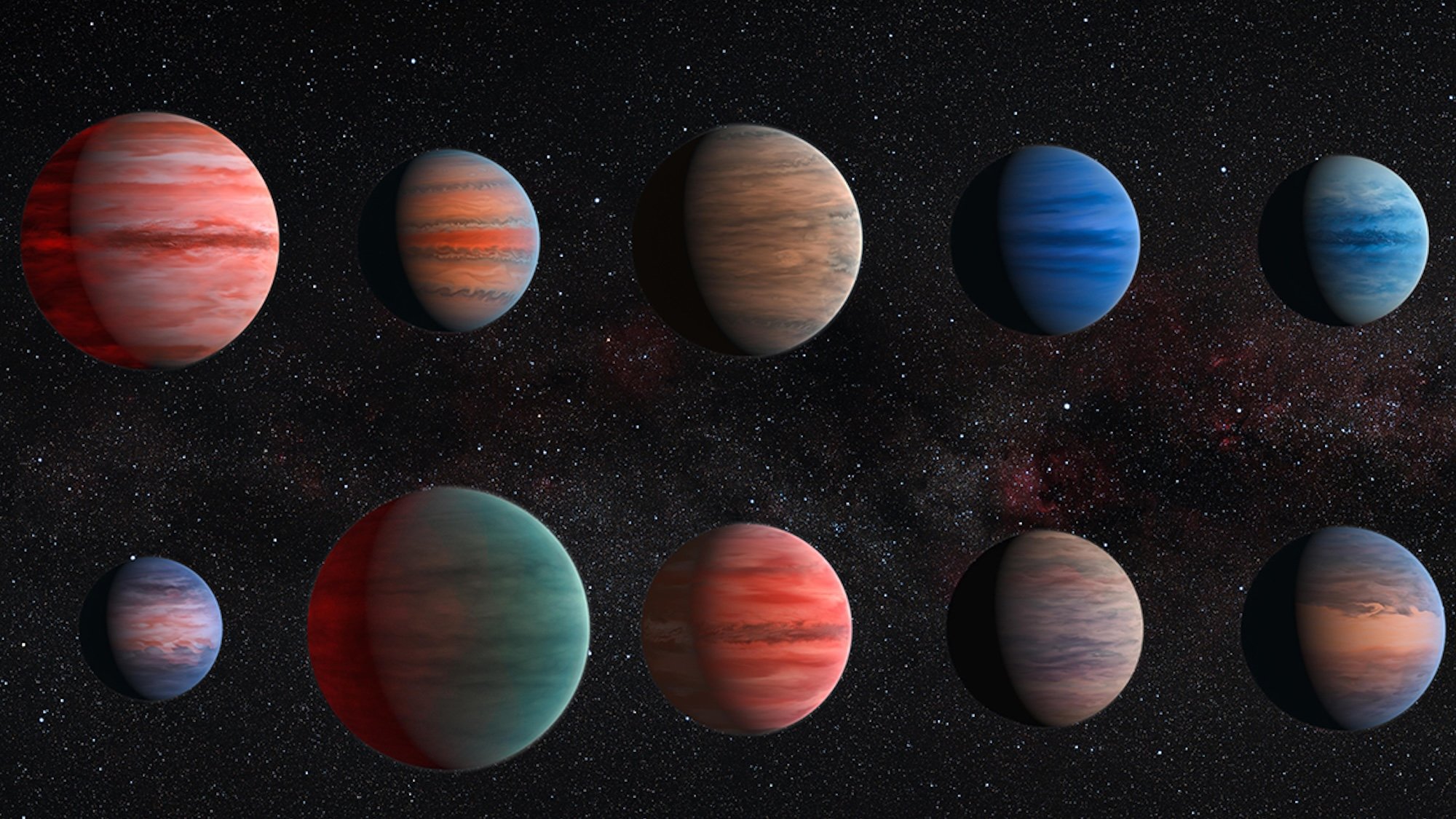
For the first time in the history of modern exoplanetary research, astronomers have documented a gargantuan world effectively disappearing from the sight of Earth-based telescopes. The exoplanet, designated TOI-2535 b, is a "hot Jupiter"—a gas giant of immense proportions that orbits its parent star at a proximity far tighter than that of Mercury to our own sun. Rather than being destroyed or evaporating into the void, this planet has been forced out of its transit alignment by the gravitational influence of an unseen, neighboring celestial body, causing its orbit to wobble in a manner reminiscent of a spinning top losing its momentum.
This discovery, recently published in The Astrophysical Journal Letters, challenges the long-held notion that planetary systems operate with the mechanical predictability of a clock. Instead, it highlights the complex, chaotic, and often violent gravitational "dance" that occurs in multi-planet systems. The observation was made possible through long-term monitoring by NASA’s Transiting Exoplanet Survey Satellite (TESS), a mission designed to detect the faint, periodic dimming of stars caused by planets passing in front of them.
The Mechanics of a Disappearing World
The process by which TOI-2535 b became invisible is rooted in orbital dynamics. Under normal circumstances, a transiting planet passes directly between its host star and the observer, blocking a small fraction of the star’s light. This predictable dip in brightness allows researchers to calculate the planet’s orbital period, size, and composition.
In the case of TOI-2535 b, however, the regularity of these transits was disrupted. Between 2019 and 2026, data collected by TESS revealed that the transits were arriving progressively earlier or later than the expected schedule—by as much as six hours. Furthermore, the light curves—the graphical representations of the star’s brightness—showed that the transits were becoming shorter and shallower. This signaled to astronomers that the planet’s orbital plane was tilting, gradually angling itself away from our line of sight.
By March 2026, the transit ceased entirely. The planet had not been destroyed; it had simply tilted its orbit to such an extent that it no longer crosses the face of its star from the perspective of the TESS telescope.
A Chronology of Observations
The investigation of the TOI-2535 system began in April 2019, shortly after the TESS mission began its primary survey of the southern sky. Initial observations established that TOI-2535 b was an exceptionally short-period planet, completing a full orbit in just 8.25 days. By comparison, Mercury, the innermost planet of our solar system, requires 88 days to complete its journey around the Sun.
Over the next seven years, researchers maintained a consistent watch on the system. By 2023, the team, led by Samuel Yee of the University of California, Los Angeles (UCLA), noted significant deviations in the transit timing. These variations were not the result of instrument error but suggested strong gravitational "n-body" interactions. As the orbit of the hot Jupiter shifted, the transit duration began to decay. The final observation in early 2026 marked a milestone in exoplanetary science: the first recorded "evaporation" of a transit signal due to nodal precession, or the wobbling of the orbital plane.
Gravitational Dynamics and the "Wobble" Effect
The cause of this dramatic orbital shift is an unseen, massive companion planet. According to the research team, the two planets are locked in a gravitational tug-of-war. The companion planet exerts a torque on TOI-2535 b, forcing its orbital plane to precess. This is the same physical phenomenon that governs the relationship between the Earth, the Moon, and the Sun.
As noted by Erik Petigura, an astrophysicist at UCLA and co-author of the study, the reason we do not see a solar eclipse every month on Earth is that the Moon’s orbit is tilted relative to the Earth’s orbit around the Sun. If the two planes were perfectly aligned, the Moon would cross the Sun’s face every month. In the case of TOI-2535 b, the gravitational influence of its neighbor has pushed the planet’s orbit into a similar state of misalignment, but at a much more rapid and extreme rate.
"We think of the universe as resembling clockwork, where everything is regular, but that’s not true," Samuel Yee stated in a release following the study’s publication. "If there are multiple planets in a system, they can affect each other’s orbits."
Implications for Exoplanet Detection
This discovery carries significant implications for how astronomers interpret data from space telescopes. If a large portion of exoplanets in multi-planet systems are undergoing similar nodal precession, it implies that our current census of planets may be incomplete. Many worlds that were once visible to TESS or the Kepler Space Telescope may have simply "wobbled" out of alignment, leading researchers to believe they are absent or that the star is solitary.
The study suggests that the "disappearance" of TOI-2535 b is not a permanent state. Based on the calculated rate of precession, the planet’s orbit will likely continue to tilt, and it may become visible again in approximately 30 to 50 years as its path once again intersects with the line of sight between its star and Earth.
Contextualizing Hot Jupiters
Hot Jupiters are defined as gas giants with masses comparable to or greater than Jupiter, but with orbital periods of less than 10 days. Since the discovery of 51 Pegasi b in 1995, the first exoplanet found orbiting a sun-like star, these worlds have been a primary focus of study. They are often used as "laboratories" for testing theories of planetary migration—the process by which planets form in the outer reaches of a star system and move inward.
The TOI-2535 system provides a rare, real-time look at how these massive worlds interact. The intense heat of the host star, combined with the gravitational strain from a companion, creates an environment of extreme instability. Understanding these dynamics is crucial for scientists trying to determine why some solar systems remain stable for billions of years while others, like TOI-2535, appear to be in a constant state of flux.
Future Research Directions
Following the publication of the findings, the astronomical community is now turning its attention toward identifying the "invisible" companion responsible for the wobble. Using radial velocity measurements—a technique that tracks the slight "tug" a planet exerts on its host star—astronomers hope to pin down the mass and orbital characteristics of the second planet.
This research represents a shift in focus from merely finding planets to understanding the long-term evolution of their orbits. The ability to witness such a significant change in an orbital plane within a single human lifetime is unprecedented and provides a new benchmark for computational models of planetary system formation.
As for the future of the TOI-2535 system, researchers will continue to monitor the star’s brightness. Even though the primary transit is currently obscured, the unseen companion may eventually reveal its own transit, or the precession of the hot Jupiter may eventually bring it back into view. The "vanishing" of TOI-2535 b serves as a poignant reminder that the cosmos is a dynamic environment where the stability of an orbit is not guaranteed, but rather a temporary configuration in a much larger, more chaotic narrative.
For the scientific community, the "disappearing act" of TOI-2535 b acts as a call to re-evaluate archival data. By looking for similar timing variations in other known systems, researchers hope to uncover more examples of planets that are currently "hiding" in plain sight, having tilted out of view long before we had the technology to track their motions with such precision. This work ensures that the study of distant worlds remains as much about the unseen forces of gravity as it is about the planets themselves.
Related posts: