Apple MacBook Pro OLED transition signals a major shift for the global display market as supply chain competition intensifies for future models

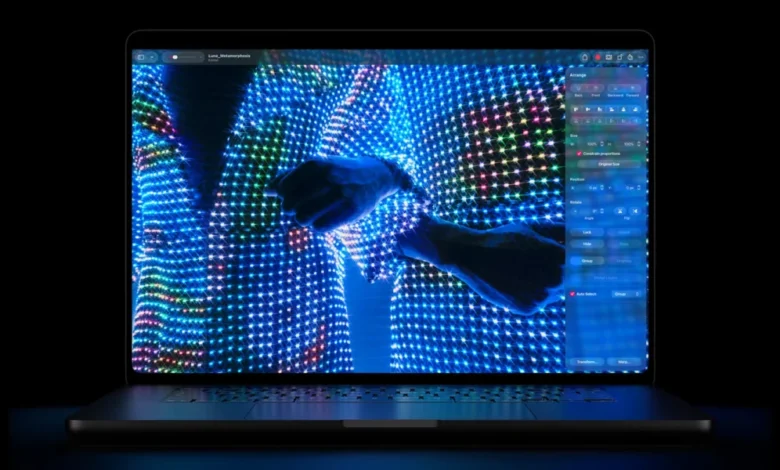
Apple’s recent unveiling of the redesigned, touchscreen-enabled MacBook Pro has officially ushered in a new era for the company’s laptop lineup, marking the most significant display architecture shift since the adoption of Mini-LED. By integrating tandem OLED technology—a sophisticated configuration that stacks two OLED layers to achieve superior brightness, longevity, and power efficiency—Apple is not merely updating its hardware; it is signaling a tectonic shift in the display manufacturing landscape. According to the latest analysis from industry research firm TrendForce, this move is poised to serve as a primary catalyst for the widespread adoption of OLED panels in the broader notebook market through the end of the decade.
The introduction of this technology follows years of industry speculation and strategic supply chain alignment. The tandem OLED architecture, which debuted on the M4 iPad Pro in 2024, has now become the cornerstone of Apple’s premium laptop experience. As Apple moves to transition its high-end portable machines to OLED, the ripple effects are already being felt across the semiconductor and display manufacturing sectors, with global suppliers vying for contracts that could define their revenue streams for the next several years.
A Chronology of the OLED Transition
The journey toward an OLED-equipped MacBook Pro was characterized by a series of precise supply chain maneuvers and leaked roadmaps that provided the industry with a clear window into Apple’s long-term strategy.

The groundwork began in earnest by late 2025. In September of that year, reports from The Elec indicated that Samsung Display was ramping up preparations for mass production of 14-inch and 16-inch OLED panels specifically tailored for the MacBook Pro. This timeline suggested an initial annual output capacity of between 2 million and 3 million units, a figure that signaled Apple’s intent to maintain a high-end, exclusive rollout.
By February 2026, the industry narrative had shifted toward the MacBook Air. While early rumors suggested a 2027 arrival for an OLED MacBook Air, supply chain analysts and reports from Samsung confirmed a delay, pushing the anticipated release to 2029. This adjustment highlighted the complexities of scaling tandem OLED production to meet the price-sensitive and volume-heavy requirements of the Air lineup. Throughout this period, TrendForce maintained a consistent outlook, correctly predicting that 2026 would be the breakout year for the MacBook Pro’s display transition, while the subsequent years would see a rapid expansion of OLED penetration across the entire notebook ecosystem.
Market Projections and Shipment Forecasts
TrendForce’s latest data paints a compelling picture of the market’s trajectory. For the 2027 calendar year, Apple is expected to ship between 1.2 million and 1.5 million units of the new, touchscreen-capable MacBook Pro. While these initial figures may appear modest relative to Apple’s total annual laptop volume, they represent a significant premium-tier entry into the OLED space.
The global impact, however, is much larger. TrendForce projects that the total market for OLED notebooks will experience a surge, with year-over-year shipment growth of nearly 40% in 2026, followed by a sustained increase of more than 40% in 2027. This growth trajectory is attributed to a "halo effect" created by Apple’s market entry. While Windows-based manufacturers—including Lenovo, HP, and ASUS—have been the pioneers of OLED adoption in the PC space, Apple’s participation acts as a stamp of industry validation. By normalizing OLED for high-end professional workflows, Apple is expected to drive consumer demand and force component suppliers to increase manufacturing yields, which will ultimately lower the cost of production for all market participants.

Supply Chain Competition: The Battle for the MacBook Air
As Apple eyes the 2029 timeline for an OLED-equipped MacBook Air, a fierce battle has emerged among display manufacturers. The supply chain for this future device is currently a theater of intense competition between LG Display, BOE, and TCL CSOT.
Unlike the high-margin, low-volume nature of the MacBook Pro, the MacBook Air represents a higher-volume product that requires significantly more cost-efficient manufacturing processes. Consequently, suppliers are not only competing on display quality but also on their ability to scale production and manage the cost-per-unit metrics that are essential for the thinner, more accessible Air chassis. LG Display is currently seen as a frontrunner due to its existing partnership with Apple, but the aggressive advancements from Chinese manufacturers like BOE and TCL CSOT represent a significant challenge to the incumbent’s market share. The outcome of this competition will likely dictate the pricing structure for the 2029 MacBook Air and could potentially dictate the pace at which OLED technology becomes the standard, rather than the exception, in the laptop market.
Economic and Consumer Implications
Despite the excitement surrounding the new technology, analysts are keeping a close watch on potential headwinds. The new MacBook Pro enters the market at a premium starting price of $2,899 for the 14-inch model. TrendForce suggests that this price point, combined with the fact that Apple will continue to offer existing Mini-LED models in the short term, may temper immediate replacement demand. Many enterprise customers and creative professionals may opt to wait for the technology to mature or for the initial price premium to subside before committing to a full-scale fleet upgrade.
However, the long-term outlook remains bullish. As the technology matures, the "premium" label will likely dissolve, mirroring the historical path of Retina displays and liquid crystal innovations. By 2030, TrendForce estimates that global OLED notebook shipments will reach approximately 46.6 million units. While the annual growth rate is expected to peak at 42.8% in 2028 before tapering to 30.8% by 2030, the sheer volume of units indicates that OLED is on track to become the dominant display technology for portable computing within the next five years.

Analysis: Why Tandem OLED Matters
The significance of the tandem OLED technology in the MacBook Pro cannot be overstated. Standard single-layer OLEDs have historically struggled with "burn-in" issues and brightness limitations when used in fixed-interface desktop-like environments—such as a laptop OS with static toolbars and dock icons. By employing a tandem structure, Apple is effectively doubling the lifespan of the display and allowing for higher brightness levels that match or exceed the performance of their previous Mini-LED implementations.
This shift has broader implications for the industry. It forces competitors to move away from older LCD and basic LED-backlit technologies, accelerating the research and development budgets of display panel manufacturers. Furthermore, it validates the touchscreen-laptop hybrid concept for a company that was previously skeptical of the form factor. By merging a professional-grade OS with touch capabilities on an OLED canvas, Apple is essentially challenging the design philosophies of its competitors, potentially triggering a new wave of innovation in laptop ergonomics and input methods.
Looking Toward the Future
As the industry moves toward 2028 and beyond, the success of the OLED transition will be measured by the ability of suppliers to maintain consistent quality at scale. The roadmap is set: after the initial adoption by the MacBook Pro, the technology will gradually move down the product stack, eventually becoming the standard for the mass-market MacBook Air.
For the consumer, this translates into a future where the visual fidelity, contrast ratios, and power efficiency once reserved for smartphones and tablets are the baseline for professional computing. For the industry, it signifies a consolidation of supply chain power and a massive capital investment into the future of display technology. Apple has once again played the role of the market maker, and the trajectory of the next half-decade in computing hardware will undoubtedly be defined by the company’s decision to embrace the OLED era. As manufacturers continue to battle for the favor of the Cupertino giant, the clear beneficiary will be the consumer, who stands to gain from a more competitive, technologically advanced, and vibrant display market.