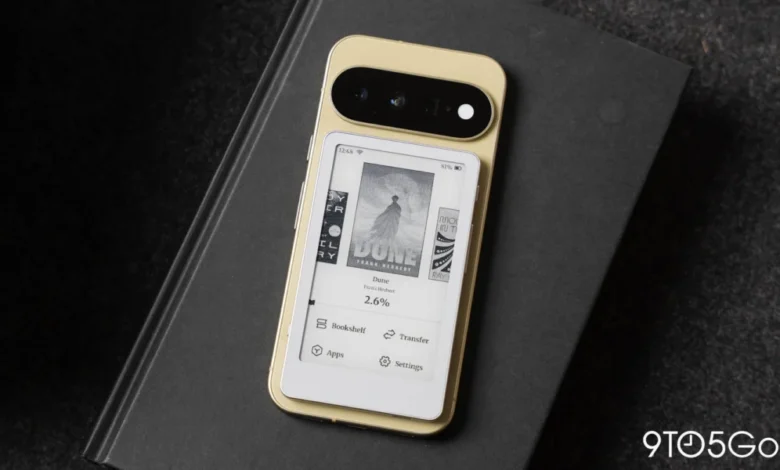
The consumer electronics landscape has seen a diversification of e-reader form factors, ranging from large-format, note-taking tablets to pocket-sized devices. Historically, manufacturers have prioritized screen real estate, often sacrificing portability for the sake of mimicking a physical book’s dimensions. However, the emergence of the Boox Picco, which stands at approximately 4.15 inches in height with a 3.97-inch display, represents a distinct shift toward hyper-portability. Priced at $109, this device targets users who view traditional e-readers as cumbersome and who prefer a dedicated reading experience over the distractions inherent in smartphone-based reading applications.

Design and Form Factor: The Philosophy of Minimalism
The primary objective of the Boox Picco’s engineering team was to minimize the physical footprint of the device to the point where it becomes a secondary accessory rather than a primary burden. With a thickness of only 5.5 millimeters, the device is comparable to the size of a standard MagSafe or Qi2-compatible wallet. This allows for seamless integration with mobile devices, specifically when paired with an optional magnetic case.
The design philosophy behind the Picco is a departure from the "all-in-one" approach of previous Android-based Boox tablets, such as the Boox Palma. By removing the operating system overhead of Android, the developers have eliminated the ability to install third-party applications like Kindle or Google Play Books. While this decision may alienate users who rely on ecosystem-specific library synchronization, it serves a functional purpose: it reduces system bloat, extends battery life, and streamlines the user interface to focus exclusively on the consumption of EPUB files.

Technical Specifications and Operational Workflow
The Boox Picco operates on a proprietary, closed-loop software system. Because it does not feature an app store, the transfer of literary content is managed via a dedicated companion application. This workflow requires a manual "handshake" between the user’s smartphone and the e-reader via the companion app. Once the devices are paired, users can transfer EPUB files from their device’s local storage or cloud services directly to the Picco’s internal library.
Despite its entry-level price point, the device includes hardware features often reserved for more expensive models. This includes a front-light system managed by a dedicated physical switch, providing users with the ability to adjust illumination without navigating complex on-screen menus. The device also features physical page-turn buttons, a feature frequently requested by long-form readers to avoid the tactile strain of repeated screen swiping.

Regarding power management, the Picco utilizes a high-efficiency battery suited for its passive e-ink display. In standard usage—defined as one to two hours of daily reading—the device is capable of lasting approximately one week on a single charge. Its standby performance is optimized for long periods of inactivity, making it a viable option for travelers who may not have immediate access to charging infrastructure.
The Role of Magnetic Integration
One of the most notable aspects of the Picco is its magnetic attachment capability. By utilizing an optional magnetic case, the device can be snapped onto the back of a standard smartphone. This integration is designed to work with the Qi2 wireless charging and magnetic mounting standard.

However, there are practical considerations regarding this design. While the magnetic attachment provides a convenient storage solution, the increased thickness and weight of a "piggybacked" device can alter the ergonomics of a standard smartphone. Users with larger or non-standard handsets, such as foldable devices like the Samsung Galaxy Z Fold series, may find the attachment less balanced than users with traditional slab-style phones. The physical sensation of holding a device that includes a secondary screen on the rear is a novel, if not universally ergonomic, experience that characterizes the product’s niche appeal.
Industry Context and Market Positioning
The release of the Boox Picco occurs at a time when the e-reader market is heavily bifurcated. On one end, premium devices like the Kindle Scribe or Boox Note series offer expansive displays and digital stylus integration for professionals and academics. On the other end, the "distraction-free" movement has spurred a surge in demand for devices that intentionally limit functionality.

Market analysis suggests that consumers are increasingly seeking "analog-first" digital experiences. The success of small-format devices like the Boox Palma, which runs a full version of Android, proved that there is a significant user base for devices that occupy the space between a smartphone and a tablet. The Picco attempts to refine this further by stripping away the complexity of Android entirely, positioning itself as a pure-play reading device.
The lack of ecosystem integration is perhaps the most significant barrier to mass adoption. By requiring users to manage their own EPUB collections, the device assumes a level of technical literacy and organizational effort that many mainstream consumers—accustomed to the "one-tap" download experience of the Amazon Kindle store—may find prohibitive. However, for the subset of readers who prioritize digital ownership and DRM-free content, this barrier is irrelevant.

Implications for Future E-Reader Development
The Boox Picco serves as a test case for whether "feature-limited" hardware can compete in a market dominated by service-integrated platforms. If the device achieves sustained sales, it may signal to other manufacturers that there is a viable market for ultra-niche, task-specific e-ink hardware.
Furthermore, the integration of Qi2 magnetic mounting suggests a potential future where e-ink devices become modular accessories for smartphones. This could eventually lead to the development of "e-ink skins" or modular covers that provide a secondary, low-power display for notifications or reading, effectively turning a standard smartphone into a hybrid device.

Analysis of User Experience
The user interface is characterized by a simple carousel display that shows the library and a progress bar for each title. Because the device is not burdened by a complex OS, the navigation is highly responsive. The absence of a control panel is mitigated by the inclusion of physical controls, which are consistently cited by power users as a preference over capacitive touch-based controls.
The decision to omit third-party apps also has an implicit impact on privacy. By removing the need for a constant connection to storefronts or cloud-based bookstore servers, the device functions as an isolated unit. For users concerned with digital tracking and ad-based content recommendations, the Picco’s closed, offline-first approach offers a level of digital privacy that is increasingly rare in modern consumer electronics.

Conclusion and Future Outlook
The Boox Picco stands as an unconventional offering in a market that typically favors convergence and multifunctionality. By focusing on a single task—reading—and optimizing for size and battery efficiency, it caters to a specific demographic that values simplicity. While it is unlikely to disrupt the market share of major incumbents like Amazon or Kobo, it fills a gap for the "minimalist" consumer.
As the device reaches consumers, the primary metric for its success will be whether the convenience of its portable form factor outweighs the friction of its manual file-transfer process. If the experience of carrying a lightweight, dedicated reading device proves superior to the convenience of reading on a multifunctional smartphone, the Picco could well become the template for a new category of "micro-e-readers." The device is currently available through major retail channels for $109, positioning it as an accessible entry point for those looking to diversify their reading habits away from the glowing, notification-heavy screens of their primary mobile devices.