A Heartfelt Tribute to Aerospace Innovation Captured at NASA Kennedy Space Center During the 2026 MAX POWER Expo

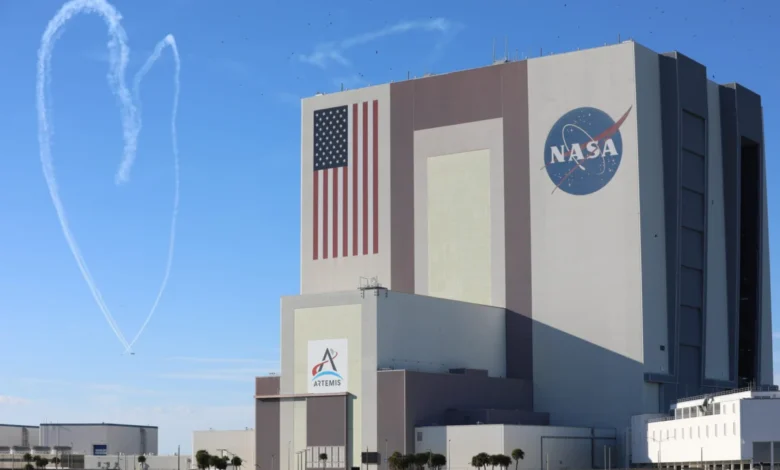
The skies above Florida’s Space Coast were transformed into a canvas of national pride on Sunday, November 8, 2026, as the United States Air Force Air Demonstration Squadron, known globally as the Thunderbirds, performed a breathtaking aerial maneuver directly over the iconic Vehicle Assembly Building (VAB) at NASA’s Kennedy Space Center. The precision flight, which culminated in the formation of a crisp, white, heart-shaped smoke trail, served as the visual centerpiece for the agency’s MAX POWER expo and air show. This high-profile event was organized as a cornerstone celebration for the United States’ 250th anniversary, bridging the historic legacy of American aviation with the burgeoning future of space exploration.
A Chronology of the MAX POWER Celebration
The MAX POWER expo represented a multi-day convergence of technology, heritage, and public outreach. The festivities officially commenced on Friday, November 6, 2026, with a series of technical symposiums and static displays of both retired space hardware and cutting-edge next-generation rockets. By Saturday, the focus shifted to public engagement, drawing thousands of attendees to the Kennedy Space Center complex to witness demonstrations of drones, autonomous flight systems, and historical aircraft flybys.
The event reached its climax on Sunday, November 8, when the U.S. Air Force Thunderbirds took to the air. The team, flying their signature F-16 Fighting Falcons, executed a series of high-speed maneuvers designed to demonstrate the agility and tactical capabilities of modern military aviation. The heart-shaped maneuver, performed in close proximity to the VAB—a structure that has housed the Saturn V, the Space Shuttle, and the Artemis moon rockets—served as a symbolic gesture of unity, linking the military’s aerial precision with the civilian agency’s mission of exploration. The timing of the performance, occurring in the afternoon, ensured optimal visibility for the capacity crowd gathered at the visitor complex and surrounding viewing areas.
The Significance of the Venue: The Vehicle Assembly Building
The choice of the Vehicle Assembly Building as the backdrop for this aerial display was far from incidental. Standing 525 feet tall, the VAB remains one of the largest single-story buildings in the world and serves as the epicenter of human spaceflight assembly. Since its completion in 1966, the structure has evolved from the primary site of the Apollo-era lunar missions to the central hub for the Space Shuttle program and, currently, the Artemis campaign aimed at returning humans to the Moon and beyond.
By utilizing the VAB as the focal point for the Thunderbirds’ demonstration, NASA highlighted the enduring nature of the facility. The juxtaposition of the vapor-trail heart—ephemeral and transient—against the massive, concrete, and permanent structure of the VAB illustrated the contrast between the fleeting excitement of an air show and the long-term, multi-generational commitment required for deep-space exploration.
Aerospace Innovation and the 250th Anniversary
The MAX POWER expo was commissioned specifically to align with the United States’ Semiquincentennial (250th) anniversary. The festival’s mission statement emphasized the "past, present, and future" of American aerospace. Throughout the weekend, attendees were presented with data-driven exhibits outlining the trajectory of U.S. aviation.
Historically, the U.S. aerospace sector has been a primary driver of the national economy. According to recent reports from the Aerospace Industries Association, the industry supports over 2.2 million jobs across the United States and contributes significantly to the national GDP through exports and technological innovation. The MAX POWER expo acted as a bridge for the next generation of engineers and pilots, with various interactive STEM booths providing data on career paths in aeronautics and astronautics.
The event also showcased the rapid evolution of flight technology. Alongside the traditional jet aircraft displays, the expo featured demonstrations of Electric Vertical Take-off and Landing (eVTOL) vehicles, representing the industry’s push toward sustainable, urban air mobility. This inclusion underscored the theme of "MAX POWER"—not merely as a reference to jet fuel, but as a commitment to maximizing the potential of human ingenuity in the coming decades.
Official Statements and Organizational Perspectives
While the event was largely celebratory, the atmosphere reflected a professional pride held by both NASA and Department of Defense personnel. Though no formal press conference was held regarding the specific formation, officials from the Kennedy Space Center noted that the demonstration was intended to foster public interest in the agency’s long-term objectives.
"The presence of the Thunderbirds at our facility represents the deep-seated partnership between the military and the space program," said a spokesperson for the Kennedy Space Center operations team. "Seeing such high-caliber aviation talent operating in the shadows of our launch vehicles provides a tangible reminder of the synergy required to maintain American leadership in the aerospace domain."
The Thunderbirds, who have been the primary ambassadors of the U.S. Air Force since 1953, operate with a strict standard of excellence. Their participation in the 250th anniversary celebrations was part of a larger nationwide tour, but their performance at Kennedy Space Center was widely cited by attendees and aviation enthusiasts as the most evocative of the year, given the symbolic weight of the location.
Economic and Societal Implications
The broader implications of the MAX POWER expo extend beyond the aesthetic success of an air show. Large-scale aerospace events function as critical public relations vehicles that maintain political and public support for NASA’s budget. With the agency currently managing the high-cost, high-stakes Artemis program, sustaining public enthusiasm is a strategic necessity.
Furthermore, the data collected during the event regarding public attendance and engagement metrics will likely be used to justify future investments in the Kennedy Space Center’s tourism and educational infrastructure. As NASA shifts toward a model of increased commercial collaboration—partnering with companies like SpaceX, Blue Origin, and Boeing—the facility is increasingly serving as a gateway for private industry. The expo served as a proof-of-concept for the center’s ability to host massive, multi-faceted public events that highlight both government and private-sector achievements.
Technical Analysis of the Aerial Maneuver
The heart-shaped smoke trail is a classic maneuver, yet its execution over the VAB required significant coordination between Air Force pilots and the Kennedy Space Center’s range safety officers. Because the VAB is situated within restricted airspace, all flight patterns during the show were subjected to rigorous safety protocols.
The formation is achieved by the lead pilot and wingmen maintaining precise distances from one another while deploying specialized smoke oil into the jet exhaust. The oil vaporizes upon contact with the heat of the exhaust, creating the iconic white trail. Factors such as wind speed, atmospheric humidity, and air temperature at the altitude of the flight (typically between 3,000 and 5,000 feet for this maneuver) play a critical role in the longevity and shape of the heart. The fact that the smoke trail remained stable and recognizable for several minutes after the planes passed indicates that the environmental conditions on November 8 were near-ideal for such a demonstration.
Conclusion: A Vision for the Future
As the MAX POWER expo concluded, the lasting image of a heart over the VAB served as a fitting metaphor for the nation’s relationship with the sky. For 250 years, the United States has moved from the early pioneers of flight to the masters of orbit and planetary exploration. The weekend’s events underscored that while the technology—from the Wright Brothers’ wood-and-fabric biplanes to the modern F-16 and the SLS rocket—has changed drastically, the underlying drive for exploration remains a constant.
The event successfully balanced the nostalgia of historical aviation with the technical ambition of the 2026 era. By engaging the public in a way that was both visually spectacular and deeply rooted in the history of the Space Coast, NASA and its partners ensured that the legacy of American aerospace would continue to inspire the next generation of explorers. As the sun set on the Kennedy Space Center on that Sunday, the lingering smoke trail served as a final, silent testament to a future that remains as expansive as the sky itself.