World of Warcraft: Forever Oceania Server Day Night Cycle Issue Sparks Community Backlash

The recent and historic launch of World of Warcraft: Forever has shattered concurrency records across the massively multiplayer online role-playing game (MMORPG) genre
, cementing itself as one of the most successful titles in Blizzard Entertainment’s storied history. However, beneath the celebratory surface of record-breaking player counts and critical acclaim, a persistent technical and environmental grievance has soured the experience for a significant regional player base. Gamers located in Australia, New Zealand, and surrounding Oceania territories find themselves entirely alienated from a fundamental aesthetic element of the virtual world: natural daylight.
While players across North America and Europe enjoy immersive, synchronized day and night cycles reflecting standard play hours, Oceania gamers are trapped in an inverted temporal reality. Because regional servers are tethered directly to North American mega-servers, the in-game clock forces local players to experience the sunlit portions of Azeroth predominantly during sleeping hours, leaving their actual leisure time cloaked in perpetual darkness. This unintended byproduct of server architecture has ignited a coordinated community campaign demanding immediate structural remedies from Blizzard Entertainment.
The Mechanics of the In-Game Temporal Disconnect
To understand the core frustration of the Oceania player base, one must examine how World of Warcraft: Forever handles its environmental lighting and clock synchronization. Unlike titles that tie day and night cycles strictly to a player’s local hardware clock or regional timezone, the newly launched MMO operates on a centralized server-time architecture. Under this system, the illumination of zones—ranging from dense forests to sprawling riverlands—aligns directly with the master clock of the designated server cluster.
For British, European, and North American demographics, this creates a seamless, organic loop. When players log on during evening or weekend daylight hours, their virtual avatars traverse sun-drenched landscapes. Conversely, late-night gaming sessions naturally transition into twilight and moonlit exploration.
For Oceania users, however, the geometry of geography clashes directly with server design. Although Blizzard has provided a dedicated data center located within Australia to ensure optimal latency and a solid connection, these regional nodes remain tethered to overarching North American mega-servers. Consequently, the master clock dictates that full in-game daylight occurs precisely when the vast majority of Oceania players are fast asleep—typically between midnight and 6:00 AM local time. During peak afternoon and evening playing hours across Sydney, Melbourne, and Auckland, the virtual skies of Azeroth remain stubbornly dark.
Grassroots Protest and Social Media Mobilization
As frustration mounted following the initial honeymoon phase of the game’s launch, the community turned to digital forums and social media platforms to voice their discontent. Reddit has emerged as the central organizing hub for this movement, spearheaded by prominent community members. A user identified on the platform as Playful_Artichoke981 initiated a high-visibility protest by launching a daily thread campaign, vowing to post every single day until Blizzard formally addresses or rectifies the Oceania day-night cycle dilemma.
This sentiment is far from an isolated complaint. Threads across various subreddits dedicated to classic and modern iterations of the franchise—including dedicated boards for World of Warcraft: Forever—have been flooded with testimonies from frustrated southern-hemisphere players. Many have shared screenshots highlighting the stark contrast between their actual daylight reality and the gloomy, nocturnal landscapes they are forced to navigate during their free time.
"We don’t hate the nighttime. We just want variety," wrote Playful_Artichoke981 in a widely upvoted thread. "We don’t want to have to compromise our sleep schedules to experience this game in all its glory."
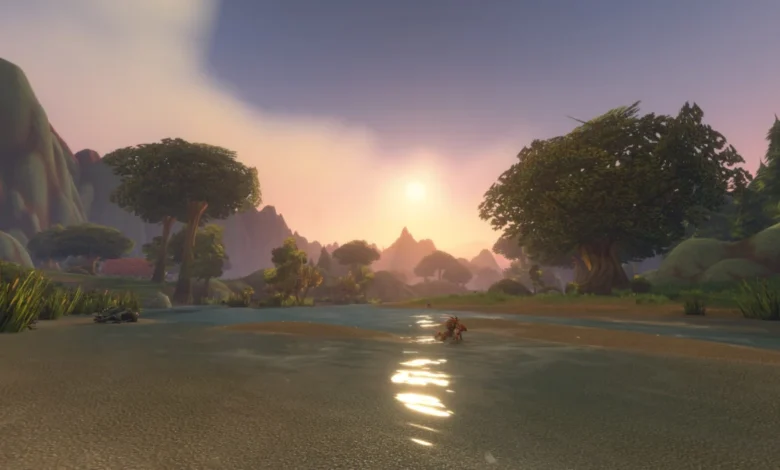
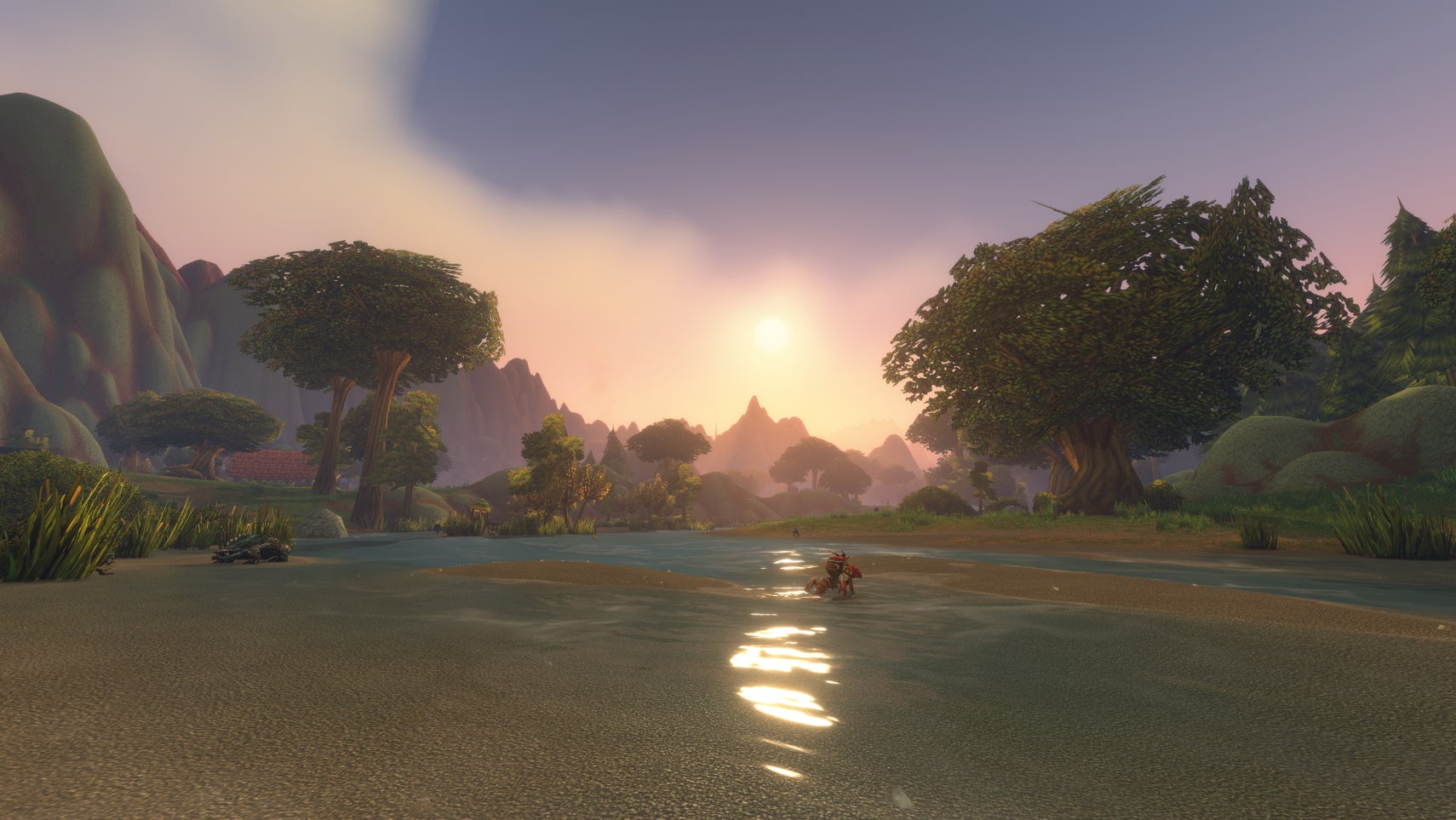
Another prominent community voice, user cuddlegoop, emphasized that the issue is not necessarily about demanding isolated servers, but rather about experiencing the rich environmental artistry the game has to offer. "I am totally fine with my day/night changing when I join an NA party. Just let me see the sun! I was up late last night and the view over the bay at Shadowfan Keep in the dawn was so beautiful I want to see stuff like that more often," they noted.
The community’s primary grievance centers on a lack of visual diversity. By missing out on dawn, dusk, and mid-day lighting parameters, Oceania players are visually segregated from a core component of the world-building craftsmanship that Blizzard has heavily marketed as a cornerstone of the new expansion.
Industry Precedent and Technical Hurdles
The challenge of accommodating regional time zones within centralized MMO frameworks is not entirely unique to World of Warcraft, though it remains a persistent industry hurdle. Historically, developers have addressed the Oceania timezone disparity through various mechanisms, ranging from completely isolated regional servers with independent clocks to localized client-side lighting overrides.
However, World of Warcraft: Forever’s emphasis on mega-server connectivity—designed specifically to maximize player interaction, dynamic world events, and cross-realm matchmaking—creates complex technical dependencies. Decoupling the environmental clock from the master server time could theoretically disrupt shared world events, scheduled raids, dynamic spawns, and cross-region party mechanics.

Despite these underlying technical hurdles, affected players argue that a compromise should be technically feasible. Proposals circulating within community forums include implementing a localized client-side toggle for lighting, introducing rolling regional server time offsets, or utilizing a rotating aesthetic cycle that decouples visual daylight from server-side utility timers. Thus far, developer communication regarding these specific user-generated solutions has been entirely absent.
Corporate Silence and Public Relations Impact
As the grassroots movement gains momentum, media outlets have begun pressing the developer for official statements. Representatives from major gaming publications, including Eurogamer, formally contacted Blizzard Entertainment to inquire whether the studio has concrete plans to address the Oceania day-night issue, or if temporary patches are currently being engineered. As of the time of writing, Blizzard has declined or failed to provide a formal response.
This corporate silence has inadvertently amplified player frustration. While the broader gaming press continues to praise World of Warcraft: Forever for delivering record-breaking concurrent player counts, seamless launch stability in most territories, and engaging gameplay loops, the unresolved geographical oversight casts a shadow over an otherwise stellar rollout.
For an industry giant like Blizzard, managing community relations during a historic launch period requires delicate balancing between monumental global achievements and localized quality-of-life grievances. Ignoring a vocal regional population risks alienating a loyal consumer base that contributes significantly to the game’s active player metrics.
Broader Implications and Future Outlook
The current standoff between Oceania World of Warcraft players and Blizzard highlights an ongoing design oversight in modern multiplayer game development: the friction between globalized server architecture and local environmental immersion. As MMORPGs increasingly rely on massive, borderless mega-servers to ensure long-term population health and seamless matchmaking, localized geographical anomalies frequently get overlooked during the pre-launch phase.
Whether Blizzard will intervene with a dedicated technical patch, an environmental override, or a structural realignment of server clocks remains to be seen. What is clear, however, is that the Oceania community’s resolve shows no signs of waning. Until developers acknowledge the issue and introduce a viable workaround, thousands of players across the southern hemisphere will continue logging into a world where the sun never shines on their time of day, turning an otherwise celebrated digital homecoming into an exercise in perpetual twilight.