Samsung Galaxy SmartTag 3 Sees Rapid Price Drop to $20 Just One Week After Market Launch

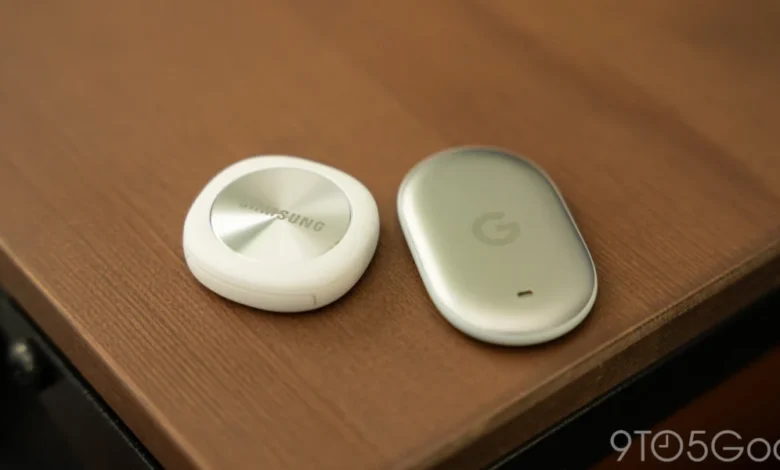
Barely seven days following its retail debut, the Samsung Galaxy SmartTag 3 has experienced a significant price reduction, with units appearing on secondary retail platforms for as low as $20. This rapid shift in pricing positions Samsung’s latest iteration of its item-tracking hardware as a highly competitive alternative to the recently released Google Pixel Tag. While the Pixel Tag is marketed as a universal solution for the broader Android ecosystem, the Galaxy SmartTag 3’s current value proposition underscores a growing fragmentation in the Bluetooth tracker market, particularly for users already entrenched within the Samsung ecosystem.
Market Context and Product Positioning
The release of the Galaxy SmartTag 3 marks the latest chapter in the ongoing competition between tech giants to dominate the "Find My" utility space. Samsung has historically maintained a closed-loop system, leveraging its massive install base of Galaxy smartphones to create a proprietary tracking network. Conversely, Google’s Find My Device (FMD) network, which powers the Pixel Tag, is designed to be hardware-agnostic, aiming to provide a unified experience across all Android devices.
Despite Google’s ambitious goal of creating a "Find Hub" network that rivals Apple’s global Find My infrastructure, early real-world performance metrics suggest that Samsung’s proprietary SmartThings Find network continues to exhibit superior reliability. Reports from various user communities, including Reddit’s r/GoogleFMD, indicate that Samsung’s network density often results in faster, more accurate location pings compared to the current iteration of the Google FMD network. For many consumers, the choice between the Pixel Tag and the SmartTag 3 is not merely about hardware design, but about the effectiveness of the underlying tracking infrastructure.
The Evolution of Samsung’s Tracker Lineup
The Galaxy SmartTag 3, which officially hit shelves on November 6, 2026, represents a refinement of the design language established by its predecessor, the SmartTag 2. The new model features a significantly more compact form factor, though it notably omits the integrated mounting loop that was a hallmark of the previous generation.
Technically, the SmartTag 3 introduces several key upgrades:

- Enhanced Battery Longevity: Improved power management protocols allow for an extended operational lifespan between battery changes.
- Limited iPhone Interoperability: Unlike previous generations, the SmartTag 3 offers a degree of cross-platform functionality, allowing limited interaction with Apple’s ecosystem, though it remains incompatible with the Android FMD network.
- NFC Contact Sharing: Perhaps the most significant functional addition is the inclusion of Near Field Communication (NFC) technology. This allows a finder to tap their smartphone against the tag to view contact information pre-configured by the owner, simplifying the recovery process for lost items.
Pricing Chronology and Retail Strategy
The sudden price drop is primarily driven by third-party retailers such as Woot, which is currently listing the device at $23.99 for a single unit. The retail strategy scales aggressively with multi-pack bundles, driving the per-unit cost down to $20 for those purchasing a four-pack.
- 1-Pack: $23.99
- 2-Pack: $43.99
- 3-Pack: $62.99
- 4-Pack: $79.99
This pricing strategy suggests that retailers are attempting to capture market share quickly during the holiday shopping window, potentially anticipating competition from the Google Pixel Tag’s own promotional cycles. While the MSRP for the Galaxy SmartTag 3 remains at $29.99 through official Samsung channels, the availability of these lower-cost alternatives at secondary retailers creates a complex landscape for the average consumer. Furthermore, the persistent discounting of the previous generation, the Galaxy SmartTag 2, at major retailers like Amazon provides an additional layer of choice for budget-conscious users who may not require the NFC features of the latest model.
Comparative Analysis: Samsung vs. Google
The core tension in this market segment lies in the trade-off between network reach and hardware reliability. Google’s Pixel Tag, while technically impressive, relies on the Find My Device network, which is still in its relative infancy. Because Google has prioritized privacy and opted to rely on a crowd-sourced network of Android devices, the efficacy of the tracker is directly tied to the number of Android users in the immediate vicinity of a lost item.
Samsung, by contrast, has spent years building a robust mesh network of millions of Galaxy devices globally. This creates a "walled garden" effect. A user with a Galaxy phone benefits from a denser, more responsive network, but that hardware remains tethered to Samsung’s ecosystem. The decision to make the SmartTag 3 somewhat compatible with iPhones suggests that Samsung is attempting to expand its addressable market, though it remains firmly focused on keeping its hardware ecosystem the primary choice for its own smartphone users.
Industry Implications and Future Outlook
The rapid price devaluation of a flagship peripheral like the SmartTag 3 within its first week of availability is a signal of the intense commoditization occurring within the tracking market. As these devices become less about proprietary technology and more about infrastructure-as-a-service, the hardware itself is being treated as a loss leader.
From a policy perspective, the introduction of NFC contact-sharing features raises interesting questions regarding privacy and security. While convenient, the ability for a stranger to scan a tag and receive user-defined contact information is a feature that requires careful implementation to prevent abuse. Industry observers will be monitoring how Samsung addresses potential security concerns, as well as how Google responds to the criticism regarding its Find My Device network performance.

If the Google FMD network fails to improve its location accuracy and network density in the coming months, consumers may increasingly flock toward the more established, albeit restricted, Samsung ecosystem. Conversely, if Google can leverage its dominance in the Android OS market to force faster adoption of its Find My Device features, the competitive landscape could shift dramatically by the end of 2027.
Analyst Perspectives on Consumer Behavior
Market analysts suggest that the "average" consumer is increasingly indifferent to the underlying technology—whether it be UWB (Ultra-Wideband) or Bluetooth Low Energy (BLE)—and is instead focused on the "it just works" factor. The success of the Apple AirTag has set a high bar for this expectation, and both Samsung and Google are currently chasing that benchmark.
Samsung’s decision to remove the mounting loop on the SmartTag 3 has been a point of contention among power users who relied on that feature for attaching trackers to keys or bags. However, the internal hardware upgrades and the aggressive pricing suggest that Samsung is confident that the device’s functional improvements, particularly the NFC recovery feature, will outweigh the design change.
Conclusion
As the end of the year approaches, the battle for the item-tracking market is intensifying. For those already utilizing the Samsung Galaxy ecosystem, the SmartTag 3 at its discounted $20 price point represents a high-value purchase, offering proven network reliability and modern convenience features. For users outside the Samsung ecosystem, the choice remains more difficult, as they must decide whether to invest in a device that may not be fully compatible with their hardware or wait for the Google Pixel Tag ecosystem to mature.
The coming months will be critical in determining whether the "Find My" market converges on a single standard or remains bifurcated between competing tech giants. For now, the consumer is the primary beneficiary of this competition, as prices for high-quality tracking technology continue to trend downward, making it easier than ever to secure personal belongings in an increasingly mobile world. Retailers and manufacturers alike will likely continue to monitor these trends closely as they prepare for the next phase of the holiday shopping season, which often serves as a bellwether for the success of such peripheral devices.