The highly anticipated launch of the iPhone Duo, Apple’s inaugural entry into the competitive foldable smartphone market, has been met with a wave of technical complications that threaten to overshadow its successful market debut. Within just seven days of the device reaching consumer hands, a growing number of users have reported catastrophic failures of the internal flexible display. While initial critical reception was largely favorable, praising the device’s industrial design and software integration, the emergence of a recurring screen failure—now colloquially termed "CrackGate" by industry observers—has shifted the narrative toward quality control concerns.
The Anatomy of the Failure
Reports surfacing across social media platforms, Reddit, and various technical forums indicate a high degree of uniformity in the reported damage. Affected units exhibit a distinct, vertical fracture running precisely along the central axis where the display folds. This is frequently accompanied by a secondary, horizontal line of dead or malfunctioning pixels, which typically manifests as a stark white streak extending from the hinge toward the outer bezel.
The consistency of these reports suggests a systemic hardware issue rather than isolated cases of user error or accidental damage. One notable account from a consumer in Australia describes an audible "snap" or "pop" sound occurring during a standard folding motion, followed immediately by the appearance of the screen crack. Even more concerning are reports from users who claim their devices suffered screen failure during the initial unboxing and setup phase, before the phone had been subjected to any significant daily usage.
A Chronology of the Crisis
The timeline of this incident is relatively compressed, which is typical of modern high-profile hardware launches. The iPhone Duo became available to the general public in late October 2026. Within 48 hours of the first retail shipments, the first anecdotal reports began appearing on platform-specific subreddits dedicated to the new hardware.
By October 24, 2026, the volume of reports reached a critical threshold, prompting tech enthusiasts and early adopters to aggregate data into centralized threads. This digital assembly of evidence revealed that the failure rate was not limited to a single geographic region, but rather affected units distributed globally. As the reports spread, industry analysts began drawing historical parallels to Apple’s 2011 "Antenagate" controversy, where the iPhone 4 faced criticism over signal attenuation issues caused by the device’s antenna design. While the scale of the current issue remains unverified, the speed at which the "CrackGate" moniker has been adopted suggests a significant impact on brand sentiment.
Technical Speculation and Potential Causes
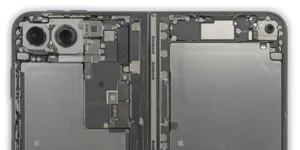
While Apple has not yet issued a formal technical white paper regarding the failure, hardware engineers and third-party repair analysts have begun to speculate on the root causes. The most prominent theory concerns the structural integrity of the hinge mechanism. In a foldable device, the hinge must provide sufficient tension to hold the device in various positions while simultaneously protecting the delicate flexible OLED panel from excessive stress.
If the hinge mechanism is failing to distribute tension evenly across the display’s substrate, it could create pressure points that exceed the physical tolerances of the screen’s protective layer. Furthermore, the horizontal white line observed by many users suggests a potential failure in the display’s ribbon cable or the underlying thin-film transistor (TFT) backplane, which may be getting pinched or over-stressed during the folding cycle. Whether this is due to a flaw in the manufacturing process of a specific batch, a design limitation of the hinge architecture, or environmental factors such as temperature sensitivity in the display material remains a subject of intense investigation.
Apple’s Official Stance and Consumer Support
In response to the mounting public pressure, Apple has issued a brief, measured statement directed at affected consumers. A spokesperson for the company, speaking to Bloomberg, advised that users experiencing display issues should contact AppleCare immediately to facilitate a device replacement.
The company’s decision to steer users toward its established support network is standard procedure, but it underscores the potential logistical strain this could place on Apple’s retail and repair operations. Because the iPhone Duo is a flagship device with a premium price point, the cost of out-of-warranty repairs is exceptionally high. For those without AppleCare+, a screen replacement could represent a significant portion of the device’s original cost, making the company’s handling of these early-life failures a critical test of its commitment to customer satisfaction.
Broader Implications for the Foldable Market
The foldable smartphone sector has long been viewed as the next frontier for mobile innovation, yet it has historically been plagued by durability concerns. Samsung, the current market leader in foldables, faced similar challenges with its first-generation Galaxy Fold, which eventually led to a delayed release and a complete redesign of the hinge and screen protection layers.
The "CrackGate" saga serves as a reminder of the inherent volatility in bringing experimental form factors to the mass market. For Apple, which prides itself on the reliability and build quality of its ecosystem, this incident poses a significant reputational risk. If the issue is found to be widespread across all early production units, the company may be forced to initiate a voluntary recall or an extended replacement program, both of which are costly and resource-intensive operations.
Market Response and Production Outlook
Despite the negative press, the market demand for the iPhone Duo remains unexpectedly resilient. Reports from supply chain analysts suggest that Apple has not slowed down its manufacturing pipeline; in fact, the company has reportedly requested that its component suppliers increase output to meet strong holiday demand. This suggests that the company is confident in its ability to contain the problem to a manageable number of units or that it believes the failure rate—while visually alarming—does not represent a failure of the entire product line.
Investors and analysts are watching the situation closely. Historically, Apple’s ability to manage product crises—by acknowledging the issue, offering solutions, and maintaining transparency—has allowed it to weather similar storms. However, in the case of a $1,000+ foldable device, the threshold for consumer tolerance is significantly lower. The company’s next steps, including whether it will offer free, no-questions-asked replacements for all affected units regardless of warranty status, will likely dictate the long-term perception of the iPhone Duo.
Conclusion: The Road Ahead
The "CrackGate" phenomenon is a developing story that highlights the intersection of high-end engineering and real-world durability. While it is currently impossible to quantify the exact percentage of affected units, the pattern of failure suggests a systemic vulnerability. For the average consumer, the current advice remains clear: handle the device with care, monitor the display for early signs of stress or unusual noises, and utilize official support channels at the first sign of trouble.
As the industry moves forward, the scrutiny on the iPhone Duo will only increase. Whether this becomes a footnote in the history of a successful product or the start of a prolonged decline in consumer trust will depend entirely on how Apple chooses to resolve the conflict between its ambitious design goals and the physical realities of foldable hardware. For now, the tech community remains in a holding pattern, waiting to see if "CrackGate" is an isolated manufacturing hiccup or a harbinger of more significant structural challenges for the future of the foldable iPhone.